
Before La Bola Negra has introduced any of its three narratives, its opening credits are already doing something striking with the past. Black-and-white photographs are partially—and sometimes aggressively—overpainted with bright pink. The original images remain visible but are not presented as untouched archival objects; something contemporary has been applied over them, changing how we see the image without erasing it. That interplay of inheritance and reinterpretation runs throughout the 155-minute film from Javier Calvo and Javier Ambrossi, better known as Los Javis. La Bola Negra premiered in competition at Cannes, where the directors shared the Best Director award.
A runtime of two hours and thirty-five minutes can feel daunting, especially for a film that moves across three historical periods, but Los Javis never let the film drift. They demonstrate tight control over pacing and tone, moving between large-scale historical reconstruction and intimate human moments without letting one dominate the other. Cinematography, production design, editing, sound, and score consistently reinforce connections among characters who initially seem separated by time and place.
The pink paint applied to those opening photographs serves as a useful metaphor for what the film does with history. The past remains visible, yet it is constantly encountered and reinterpreted from the present. Calvo and Ambrossi have discussed inheritance explicitly, responding to a perceived generational gap in contemporary Spain: rights available to gay men today can feel stable enough that the struggles of earlier generations are not always acknowledged. La Bola Negra repeatedly returns to that gap between what has been inherited and what is remembered, asking how later generations handle art, stories, and lives that survive only in fragments.
What is La Bola Negra About?
At its simplest, La Bola Negra follows three men across three moments in Spanish history: 1932, 1937, and 2017. Carlos (Milo Quifes) is a young man in Granada attempting to join an elite social institution while negotiating his father’s expectations and the consequences of being known as homosexual. Five years later, during the Spanish Civil War, Sebastián (Guitarricadelafuente) meets Rafael (Miguel Bernardeau), a fictionalized representation of Rafael Rodríguez Rapún, who was secretary to Federico García Lorca’s traveling theatre company, La Barraca, and one of Lorca’s important romantic relationships. In 2017, Alberto (Carlos González) investigates the history that connects these lives while remaining reluctant to confront unresolved history within his own family. Together, the three narratives explore desire, pain, and inheritance from different vantage points in Spain’s past.
Describing La Bola Negra as an adaptation is accurate to a degree, but it needs qualification. The film draws on Federico García Lorca’s unfinished project of the same name and on Alberto Conejero’s play La piedra oscura, which imagines the final days of Rodríguez Rapún and his efforts to preserve Lorca’s work. Conejero co-wrote the screenplay with Calvo and Ambrossi, building on the historical and imaginative material that informed his play.
Federico García Lorca and the Problem of an Unfinished History
Knowing Lorca’s story reshapes how La Bola Negra reads. Federico García Lorca was a leading poet and dramatist of twentieth-century Spain and a gay man whose work engaged repeatedly with desires that could not be openly expressed in his cultural context. At the start of the Spanish Civil War in August 1936, he was arrested in Granada by forces aligned with Francisco Franco and soon afterwards executed; his body was never recovered. His sexuality and political associations are widely seen as factors in why he became a target, although any single explanation risks oversimplifying a complex murder.
Only four pages of Lorca’s unfinished La Bola Negra survive. The first two are primarily a character list; the next two begin a dialogue between Carlos and his sister. The surviving material leaves the larger project radically incomplete and does not include the casino rejection incident that informs the film—an episode Lorca reportedly told to Cipriano Rivas Cherif in which Carlos is denied entry to Granada’s casino for being homosexual. The title literally means The Black Ball, a reference to the practice of accepting or rejecting prospective club members with white or black balls. In the film, that mechanism functions brutally: men can reject Carlos without ever having to state the reason aloud.
Calvo and Ambrossi take Lorca’s surviving pages as the seed of an imagined work that can resonate emotionally with contemporary viewers. Their film gives Lorca’s ideas and struggles another form in which audiences can encounter them, without attempting to reconstruct a definitive historical whole.
This incompleteness matters particularly in queer history. Records are partial, and queer lives and relationships were difficult to document openly when doing so carried social, legal, or physical risks. Lorca’s life and Rodríguez Rapún’s story are examples of what can be lost from the record. Fragments that remain offer later artists material to work with while also marking what cannot be recovered.
La Bola Negra: The Stories of Carlos, Sebastián, and Alberto
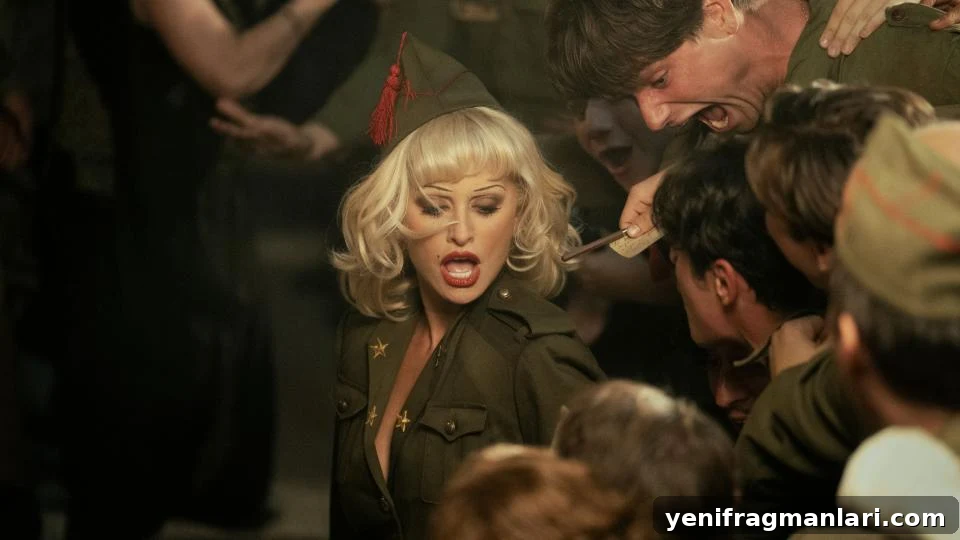
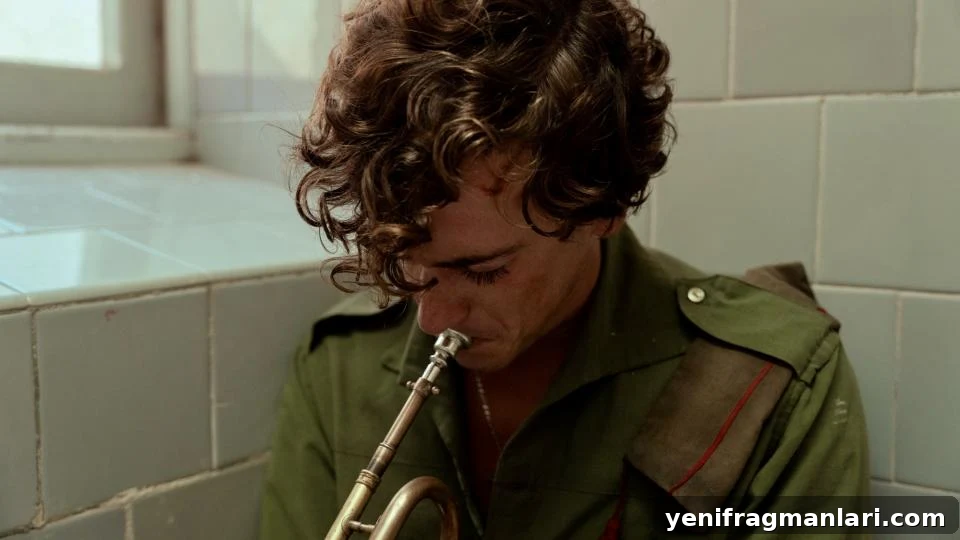
For much of the film, the three timelines feel distinct. Carlos’s 1932 world is shaped by soft piano and strings, formal interiors, and orderly social rituals. Sebastián’s 1937 segment is harsher: Raül Refree’s brass-heavy score, military movement, and the chaos of war make the film loud and unstable, and the color palette grows grayer and more muted. When Alberto appears in 2017, the film deliberately shifts into Grindr notifications, smartphone alarms, Candy Crush, and contemporary pop music. These modern sounds establish a sharp sonic identity for Alberto’s world before the narratives gradually seep into one another.
The three-era structure was part of the project from early on. Calvo and Ambrossi had seen La piedra oscura years earlier, but reimagining it for cinema led them to situate Sebastián and Rafael’s story alongside an imagined Lorca tale and a present-day investigation.
As La Bola Negra advances, music and visual rhythm begin to travel between periods. Transitions through light and shadow allow one historical moment to slide into the next, and by the final act the score resonates across the three stories. editor Alberto Gutiérrez carries thematic and musical motifs through the cuts, enabling visual and sonic ideas to cross timelines while each era retains a distinct identity. Ambrossi has said many of these cuts were planned in the screenplay; that precision shows in how scenes connect timelines without explanatory dialogue. Occasional abrupt jump cuts interrupt the flow, but they feel intentional.
The connection between forms becomes especially apparent when Alberto discovers the surviving pages of Lorca’s La Bola Negra. As he reads, the film returns to Carlos’s story but the dialogue shifts subtly: it becomes less naturalistic and takes on a stage-like flourish, as if moving closer to the play Alberto holds rather than merely revisiting another historical scene. During these moments the film offers a glimpse of what the incomplete play might have felt like.
Carlos: Desire, Rejection, and the Passage of Time
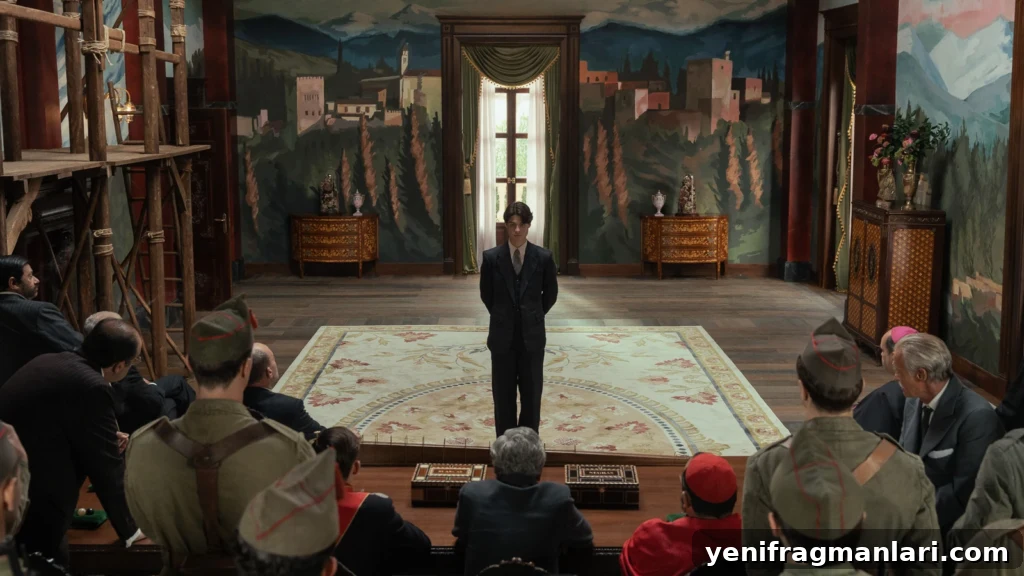
Carlos’s story is shaped by rejection. His father insists he become what he “must” be because he is a man, framing self-denial in the language of masculine duty. Carlos has opportunities for connection—friends and potential lovers—but he repeatedly stops short of giving himself over to desire. The men around him impose expectations, and over time Carlos begins to limit himself to fit those expectations.
The film makes that imbalance visually explicit. Carlos is often isolated, pushed toward the bottom of the frame, while those judging him occupy greater space and visual authority.
Time is crucial to his arc. Clocks appear repeatedly in the Granada section, sometimes in the background and sometimes as isolated insert shots. This imagery nods to Lorca’s play Así que pasen cinco años (When Five Years Pass), a surreal work preoccupied with postponed love and lives deferred. Calvo and Ambrossi were particularly interested in the idea of delaying one’s becoming out of fear. Carlos spends much of his story stuck in that postponement; the clocks serve as a steady reminder that life continues even while he waits.
Sebastián and Rafael: Recognition, Intimacy, and the Things Left Unsaid
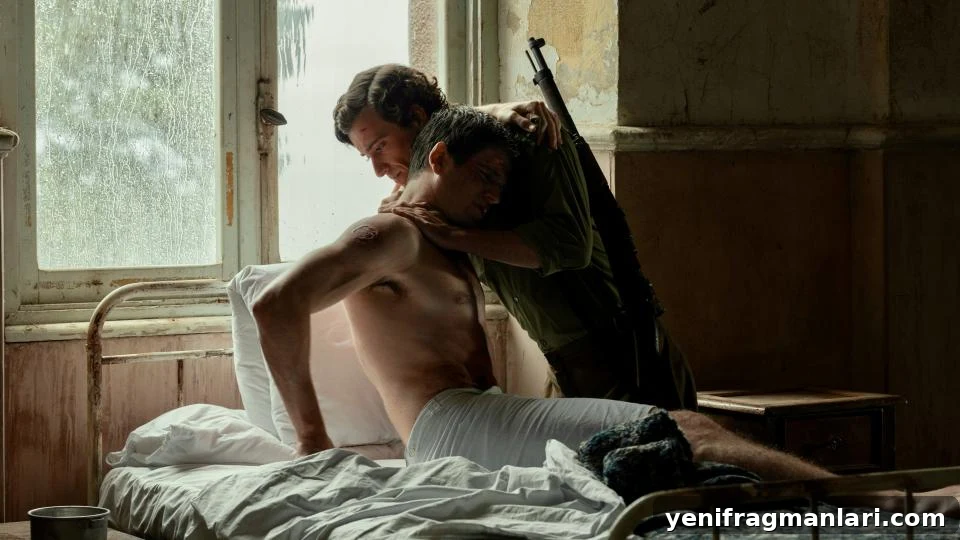
Sebastián’s relationship with Rafael moves withheld desire in another direction. Rafael gives Sebastián something he has been missing: a person in whom he can recognize parts of himself without immediately wanting to hide them. Rafael has lived more openly and experienced things Sebastián has kept at a distance; their connection gives Sebastián room to acknowledge facets of himself.
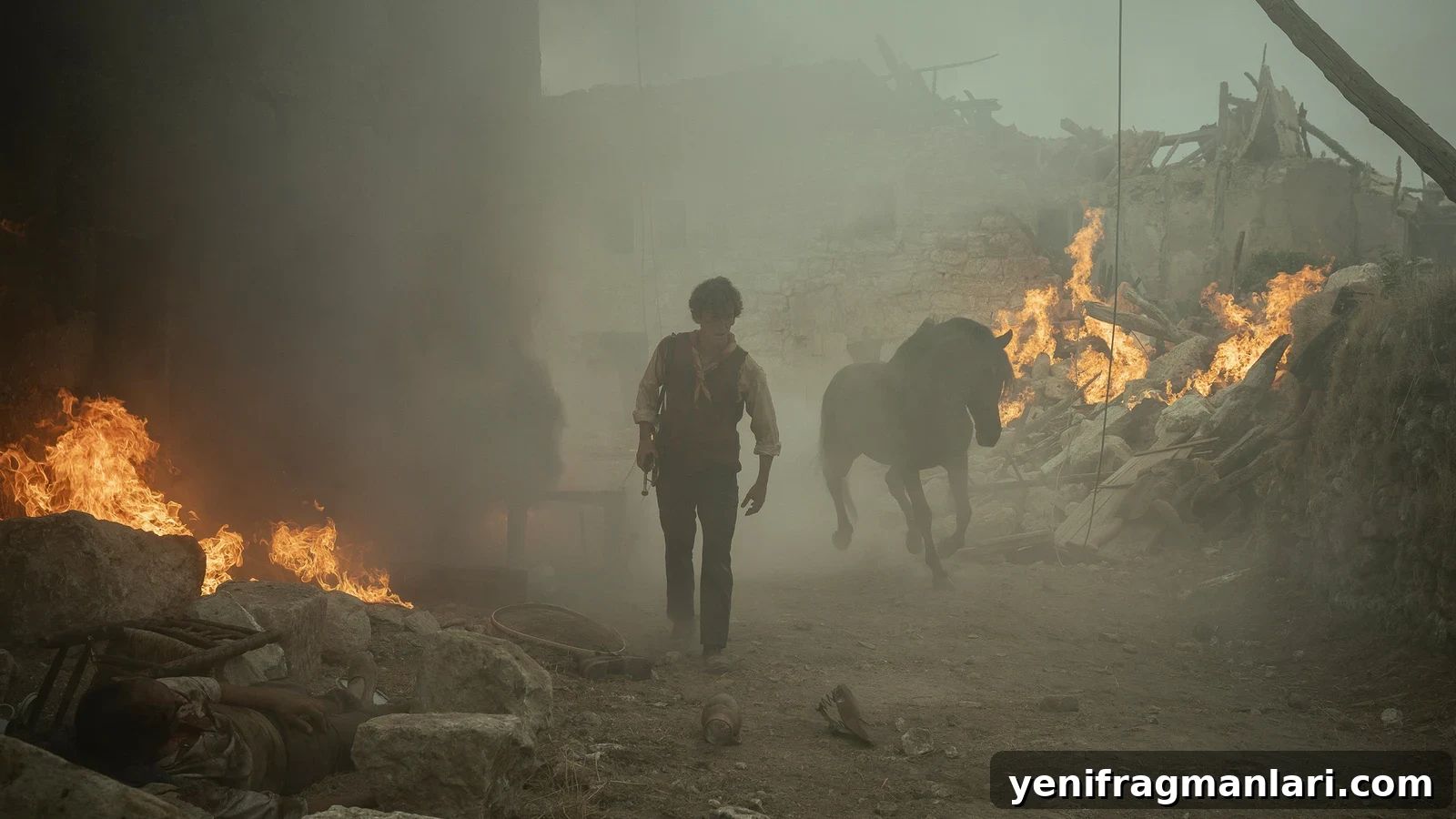
The filmmaking grows quieter around them. Though Sebastián’s 1937 world is dominated by brass-heavy music, military movement, and wartime chaos, several intimate scenes with Rafael strip away that noise. One of the film’s most profoundly composed sequences shows the two men stepping into a narrow sliver of light and simply holding one another. These small, still moments—set within a section dominated by violence—make acceptance tangible for a man who has spent so much of his life withholding pieces of himself.
When Sebastián asks whether Rafael was a footballer, Rafael replies, “I was many things.” Rodríguez Rapún in historical fact was a sportsman, a mining engineer, politically engaged, and part of La Barraca as actor and later secretary; his relationship with Lorca is only one facet of a larger life. For queer people whose sexuality could determine their treatment, persecution, or how history remembered them, Rafael’s answer resists reducing a person to a single trait. Sebastián has narrowed himself in response to the world’s constraints, while Rafael acknowledges the plurality of identity.
Sebastián’s understanding deepens when he finds a note containing Lorca’s poem El amor duerme en el pecho del poeta (The Beloved Sleeps on the Poet’s Breast) in Paul Archer’s English translation. Within the film, Sebastián reads the note as something Lorca wrote to Rafael, turning the poem into evidence of an intimate life that could not be publicly declared. Its opening lines—“You will never understand how much I love you / because you sleep in me and are asleep”—give language to feelings Sebastián has struggled to name. At first he says he does not fully grasp the poem; to understand it he would have to confront desires he has long suppressed.
Alberto: Sexual Freedom and the Story He Avoids
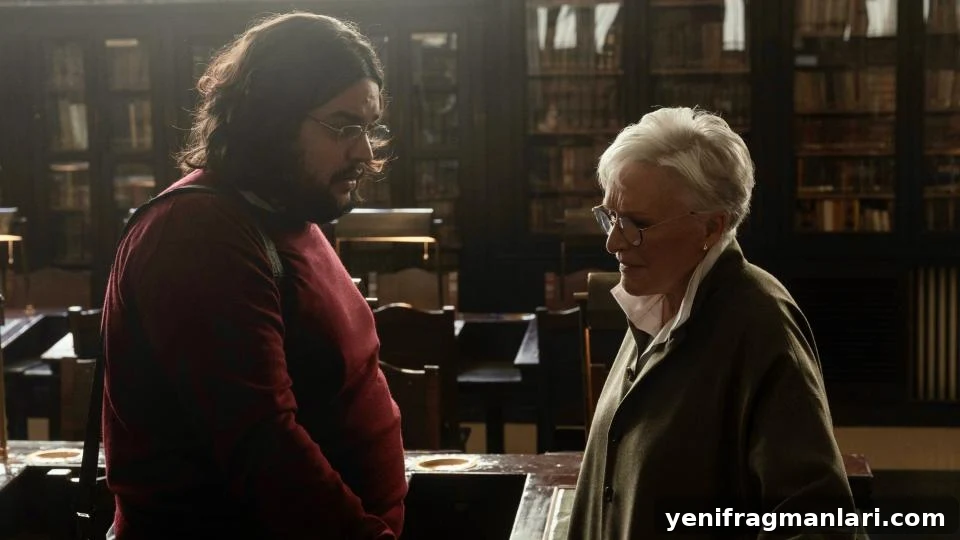
Alberto enters under very different conditions. Grindr, smartphones, casual sexual encounters, and an open relationship suggest freedoms Carlos and Sebastián never had. He can satisfy desire in the moment—but whether it brings satisfaction is another matter.
Alberto’s encounters feel fleeting, and a deeper dissatisfaction runs through his life. His relationship with his mother is fractured by addiction and long-standing resentments. His father abandoned the family, leaving Alberto with a sense of disconnection from a past he doesn’t fully understand. He once wrote plays but stopped, in part because he felt he wasn’t good enough to continue. Those freedoms have not produced a clear sense of what he wants to create with his life.
He devotes enormous energy looking outward. He researches queer lives before the Civil War through art, music, and the surviving traces people left behind, aiming to show that these lives existed and to prevent them from disappearing. That impulse is generous, but it also directs his attention away from himself.
Gradually, Alberto’s research turns the question back on his own history. He approaches the past through other people’s voices while hesitating to interrogate his family story—though distance from his mother, his father’s abandonment, and absences deeper in the family have clearly shaped him. He can recognize his sexual identity, but he still must reckon with his relationships and the creative voice he renounced when he stopped writing plays. Recovering erased voices from history proves easier, in some ways, than confronting his own life.
From the Black Ball to White Snow: Metaphor and Lorca’s Poetic Logic
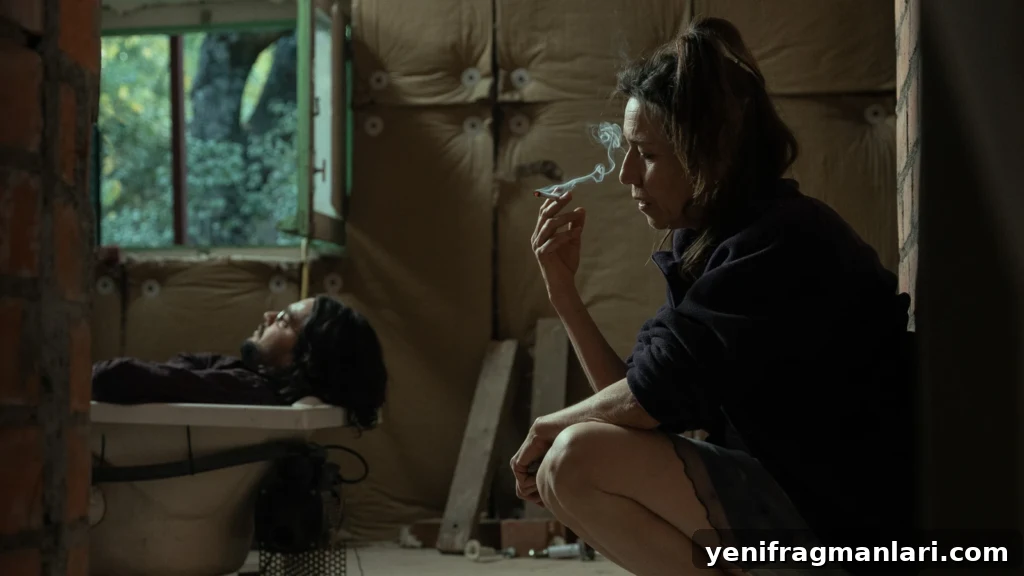
Metaphor is central to La Bola Negra because it follows Lorca’s poetic logic. Lorca often begins in recognizable realistic spaces before letting stranger figures and images—snow, the moon, silver—accrue symbolic weight and become closely associated with death. The film follows that movement in Carlos’s narrative, gradually letting metaphor and surrealism express what realism cannot.
One pivotal sequence follows Carlos’s first rejection in a bar. He enters to drink and escape, but the floating camera and moving bodies loosen the earlier realism. A woman he meets tells him about the death of her child, introducing maternal grief as a recurring image. Her importance lies less in a literal role and more in the symbolic presence she assumes across the story.
That symbolic role becomes clearer when Carlos reaches the Sierra Nevada, the mountain range above Granada. The same performer returns as the voice of the snow, linking the woman in the bar to a landscape of tranquil death. She moves beyond a conventional character: embodied in the bar and later dispersed across the mountain, she connects maternity, loss, memory, and release across Carlos’s arc.
The progression from the black ball to white snow encapsulates this transformation. The black ball has a fixed social meaning—rejection—part of a system that classifies Carlos and determines his belonging. Snow operates with a more plural logic: it can signify death and loss while also offering consolation and release. The contrast is not simply black versus white or rejection versus acceptance; it is a movement from a world where meanings are imposed through rigid categories toward one where metaphor allows multiple meanings and possibilities for self-understanding to coexist.
Through art, La Bola Negra preserves traces of lives that were never fully recorded—particular desires, relationships, fears, and forms of repression. The film traces an artistic lineage: from Lorca’s unfinished pages to Conejero’s play to Los Javis’ cinematic imagining—each handoff keeping fragments alive rather than attempting to finish what was never completed.
Final Thoughts on La Bola Negra
At 155 minutes, La Bola Negra is ambitious, but its scale rarely feels unwieldy because its formal construction is tightly bound to its central themes. The three periods retain distinct visual and sonic identities while editing, music, performance, and metaphor gradually dissolve their boundaries. The film becomes an act of inheritance assembled from Lorca’s fragmentary writing, theatrical adaptation, historical lives, poetry, music, and contemporary experience.
Its treatment of queer history resists a simple arc from repression to liberation. Alberto enjoys freedoms unavailable to Carlos or Sebastián, yet freedom does not automatically yield self-knowledge. Across the three eras, forms of constraint change while questions of identity, silence, memory, and inheritance persist. The film is less concerned with repetition than with transmission: how experiences that could not be fully expressed in one generation continue to shape those that follow.
That focus gives La Bola Negra its emotional and intellectual coherence. The film does not complete Lorca’s unfinished work; instead, it places the surviving pieces into a contemporary artistic form where they can continue to be interpreted. For all its visual ambition, that is its most significant achievement: La Bola Negra treats preservation not as completion, but as continuation.
Read More:
- Interviews
- Film Reviews
- Film Festivals
- Top 10s and Beyond