
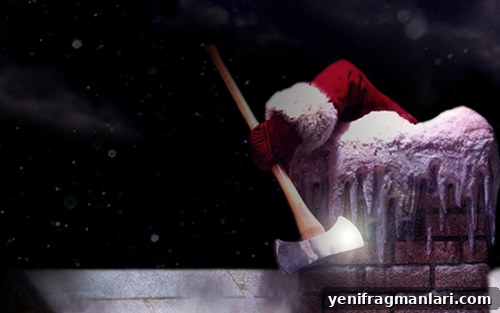
Christmas is widely regarded as the most wonderful time of the year, a season filled with warmth, family gatherings, twinkling lights and festive music. It can therefore feel jarring—almost perversely entertaining—when movie makers set violent or terrifying stories against this backdrop of seasonal cheer. Yet Christmas-themed horror has become a recurring and enduring subgenre. What is it about the holiday that makes it such fertile ground for chilling tales?
Over the decades filmmakers have repeatedly used the holiday to amplify fear. The 1972 slasher Silent Night, Deadly Night famously unfolds on Christmas Eve, delivering the shock value of a killer stalking victims at a time associated with safety and family. Two years later, Black Christmas (1974) brought the menace into a sorority house, exploiting the tension between homecoming and hidden danger; its 2006 remake revived that same unsettling contrast for modern audiences. More recently, 2015’s Krampus reinterpreted Austro-Bavarian folklore by pitting a family’s dwindling holiday spirit against a punitive demonic creature. These films illustrate a simple formula: take a familiar horror premise, then dress it up in tinsel, carols and decorations to make the dread feel unexpectedly intimate.
There are practical and psychological reasons this works so well. On a practical level, Christmas provides instantly recognizable visual shorthand—evergreen trees, flashing lights, candles, wreaths, red-and-white color schemes—that can be used to create atmosphere and to misdirect expectations. When a filmmaker mixes those symbols with traditional horror motifs such as shadowy lighting, isolated settings or an unseen stalker, the contrast heightens unease. We instinctively associate the holiday’s brightness and warmth with safety; when those comforting cues exist alongside danger, our sense of dissonance intensifies the emotional response.
From a psychological perspective, filmmakers deliberately tap into our emotions to make a movie resonate. Drama and romance often rely on positive emotions such as love or nostalgia to connect with viewers, while horror trades in fear. By setting fear against the backdrop of a season known for joy and goodwill, the filmmakers exploit cognitive dissonance: our brains are told to expect comfort, yet we are simultaneously primed for threat. This mismatch deepens the impact of scares because it violates a strong cultural and personal script—Christmas is supposed to be safe, so something horrific occurring at that time feels especially transgressive.
Horror also leverages basic, evolutionarily rooted fears—darkness, isolation, hidden predators—and Christmas imagery can both obscure and spotlight those fears. Low-key lighting and shadowy corners create anticipation, while seasonal elements like a tree’s twinkling lights or a brightly decorated living room make the danger feel all the more intimate and closer to home. The angel atop the tree, the kindly face of Santa Claus, and the sounds of carols provide familiar anchors that, when corrupted, produce a powerful shock: we are witnessing the subversion of what we trust.
Part of the appeal of Christmas horror is the emotional rollercoaster it offers. Audiences often seek out horror for the adrenaline rush and the subsequent release of tension. When a holiday icon is twisted—when Santa becomes a threat or the spirit of giving becomes perverted into punishment—viewers experience surprise, outrage, laughter and fear in swift succession. That rollercoaster can be cathartic; it allows us to confront anxieties about family, consumerism, tradition and mortality in a framed, safe way.
Christmas itself is rich with symbolic meaning: family gatherings, rituals, expectations, and commercial pressures. Horror films set during the holiday can interrogate those themes directly. For example, Krampus critiques consumer excess and the erosion of familial warmth, while slasher films that take place at Christmas can reflect the tension between public celebration and private secrets. Because the season amplifies interpersonal dynamics—old grudges, financial stresses, emotional estrangement—it naturally fuels the character-driven conflicts that horror thrives on.
The incongruity of joyful imagery and terrifying events is the central reason Christmas horror keeps returning. That incongruity makes scares sting harder and makes the films linger in viewers’ minds. Whether a movie uses the holiday as mere decoration or as a central thematic device, Christmas horror continues to be an effective way to explore fear in an unexpected setting—reminding us that even the brightest lights can cast long shadows.
Written by James Cullen
Recommended for you: 50 Unmissable Christmas Movies