
What I’ve Learned Thus Far…
This article was originally written by Gemma Pecorini Goodall for her film and TV blog Gemma Reviews.
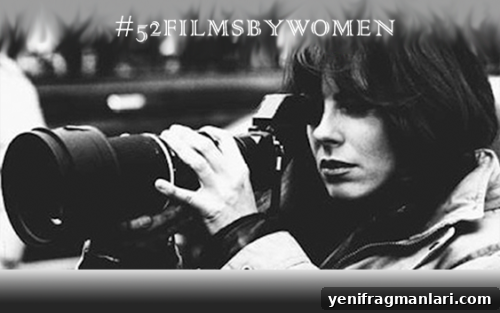
Resolutions tied to the calendar usually begin in January, but I didn’t start mine at the top of the year. Although I had heard of the #52FilmsByWomen pledge before, I only signed up in August. If I had begun in the first week of that month I would be on my 22nd film by now, yet I’ve managed to log only seventeen. Even so, committing to the pledge has taught me a great deal about women in film, especially female directors. With the close of the year and the arrival of 2017, I wanted to reflect on what the pledge has taught me so far.
Before listing the lessons I’ve learned, it helps to explain the pledge and why consuming media made by women matters. The #52FilmsByWomen pledge was launched by Women in Film Los Angeles, an organization that promotes equal opportunities for women in the film industry. The commitment is simple: watch one film directed by a woman every week for a year. The goal is to raise awareness of films made by women and to demonstrate that female-directed productions can be as successful and compelling as those led by men. If you want more background on why I took this on, I previously shared my reasons in an earlier post on my blog. I also plan to publish a follow-up piece that includes more statistics and arguments about women’s representation in Hollywood.
With that context, here are the key things I’ve learned while taking the #52FilmsByWomen pledge and how the experience has shaped my perspective on film watching.
- Planning to watch a specific film every week is harder than it sounds
I assumed choosing and watching a film each week would be straightforward, especially with streaming services like Netflix making films so accessible. I was wrong. Selecting a pledge film has become an exercise in careful consideration, almost like reading ingredient labels when grocery shopping. For most casual moviegoers, the cast is the main factor when deciding what to watch. Few people look closely at the creative team, and the director’s name is often small or invisible on posters and listings. That makes it difficult to quickly identify which films qualify as female-directed without searching through credits or production information, and it slows down the decision-making process more than I expected.
- There aren’t enough female-directed films readily available on streaming platforms
This observation is shaped by my personal experience and regional Netflix libraries (I use the UK and Italian catalogs), but it is significant: finding films by women on streaming platforms is not as easy as it should be. There’s no dedicated category for “films directed by women,” which raises a question: is it preferable that male- and female-directed titles are integrated, or does the lack of a visible category make it harder for audiences to discover films made by women? The absence of an obvious way to find these films does slow down the pledge and likely reduces discoverability for audiences who want to support female filmmakers.
- Not every woman filmmaker focuses on women’s stories
I’d already known that women do not exclusively tell stories about women, but it’s worth emphasizing for anyone worried the pledge equals an endless stream of romantic comedies or “chick flicks.” Many women directors create films across genres. While I watched titles that center young female protagonists, such as Mustang and Turn Me On, Goddammit, I also watched works like Wayne’s World and The Hurt Locker, which belong to genres traditionally associated with male creators—comedy and action—showing that female directors can and do work across the full spectrum of cinema.
- Women directors often favour character-driven narratives
From my viewing, a notable trend has emerged: many female directors pursue intimate, character-focused stories that explore relationships and personal growth. Films such as Eden and American Honey are introspective and centered on their protagonists’ inner lives. Ensemble pieces directed by women, like The Riot Club and Lords of Dogtown, tend to develop their characters fully, emphasizing interpersonal dynamics as much as plot. One practical reason for this trend may be that relatively few women are given the largest budgets. When directors don’t have the backing of massive visual-effects budgets, a strong screenplay and compelling character work often become the driving force of the film.
- Despite progress, women remain dramatically underrepresented in film
Watching a year’s worth of films directed by women reinforced how far the industry still has to go. Award seasons and festival lineups often reflect the industry’s imbalances. For example, after the Golden Globe nominations were announced, I had hoped to see more recognition for female-directed work. Even with numerous excellent films directed by women in a single year, key categories and top nominations frequently overlook female filmmakers. While some organizations have made strides in diversity, the overall numbers remain low: women direct a small percentage of feature films, and women of colour are an even smaller portion of that group. This persistent gap is unacceptable and highlights why initiatives like the #52FilmsByWomen pledge are important for raising awareness and changing viewing habits.
Committing to this pledge has been educational and sometimes challenging, but it has also been rewarding. It has introduced me to filmmakers I might not have found otherwise and reminded me that deliberate viewing choices can broaden one’s cinematic horizons. If more viewers intentionally seek out films by women, the industry will have stronger incentives to support and promote female-led projects.
By Gemma Pecorini Goodall
Gemma Pecorini Goodall is a writer and translator who blogs about film at Gemma Reviews, where she publishes reviews of classic and contemporary films and reflects on her personal journey through cinema. You can find Gemma at the following links:
Film Blog: Gemma Reviews
Twitter: @gempecorini