
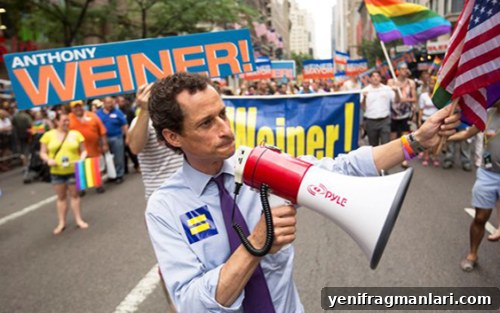
Weiner (2016)
Directors: Josh Kriegman, Elyse Steinberg
Writers: Josh Kriegman, Elyse Steinberg, Eli B. Despres
When filmmakers Josh Kriegman and Elyse Steinberg followed former U.S. Congressman Anthony Weiner on his New York mayoral campaign, they expected an inside look at a political comeback. What unfolded, however, was far more revealing and dramatic than anyone could have predicted. The resulting documentary, Weiner, captures a story of deception, a marriage pushed to the brink, and the dizzying cost of public notoriety. It stands as one of the rawest and most compelling political documentaries of recent years.
Anthony Weiner became a national figure in the early 2010s after explicit photos from his Twitter account were leaked online. What began with a hacked email and online indiscretions quickly snowballed into a scandal that engulfed his personal and political life. His wife, Huma Abedin, who held a senior role in the campaign of a major presidential candidate, remained publicly supportive as Weiner attempted to rebrand himself as a contrite, transparent candidate for New York City mayor. Kriegman and Steinberg’s film exposes the human reality behind the headlines and the political calculations that pressure couples to remain together or to separate under intense public scrutiny. The documentary pulls back the curtain on the image crafted by the media and the campaign, showing the couple’s personal struggle with a marriage strained by shame and relentless press attention.
Weiner is an access-driven film: the directors were granted rare, often intimate access to the candidate, his family, and his campaign team. The interviews feel candid and unguarded, offering long, reflective moments in which Weiner speaks openly about both his professional ambitions and personal failures. At times, those interviews read like informal therapy sessions—Weiner searching for understanding, perhaps from the filmmakers, perhaps from viewers. The man often seeks the spotlight and presents himself as a kind of flawed hero. That paradox—his craving for public attention yet repeated self-sabotage—becomes the film’s central fascination.
The documentary’s strength lies not only in its subject but also in its portrayal of the political process. Campaign strategy meetings, from cramped offices to larger media rooms, punctuate the narrative and reveal the day-to-day pressures that define modern political life. The film follows an earnest, often understaffed campaign team as anxieties rise and decisions are made under intense time and media pressure. These scenes offer a revealing view of how political campaigns operate, the youthful energy and low budgets many campaigns rely on, and the human toll that high-stakes political contests can take.
Beyond the personal scandal, Weiner raises broader questions about the ethics of news reporting and the shifting nature of political coverage. The film examines the movement of media from a focus on policy and governance toward intimate personal scandals. It asks, implicitly, whether a candidate whose flaws are publicized for their salacious value should be judged differently than politicians who engage in financial or political corruption but avoid the same kind of personal exposure. The documentary does not prescribe a definitive answer; instead, it invites viewers to wrestle with complicated judgments about privacy, accountability, and the kind of behavior that should disqualify a public servant.
The film traces Weiner’s descent from confident politician to someone repeatedly undermined by his own choices. That arc—the riches-to-rags style downfall—could be played as moralizing spectacle, but the filmmakers deliberately humanize their subject. They show his charisma and vulnerability alongside his mistakes, creating a portrait that resists easy moralizing. By refusing sensationalist flourishes, the documentary lets the material speak for itself. The result is a film that feels immediate and unvarnished: an unsettling but magnetic portrait of a public figure unraveling in real time.
Weiner balances tones, moving from moments that are genuinely funny to scenes that are bleak and painful. It functions as both an engrossing character study and a thoughtful critique of contemporary political media. Whether viewers come to the film with an understanding of U.S. politics or no prior knowledge of the case, the documentary remains gripping. It holds attention through the inherent drama of its subject and through the clear-eyed way the filmmakers present the events, without embellishing or inventing facts.
If you commit to this film, you’re likely to be pulled in by its emotional candor and its unflinching look at a fall from power. Weiner offers meaningful commentary on media, politics, and personal accountability, while ultimately centering the human cost of scandal. It is a compelling, sometimes uncomfortable viewing experience that sticks with you long after the credits roll.
Score: 17/24
Recommended for you: More Movie Reviews from The Film Magazine