
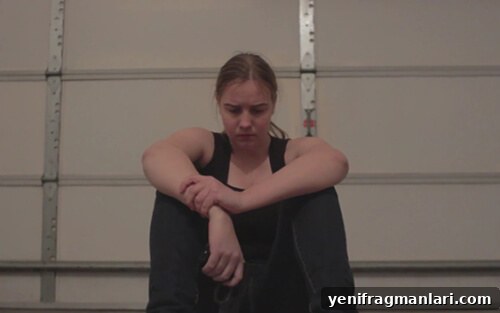
INDOOR AIR (2014)
Director: Ron Purtee
Screenwriter: Ron Purtee
Starring: Deann Baker, Brandon Nichols
INDOOR AIR begins, like any effective thriller, with a single urgent question: why does this young woman have a gun? Over the course of just 4 minutes and 36 seconds, the film reveals that answer slowly and with precision, using striking cinematography, carefully timed dialogue, and a powerful score. Those elements combine to make a compact, tense short that manages to fill every moment with suspense and emotional weight.
The film takes place almost entirely in a single room and centers on two characters: a young woman holding a gun and a man who is either catatonic or otherwise detached from reality. Cinematographer John Rupe and director Ron Purtee treat the environment as a visual puzzle, revealing details piece by piece through well-composed shots. Each camera angle contributes a small portion of the whole picture, encouraging the viewer to assemble the narrative from those fragments. That methodical, deliberate pacing creates genuine intrigue and gives the short film a sense of depth far beyond its running time.
Complementing the visuals is Matt Vollmer’s score, which proves to be one of the film’s most compelling assets. A low, droning tone opens the film and establishes an uneasy atmosphere that mirrors the measured pacing. As the story progresses and dialogue appears, the music develops a subtle melodic layer that underscores the emotional shifts and the increasing stakes. The music functions almost as a constant warning, punctuating the scene’s severity and only pulling back at key moments to allow the action and climactic beats to land. In a larger-budget feature, Vollmer’s work would feel entirely at home; here it elevates the material and helps to shape the viewer’s emotional response.
Where the film falters slightly is in its screenplay. The dialogue is often expository, spelling out details the images already suggest. That tendency to explain can lessen the tension at times, as the screenplay opts to resolve uncertainty with words rather than trusting the visual storytelling. Purtee’s aim appears to be to provide answers and closure within the short runtime, and while the intent is understandable, the one-sided nature of much of the exchange sometimes undercuts the intensity of a woman pointing a gun at a man strapped to a wheelchair. In retrospect, the film might have benefited from leaning more on its visuals and score and allowing silence and space to convey more.
Deann Baker, who carries the majority of the film’s focus, faces a demanding role. Many of the shots concentrate on her, and she must convey a complex blend of fear, determination, and vulnerability. Delivering so much emotion while also handling weighty lines—often delivered directly toward the camera—poses a tough challenge. Baker’s performance is compelling, but the choice to have her speak to the lens is risky; it intensifies the intimacy of the film but also calls additional attention to the screenplay’s expository moments. Still, her presence anchors the film and ensures the viewer remains invested in the unfolding confrontation.
Despite the screenplay’s moments of over-explanation, INDOOR AIR showcases clear strengths: considered direction, intelligent cinematography, and a memorable score. In a short span of time the film establishes character, tone, and stakes effectively, making the viewer feel emotionally involved with minimal exposition. That efficiency is notable—many longer works require far more time to build similar investment.
The film’s final moments allow the technical and creative elements to come together, demonstrating the director’s grasp of genre mechanics and the cinematographer’s eye for composition. While not flawless, INDOOR AIR represents a confident short that hints at the talents of those involved and succeeds more often than it stumbles.
Score: 14/24
Recommended for you: More Short Film Coverage