
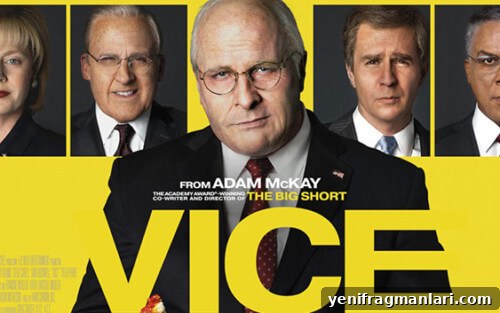
Adam McKay’s Vice has ignited debate among critics.
Kevin Fallon of The Daily Beast accuses the film of, at best, marginally humanizing and, at worst, lionizing Dick Cheney. The Washington Post’s Ann Hornaday, in a 1.5 out of 4 star review, argues that “there aren’t any revelations or risky hypotheses proffered in Vice.” Vox reviewer Alissa Wilkinson notes that a post-credits scene suggests McKay’s disdain for the American public, arguing that the film reads as an indictment of the electorate as much as of Cheney. Wilkinson has also suggested that the movie’s likely audience includes those old enough to remember both Bush administrations clearly.
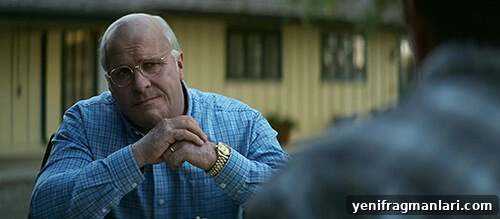
Christian Bale as Dick Cheney in Vice.
I approach the film from a different perspective, largely because of my age. I was seven when George W. Bush took office. I don’t recall the election controversy beyond pop culture references, I only have a vague memory of 9/11 and the invasion of Iraq, and much of my early exposure to that era came through comedians mimicking public figures because their speeches often felt dull. At the time I didn’t know who Dick Cheney was—other than finding his name amusing. My current understanding of the Bush years has been shaped by years of retrospective investigation and research.
Viewed from someone who started with little knowledge of Cheney, Vice functions as a compelling biopic with clear undertones that critique the present state of American politics. I generally dislike conventional biopics because they too often present sanitized, triumphant narratives structured and edited like countless others. Adam McKay brings an absurdist comedic sensibility that I enjoy, and he chose a subject who, according to public polls, was already widely unpopular. While many reviewers call Vice a tonal mess, I see a film that aims to entertain while taking creative risks that other directors rarely attempt when handling serious historical subjects.
The film’s central metaphor is fishing. McKay cross-cuts political scenes with shots of Cheney fishing, and the pattern is brisk and deliberate. When Cheney fishes, it isn’t out of necessity—he isn’t catching food for his family. He fishes because he enjoys the control it offers. Control and power are essential to his character throughout the film. Early on, Cheney declines an initial invitation to become Vice President because the position appears symbolic and lacking in real authority. At moments, worms are compared to people whose lives Cheney seems indifferent to. Fishing also stands in for the use of focus groups and political messaging: worms and lures become metaphors for tailored messaging designed to attract a desired response. The film even stages surreal sequences—scenes where officials are told the “specials” that will be used in the War on Terror, including Guantanamo Bay and enhanced interrogation. Those surreal moments feel fresher than a room full of people simply debating policy or a voiceover listing events.
The movie spends a substantial hour tracing Cheney’s path up to 2001, including his time in the Nixon and Ford administrations. I didn’t realize Cheney had been Gerald Ford’s Chief of Staff, and the film uses Cheney’s and, briefly, Roger Ailes’s careers to sketch how modern conservatism evolved. In the 2001 timeline, the film suggests Cheney helped place John Bolton in a significant role within the Bush administration, highlights how Cheney used market-tested messaging to shape Republican policy, and depicts his willingness to act on questionable intelligence in the lead-up to the 2003 invasion of Iraq. Across these events, the film rarely attempts to humanize Cheney in a sympathetic way. We may glimpse private moments—his relationship with his daughters offers occasional empathy—but the overall arc shows him repeatedly placing politics above personal ties. If one claims the film targets the public more than Cheney, that interpretation requires ignoring much of the movie in which Cheney’s apparent indifference to human life is foregrounded—most notably a sequence that cuts between Cheney’s heart transplant and the lives harmed as a consequence of the policies he championed.
Is Vice flawless? No. The film takes liberties and mixes tones in ways that won’t satisfy every viewer. Some factual criticisms have surfaced, including questions about how specific personal details are portrayed and whether certain events are simplified for dramatic effect. But the film also strives to be informative and to convey a larger argument through inventive filmmaking choices. McKay’s approach is far from conventional: he aims to educate and provoke while still delivering an entertaining cinematic experience.
Ultimately, I prefer filmmakers who experiment with style and storytelling rather than default to formulaic biopic conventions. Vice may be uneven at times, but it’s a bold attempt to do something different with political biography on screen. For viewers seeking a standard, middle-of-the-road portrayal, the film will disappoint. For those open to an unconventional, provocative interpretation of power, manipulation, and modern conservative politics, Vice is worth watching.