
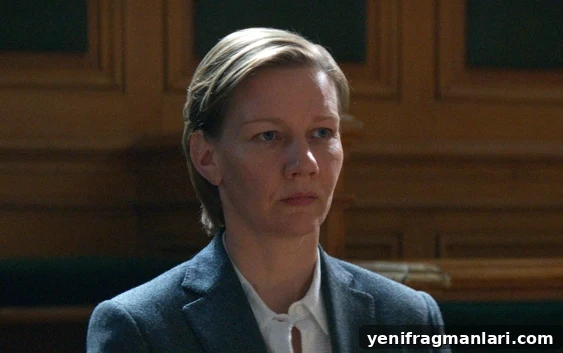
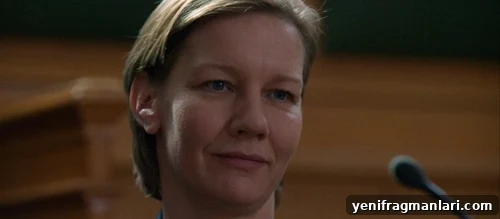
Anatomy of a Fall (2023)
Director: Justine Triet
Screenwriters: Justine Triet, Arthur Harari
Starring: Sandra Hüller, Samuel Theis, Milo Machado Graner, Swann Arlaud, Antoine Reinartz
Justine Triet’s Oscar-nominated courtroom drama Anatomy of a Fall dismantles entrenched systemic misogyny with sharp focus. This multilingual film is dense with dialogue and ideas, and it features one of 2023’s most compelling central performances. Triet’s script and direction interrogate not only an alleged crime but the attitudes and biases that surround it, demanding that viewers question how we judge others and how gender shapes those judgments.
Triet, a French director and co-writer, made a striking mark on the festival circuit in 2023 when she earned the Cannes Palme d’Or, becoming only the third woman to receive that honor. The film is notable for how confidently it operates in English, a language Triet does not use as her native tongue, while relying on a predominantly French cast and featuring a powerhouse lead performance by Sandra Hüller, a German actress whose every nuance, inflection and emotional beat grounds the film. Triet treats language and dialogue with surgical precision, arranging conversations and courtroom exchanges so that every line, hesitation and contradiction becomes evidence to be parsed. The result is a film that invites forensic attention: small details and personal history are assembled like fragments of a case, and the audience is continuously asked to reassess what they believe.
At its structural core, Anatomy of a Fall follows the familiar mystery-courtroom pattern: a character is presented, a death occurs, and a legal process seeks to determine culpability. But Triet’s aim diverges from conventional whodunit storytelling. This film is less preoccupied with the mechanics of the crime and more with why we are drawn to such stories and how those impulses shape the lives of the people involved—especially women. Triet interrogates our appetite for intimate exposure and the cultural gender biases that can turn curiosity into condemnation. The narrative uses the courtroom as a stage to examine how society treats women who deviate from expectations, questioning both the legal procedures and the popular narratives that inform public opinion.
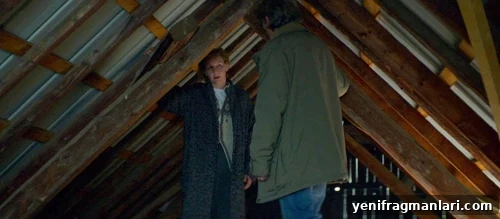
Sandra Hüller, nominated for Leading Actress at major awards ceremonies for this role, anchors the film with remarkable depth and range. Her portrayal of Sandra is both forceful and fragile, alternating between moments of blunt candor and private vulnerability. Triet’s screenplay gives her a richly drawn character: someone who can be contradictory, disarming and utterly human. In scenes of intense confrontation—particularly a prolonged argument with her husband shortly before his death—Hüller delivers a performance that remains vivid well beyond the film, turning finely crafted dialogue into lived, breathing reality. That scene in particular showcases how acting and writing can combine to transform theatrical intensity into an experience that feels intimately cinematic.
Throughout the film, Hüller’s character is framed as an outsider: her German origins and accent contrast with the predominantly French context, and her emotional world is often isolated visually as much as narratively. Triet frequently focuses tightly on her face, allowing minimal distance between character and audience. That proximity generates a kind of discomfort that is central to the film’s critique. We are made complicit in the relentless scrutiny, and Triet forces us to confront our voyeurism. The movie repeatedly undercuts the idea that a courtroom can produce an objective truth, instead exposing how social prejudices and personal histories get translated into legal narratives.
Visually, the film benefits from careful shot construction and purposeful cinematography. Scenes are composed to emphasize emotional pressure and spatial isolation, using framing and lighting to underline character dynamics. The score supports the film’s emotional architecture without overwhelming it, reinforcing tension and mood where needed. Yet the film’s primary strength remains its script, direction and performances—elements that demand sustained attention and reward it with a layered, thought-provoking experience.
While not as fanciful as some contemporary works or as relentless in its momentum as others, Anatomy of a Fall is a considered, artistic piece that speaks directly to our current conversations about gender, power and accountability. It interrogates the ethics of entertainment, the hunger for scandal, and the ways in which public judgment can be weaponized against women. Triet and her collaborators present a film that is rigorous and humane, one that lingers after the credits and keeps raising uncomfortable questions about how we decide who is guilty and who is not.
Score: 20/24
Rating: 4 out of 5.