
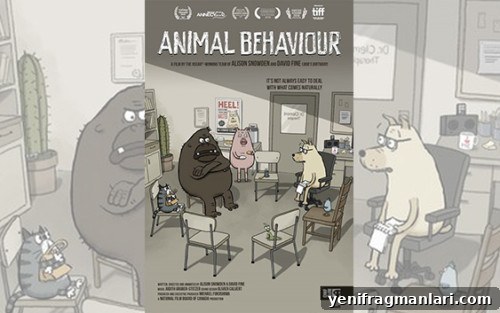
Animal Behaviour (2018)
Directors: David Fine, Alison Snowden
Screenwriters: David Fine, Alison Snowden
Starring: Ryan Biel, Taz Van Rassel, Leah Juel, Andrea Libman, Toby Berner, James Kirk, Alison Snowden
David Fine and Alison Snowden’s Oscar-nominated animated short Animal Behaviour is a smart, warm, and consistently funny exploration of identity and social expectation, framed as a group therapy session attended by an eclectic cast of animals. Produced by the National Film Board of Canada, the film turns an absurd premise into a sharp, empathetic comedy while using character-driven animation to highlight how our quirks and stereotypes shape interpersonal dynamics.
At face value, the short imagines a world where animals take part in a human-style therapy group. Dogs, cats, pigs, birds and even leeches attend the session and voice very human anxieties. That premise could easily become a string of gags, but Fine and Snowden use it instead as a vehicle to probe the small hypocrisies and vulnerabilities we hide behind social roles. The animals’ species-specific behaviors are never treated as mere punchlines; they inform the psychology of each character and deepen the satire.
One of the film’s most effective devices is how it layers subtle characterization into background details. In wide shots of the therapy room, you’ll notice the cat preening, the anxious dog fidgeting, or the porcine patient quietly eating—little gestures that reveal temperament without interrupting the scene’s rhythm. These visual details work alongside sharp dialogue to build personalities so quickly they feel instantly familiar. This economy of characterization is a strength of the animation and a reason the film resonates long after its brief runtime.
Visually, Animal Behaviour favors a warm, cartoon-inspired style that emphasizes expressive faces, body language, and timing. The animation choices underscore the film’s theme: animals are animals, and the filmmakers never lose sight of that. Yet those same behaviors become metaphors for human foibles—territoriality, neediness, vanity—so the film manages a tender balance between caricature and compassion. The result is comedy that lands not through cynicism but through recognition.
The short also thrives on pacing and structure. Running approximately fifteen minutes, it maintains a brisk tempo while allowing moments to breathe so emotional beats can register. Jokes are abundant and well-placed, but the piece distinguishes itself by arranging the whole story as a single, building joke about therapy, identity, and performance. Each laugh helps advance the theme: how we perform roles, how we perceive ourselves, and how unlikely empathy can emerge in communal spaces.
Beyond the laughs, the film has surprising emotional weight. As the session unfolds, characters reveal insecurities that cut through species-based stereotypes and speak directly to human vulnerability. That emotional honesty, delivered with clever comic timing, is what elevates the short from a simple sketch into a memorable piece of animated storytelling. It’s a testament to Fine and Snowden’s talent that a series of animal-based gags can feel so human and so true.
For viewers interested in character-driven animation or animated comedy with heart, Animal Behaviour is essential viewing. It showcases effective use of metaphor, tight visual storytelling, and a comedy sensibility that respects its subjects. The film’s nomination for major awards is well deserved: it combines technical craft with a clear, humane message, and it lingers in the mind long after the credits roll.
In short, Animal Behaviour is a brilliantly executed, laugh-out-loud animated short that uses its playful premise to explore identity and interpersonal dynamics with warmth and intelligence. It’s funny, observant, and emotionally satisfying—an exemplary piece of short-form animation from Snowden Fine Animation.
20/24