
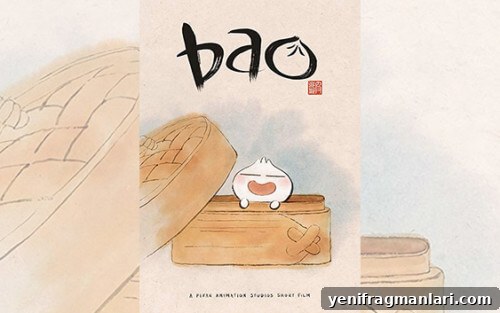
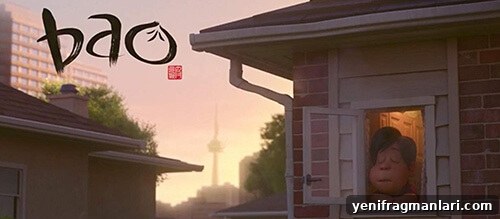
Bao (2018)
Director: Domee Shi
Screenwriter: Domee Shi
Starring: Tim Zhang
Bao is a 2018 animated short from Pixar Animation Studios directed and written by Domee Shi. Originally released as a short that preceded screenings of Incredibles 2, the film condenses a powerful emotional story into a compact runtime of roughly seven and a half minutes. It follows a Chinese-Canadian mother who, grappling with Empty Nest Syndrome, forms an unexpected bond with a small, sentient dumpling she lovingly cares for. Using this deceptively simple premise, Bao explores universal themes of parenthood, loss, cultural identity, and the complexities of maternal love.
The short is notable for its careful blending of culturally specific detail and broad emotional resonance. Domee Shi’s script treats the mother’s experience with both sensitivity and humor, allowing audiences from many backgrounds to connect with the core feelings at the center of the story. The dumpling acts as a visual and narrative device that externalizes the mother’s longing and fear of letting go, creating a story that feels intimate yet universal. The narrative structure and pacing let viewers move from light, whimsical moments to a deeply affecting emotional climax without feeling rushed.
Visually, Bao showcases the high standard of animation that Pixar is known for. The film’s textures, colors, and character animation bring a small apartment kitchen and its inhabitants vividly to life. Food animation, in particular, is a highlight: the steaming dumpling, glistening vegetables, and carefully rendered cooking processes are presented with an appetite-inducing realism and artistic flair. Small, natural gestures — a hand reaching for a bun, a mother’s furtive glance — are animated with clarity and nuance, contributing to the story’s emotional impact.
Movement and composition are used deliberately to enhance the story. The filmmakers employ a mix of wide and tight framing, dynamic camera moves, and timing that recalls classic silent-era visual storytelling, allowing the short to convey much without extensive dialogue. The result is a piece that relies on visual empathy: viewers are invited to feel what the characters feel through facial expressions, motion, and well-timed edits. Humor is threaded throughout, often arising from character interaction and physical comedy, which balances the more poignant beats.
The score, composed by Toby Chu, complements the visuals with a thoughtful, culturally informed musical approach. Traditional Chinese instruments are woven into a score that also uses the melodic and emotional contours familiar to fans of Pixar’s music style. The soundtrack subtly underscores the mother’s emotional arc, building toward the film’s reveal and magnifying the impact of the story’s quieter moments. Music and sound design work in concert to guide audience response without overwhelming the short’s restrained storytelling.
Bao has been widely praised for its emotional honesty and craft. Its Oscar nomination reflects the industry recognition of a short that manages to say a great deal in very little time. Beyond awards, the film is significant for its representation of an immigrant family and for how it foregrounds cultural specificity while addressing themes that are widely relatable: aging, parent-child dynamics, and the bittersweet process of letting go. Domee Shi’s voice as a filmmaker is evident in the short’s combination of gentle humor, detail-oriented visual storytelling, and heartfelt emotional stakes.
The effectiveness of Bao lies in its ability to invite empathy. By centering a story on a mother’s quiet interior life and translating that interiority into an imaginative visual metaphor, the film creates a bridge between different audiences and lived experiences. It’s a short that rewards repeated viewings, as its subtleties in animation, sound, and performance reveal additional emotional layers each time.
As an example of modern short-form animation, Bao stands out for its thematic clarity, technical excellence, and emotional depth. It demonstrates how animated shorts can tackle complex human subjects with both artistry and accessibility. For viewers interested in animation, storytelling, or culturally nuanced narratives, Bao is a compact but powerful illustration of what the medium can achieve.
22/24
More Short Film Reviews