
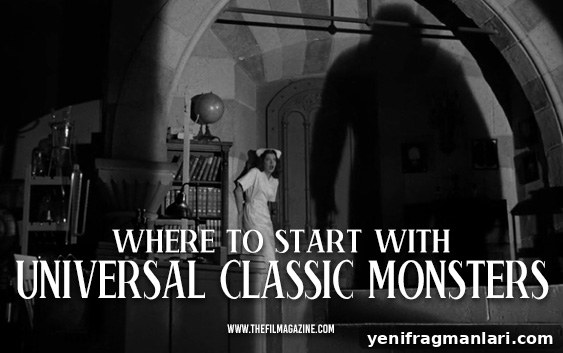
Following the success of lavish, macabre literary adaptations led by Lon Chaney in elaborate makeup—most notably The Hunchback of Notre Dame (1923) and The Phantom of the Opera (1925)—Universal Pictures launched a hugely profitable cycle of horror films when sound cinema arrived at the end of the 1920s. The studio refined a distinct blend of gothic atmosphere, sympathetic monsters, and pioneering makeup and effects that defined an era of American horror cinema.
In 1931, Universal released two landmark films: Dracula, starring Bela Lugosi, and Frankenstein, starring Boris Karloff. Both were immediate box-office hits and established the templates for the studio’s most enduring characters. Over the following two decades Universal brought to life some of the most memorable monsters in film history, a body of work that is today known collectively as the Universal Classic Monsters. These films are celebrated for iconic characters, Jack Pierce’s groundbreaking creature makeup, and John P. Fulton’s innovative visual and optical effects.
As the series proved commercially successful, Universal began crossing its creatures over into each other’s films. Decades before modern cinematic universes became a trend, Universal produced early crossover features such as Frankenstein Meets the Wolf Man (1943) and House of Frankenstein (1944). Across the whole saga there are 27 canonical films in the core cycle, along with several comedic spoofs featuring Abbott and Costello. The quality varies across the catalogue, but many entries remain essential for fans of classic horror.
Because most entries run between 60 and 80 minutes, exploring the Universal Classic Monsters is a compact way to sample distinct tones, recurring themes, and genre techniques. You can follow a single monster’s arc—there are seven Frankenstein films and multiple entries for The Mummy and The Invisible Man—or use a few representative titles to understand the cycle. The three films outlined below serve as an accessible primer on Universal’s monsters, showcasing makeup, effects, atmosphere, and the studio’s approach to sympathetic and monstrous characterization.
1. The Wolf Man (1941)
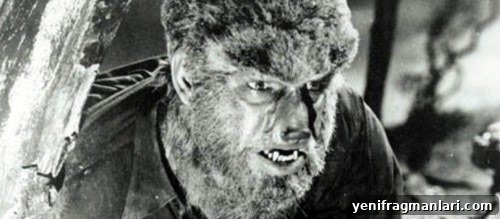
Lon Chaney Jr. stars as Laurence “Larry” Talbot, who returns to his ancestral estate in Wales after the sudden death of his brother. While in the nearby gypsy camp, Talbot is attacked and bitten by a wolf. In the nights that follow he undergoes terrifying transformations, torn between human conscience and unleashed bestial instincts.
Universal often portrayed its monsters as tragic, sympathetic figures rather than pure antagonists. The Wolf Man embodies the conflict between a civilized self and a darker, uncontrollable nature. This film introduced—or popularized—several werewolf tropes that have since become genre standards: the curse transmitted by a bite, involuntary transformations triggered by the full moon, and a supernatural vulnerability to silver. Though the werewolf makeup looks dated by modern standards, it allowed Chaney to convey pain and emotional nuance, and the script builds dread and psychological complexity with memorable effectiveness.
Recommended for you: Ryan Gosling to Star in a New Wolf Man Project (news item)
2. The Invisible Man (1933)
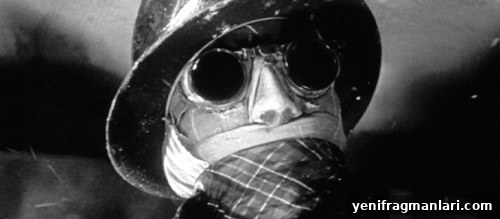
Claude Rains plays Dr. Jack Griffin, a scientist who becomes invisible as a consequence of his own experiments. Isolated in a small village while he searches for a cure, Griffin’s sanity frays and his scientific brilliance becomes twisted into a dangerous megalomania. Unlike Universal’s more pitiable monsters, the Invisible Man is increasingly malevolent and driven by ego and rage.
The photographic techniques used to depict invisibility remain impressive. Scenes were often shot twice—once with Rains clothed and acting, and once without—to composite the actor into empty space, an early form of what modern filmmaking achieves with chroma key technology. Rains’ rich, expressive voice and director James Whale’s sharp sense of dark humor contribute to a film that balances suspense, character, and visual ingenuity. While later reinterpretations would emphasize different thematic angles, this 1933 film remains a seminal take on H.G. Wells’ story and on science-fiction horror in early sound cinema.
3. House of Dracula (1945)
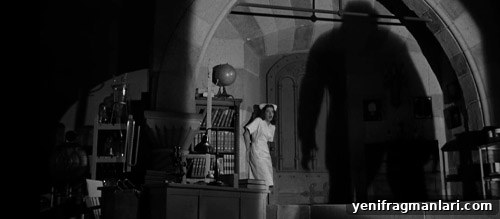
House of Dracula is one of Universal’s most ambitious multi-monster crossovers. In the film, Dr. Edelmann (Onslow Stevens) attempts to cure Count Dracula (John Carradine) through a series of blood transfusions. At the same time, the Wolf Man Larry Talbot (Lon Chaney Jr.) seeks a cure for his affliction and accidentally reawakens Frankenstein’s Monster (Glenn Strange). Dracula then pursues a cunning plan to secure his own survival and power.
This entry is notable for its creative choices and for taking bold, sometimes odd, directions with monster lore. The film’s depiction of vampirism as a form of blood-borne parasite—transmitted through transfusion—was an unusual concept for its time. Special effects vary in quality: some sequences, like Dracula’s bat form, reveal the era’s limitations, while other elements—such as gradual werewolf transformations—were accomplished with improved technique. House of Dracula also offers some fresh character details: a more vocal Dracula, a sympathetic yet eerie lab assistant, and the blending of gothic tragedy with pulpy spectacle.
Recommended for you: The Golden Age of Mexican Horror Cinema—Mendez, Baledon, Urueta (feature)
The Universal Classic Monsters series has endured because its images and figures became instantly recognizable cultural icons. From Frankenstein’s tragic creature to the melancholy Wolf Man and the chilling presence of Dracula, these films established visual and narrative conventions that continue to influence horror cinema. If these three titles intrigue you, the wider Universal catalogue offers many more discoveries—ranging from pathos-driven character studies to imaginative crossovers—that collectively represent one of the most important film cycles in horror history. For fans of classic make-up, practical effects, and gothic storytelling, the Universal monster cycle remains an essential and rewarding experience.