
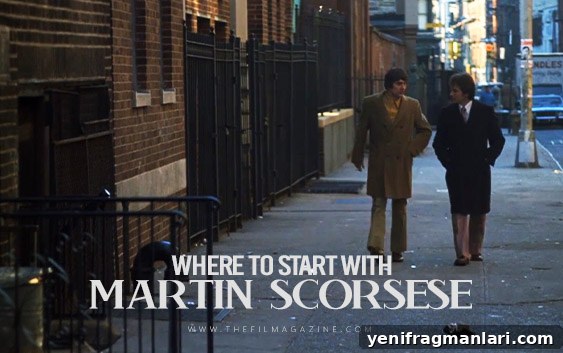
To decide where to begin with Martin Scorsese, it helps to understand who he is and what shaped his filmmaking. Born Martin Charles Scorsese in 1942, he grew up in New York City’s Little Italy and developed a deep love for movies early on. After studying film and education at New York University, Scorsese worked in many roles within the film industry, including as assistant director and supervising editor on Michael Wadleigh’s documentary Woodstock (1970). He later directed his own documentaries and features across multiple genres, but he became best known for his distinctive take on gangster cinema.
Scorsese emerged from the 1970s American auteur movement and is widely regarded as one of the most influential filmmakers of his generation. Unlike peers who focused on large-scale blockbusters, Scorsese pursued intensely personal stories rooted in film history, classical Hollywood technique, and his own cultural background. His movies frequently reference earlier films through style and direct homage, while drawing on his upbringing in an Italian-American community. The themes of faith, violence, ambition, and identity recur throughout his work, and his dynamic editing, bold cinematography, and powerful performances are integral to how his stories register with audiences.
This guide highlights three essential Scorsese films that serve as a strong introduction to his career. Each of these titles demonstrates different facets of his filmmaking: the raw, personal energy of his early work; the intimate realism of his documentary practice; and the mature, highly polished craft of his later masterpieces. Together they chart a path toward understanding his artistic development and the recurring concerns that make his body of work so compelling. This is Where to Start with Martin Scorsese.
1. Mean Streets (1973)
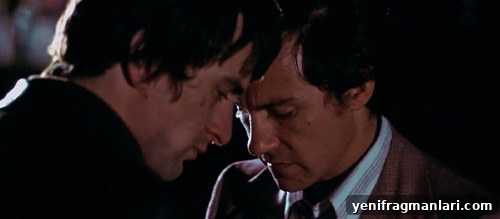
Mean Streets marked Scorsese’s breakthrough as a feature filmmaker and is widely regarded as the first film in which he really controlled the production. Co-written by Scorsese, the film draws on his experiences in Little Italy and introduces themes and stylistic choices that would define his later work. Harvey Keitel stars as Charlie, a small-time gangster who struggles to reconcile his religious upbringing with the demands and compromises of street life. Robert De Niro appears as Johnny Boy, an unpredictable companion whose behavior complicates Charlie’s efforts to stay afloat.
Mean Streets stands out for its raw energy, its use of contemporary music as part of the narrative texture, and its vivid, street-level depiction of a community caught between loyalty and lawlessness. The film’s visual palette—neon-lit bars, gritty interiors, and intimate close-ups—helped establish Scorsese’s visual signature. It also initiated his long creative partnership with Robert De Niro and signaled a new, personal approach to the gangster film that emphasized character and moral conflict over sweeping epic scale.
2. Italianamerican (1974)

Scorsese’s documentary work is extensive, and Italianamerican is one of his most intimate and revealing films. Simple in premise, the film places a camera in the family apartment and records Scorsese’s parents, Charles and Catherine, as they talk about their lives, immigration, and family traditions. The result is a warm, unscripted portrait of two immigrants’ children who built a life in America and who maintain a strong connection to food, faith, and family lore.
Italianamerican is valuable not just as a piece of autobiography but as a demonstration of Scorsese’s interest in authenticity and human detail. The film’s conversational tone and unpolished honesty allow the director’s personal history to come through organically. Small moments—an anecdote about work, a laugh, or a recipe mentioned at the end—reveal the cultural roots that inform many of his later fictional narratives. For viewers wanting to understand the emotional core behind Scorsese’s fascination with family, ritual, and generational tension, this short documentary is essential.
3. Goodfellas (1990)
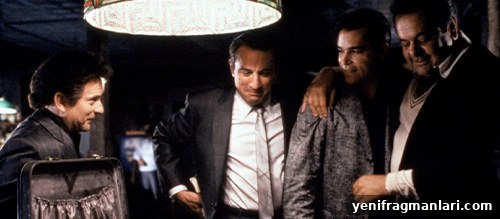
Goodfellas is often cited as Martin Scorsese’s crowning achievement—a film that synthesizes his documentary instincts, his love of genre, and his command of cinematic technique. Adapted from Nick Pileggi’s book Wiseguy and anchored by a standout performance from Ray Liotta as Henry Hill, the film chronicles the rise and fall of a man who becomes deeply enmeshed in organized crime. Robert De Niro and Joe Pesci deliver memorable performances in supporting roles, while Lorraine Bracco brings nuance and strength to the role of Henry’s wife.
What distinguishes Goodfellas is its kinetic storytelling and its sense of immediacy. Scorsese’s use of long tracking shots, rapid-fire editing, and a carefully curated soundtrack creates a world that feels both glamorous and morally corrosive. The film exposes the allure of criminal life—its rituals, rewards, and inevitable consequences—without glamorizing the violence and betrayal that lie at its heart. Visually and emotionally, Goodfellas is a masterclass in sustained tone and character-driven narrative.
These three films—Mean Streets, Italianamerican, and Goodfellas—offer complementary perspectives on Scorsese’s artistry. Mean Streets introduces his early tone and obsessions; Italianamerican shows his documentary sensitivity and personal origins; Goodfellas demonstrates his fully realized cinematic voice. From here, viewers who want to continue exploring should consider Taxi Driver, Raging Bull, and Casino to gain a broader sense of his range and recurring themes.