Belfast (2022)
Director: Kenneth Branagh
Screenwriter: Kenneth Branagh
Starring: Jude Hill, Lewis McAskie, Caitriona Balfe, Jamie Dornan, Judi Dench, Ciarán Hinds
Kenneth Branagh’s Belfast is a personal, black-and-white portrait of childhood during The Troubles. The film follows one family’s experience in Northern Ireland and filters the conflict through the perspective of a young boy, producing moments of tenderness and domestic detail that feel lived-in and sincere. Yet while the performances and certain intimate scenes shine, the film repeatedly struggles under choices that both soften and sensationalize its subject, leaving the overall message unclear.
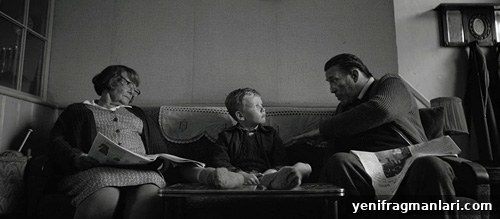
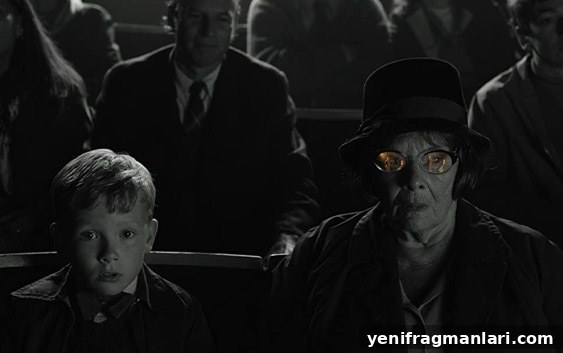
Branagh draws on recollections of his upbringing to craft a family drama that emphasizes small, human moments more than political argument. The black-and-white cinematography often works in the film’s favor, highlighting faces, textures, and gestures; Jude Hill, as the central child, benefits most. Hill’s expressive, observant presence anchors the film. His reactions and quiet curiosity help the audience move between scenes of ordinary family life and the sudden eruptions of violence outside his home. Judi Dench also stands out: her measured, richly textured performance lends gravitas and warmth, making her scenes particularly memorable. Caitriona Balfe and Ciarán Hinds contribute strong, emotionally resonant work, and Jamie Dornan adds another nuanced turn as a father torn between responsibility and fear.
Despite the strong cast, Branagh’s direction frequently pulls the film in conflicting directions. Action is staged with cinematic flair—slow motion, dramatic camera moves, and heightened editing—that often reads less like documentary realism and more like an attempt to dramatize trauma for emotional effect. These sequences, intended to convey danger and chaos, occasionally feel stylized to the point of distance. Instead of immersing the viewer in the lived experience of the community, those choices sometimes create a manufactured tension that clashes with the film’s quieter domestic moments.
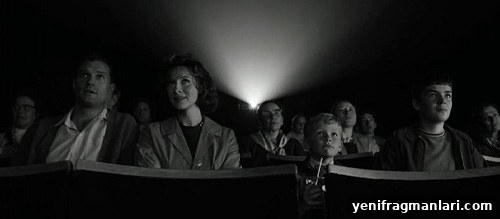
Another recurring choice is the use of musical interludes and bursts of levity in the midst of violent or tense scenes. Branagh appears to want to emphasize how families find joy amid hardship, and those lighter moments do offer relief and humanity. However, the tone shifts can be abrupt: songs and staged crowd moments sometimes feel better suited to a stage production than to a grounded family drama about a contentious historical period. When placed beside scenes of real fear and anger, these tonal shifts risk undermining the film’s seriousness rather than deepening its emotional complexity.
Where Belfast succeeds most consistently is in its quieter, character-focused scenes. Everyday arguments, small acts of kindness, and the private rituals of family life are filmed with care. Branagh captures the texture of household life—the small rebellions of youth, the burdens of adults working away from home, the protective instincts of grandparents—with sympathy and detail. These sequences reveal why the film can be compelling: they humanize a period too often reduced to headlines and statistics.
Yet the film’s approach to the conflict at its center feels cautious to the point of evasiveness. Branagh refrains from taking a clear stance on the political dimensions of The Troubles, and the film never probes the larger causes or consequences of the violence it depicts. The result is a narrative that prioritizes memory and feeling over analysis. For some viewers, this restraint will be a conscious choice to keep the story intimate and personal; for others, it will feel like a missed opportunity to engage more honestly with a complex historical reality.
Ultimately, Belfast is a mixed achievement: it offers moving performances and convincing domestic detail, but it is hampered by directorial choices that sometimes sentimentalize or spectacle-ize pain. The film’s strongest moments are those in which it lingers on human connection—the small, stubborn acts of love and care that persist amid uncertainty. However, when it shifts toward theatricality or broad sentiment, those moments undercut the film’s emotional authenticity.
Branagh’s film has been widely recognized and awarded, and its popularity reflects the powerful appeal of personal storytelling. Yet popularity and awards do not automatically equal lasting artistic impact. Belfast may be remembered for its standout performances and striking visuals, but its hesitation to take a firmer, more challenging stance on the political realities it portrays means it risks fading as a fully realized cinematic statement about that era. Still, for viewers drawn to intimate family stories and strong acting, the film offers more to admire than to dismiss.
10/24