
This article was written exclusively for The Film Magazine by The CineBlog’s Sophie Butcher.
Birds of Prey: And The Fantabulous Emancipation of One Harley Quinn (2020)
Director: Cathy Yan
Screenwriter: Christina Hodson
Starring: Margot Robbie, Jurnee Smollett-Bell, Rosie Perez, Mary Elizabeth Winstead, Ella Jay Basco, Ewan McGregor
From its first moments, Birds of Prey signals a clear change of tone for Gotham: this is a film that deliberately and unapologetically steps away from the male-dominated stories that have defined much of the DCEU to date. Margot Robbie, who returns as Harley Quinn, was instrumental in making that shift happen, and the film centers on her character’s attempt to reclaim herself after the end of a violent relationship with the Joker. What follows is a brash, kinetic riff on revenge, friendship and reinvention that frequently lands with sharp wit and genuine emotion.
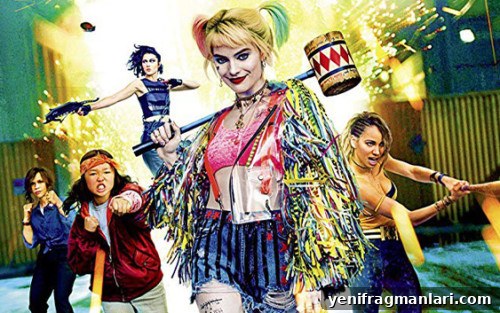
The film picks up after the events of David Ayer’s Suicide Squad, with Harley newly single and suddenly vulnerable. Word spreads quickly that she is no longer protected by ‘Mr J’, and former enemies converge on Gotham. Harley is pulled into a chaotic quest involving a stolen diamond, a young pickpocket named Cassandra Cain, and an unlikely alliance with three women—Dinah Lance (Black Canary), Renee Montoya, and Huntress—all of whom are navigating their own battles and seeking freedom from the men who have defined them.
From a technical standpoint the movie knows how to entertain. Its first twenty minutes make one thing clear: this is going to be a raucous, visually inventive ride. Action sequences are immediate and memorable—an energetic jailbreak beneath spraying sprinklers, a tightly choreographed scuffle in an evidence room, and even a small, absurd scene involving an egg sandwich that manages to become unexpectedly iconic. The editing and stunt work emphasize Harley’s acrobatic, improvisational fighting style and the film’s physical humor, and Robbie appears to embrace the demanding physicality of the role.
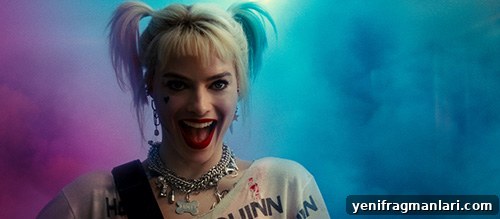
Margot Robbie owns Harley Quinn. She brings the character’s manic energy, tragic vulnerability and razor-sharp humor into a single performance. The makeup and costume design are striking, but it’s Robbie’s commitment to the emotional core—those moments when Harley’s defenses falter—that make the performance resonate. When the mask slips and the trauma underneath briefly surfaces, the audience is given the key to why Harley behaves the way she does: she is funny and dangerous, yes, but she is also deeply wounded.
That magnetism, though, has a downside. Robbie dominates every scene she’s in so completely that the film occasionally suffers when it moves away from her. Jurnee Smollett-Bell as Dinah brings soulful strength and a powerful vocal presence, and Rosie Perez’s Renee Montoya is layered with frustration and determination as a cop who frequently goes unrecognized by her male colleagues. Mary Elizabeth Winstead’s Huntress, however, is used sparingly; when she appears she is effective, combining lethal capability with awkward, often darkly comic social beats, but the script does not always give her room to breathe. Ewan McGregor’s Black Mask reveals flashes of menace and gleeful perversity, yet the villain largely remains a collection of henchmen and set pieces rather than a fully formed adversary.
The film’s decision to make the threat more diffuse—men as a repeated, structural problem rather than a single towering nemesis—works thematically. The women’s conflicts are as much about coercion, control and the societal roles imposed on them as they are about physical danger. Renee is undercut at work, Dinah is forced to perform for a controlling partner, Huntress seeks revenge for personal trauma, and Harley is constantly reminded of how dependent others expect her to be. The film translates these patterns into both comedic moments and uncomfortable power dynamics that add emotional weight to the otherwise electrified surface.
For all its strengths, the movie occasionally struggles with pacing and chronology. Cathy Yan’s direction is vivid and stylistically assured—flashes of surrealism, such as Harley imagining herself as a Marilyn Monroe–style performer singing “Diamonds Are a Girl’s Best Friend,” hint at even bolder possibilities—but at times those detours feel abbreviated. The nonlinear approach to character introductions, while distinctive, can also interrupt the momentum the film builds in its action scenes. Simpler structural choices might have preserved some of the dreamlike energy without sacrificing narrative clarity.
Ultimately, Birds of Prey succeeds as a sharply entertaining, adult-leaning addition to the DCEU. It is funny, violent, and surprisingly tender when it needs to be. The movie’s strengths lie in its performances—especially Robbie’s—its kinetic action, and its willingness to foreground women’s stories without diluting the chaos that makes Harley Quinn compelling. It’s the kind of film that leaves you smiling as the credits roll and eager to see Harley on screen again, free of the toxic relationship that once defined her.
19/24