
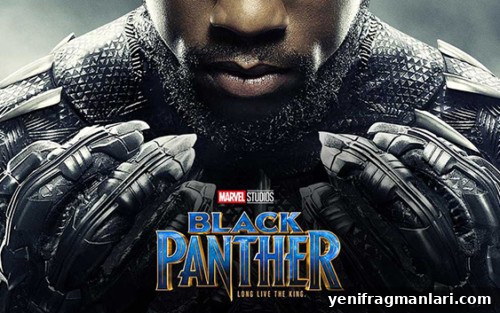
This article was originally published on SSP Thinks Film by Sam Sewell-Peterson.
Black Panther (2018)
Director: Ryan Coogler
Screenwriters: Ryan Coogler, Joe Robert Cole
Starring: Chadwick Boseman, Michael B. Jordan, Lupita Nyong’o, Danai Gurira, Martin Freeman, Daniel Kaluuya, Letitia Wright, Winston Duke, Sterling K. Brown, Angela Bassett, Forest Whitaker, Andy Serkis
Watching Black Panther is a thrilling experience — and considering the film’s themes and representation, it must be especially powerful for Black audiences. Ryan Coogler’s vision expands the Marvel universe while centering a story rooted in cultural identity, political questions, and high-concept Afrofuturism.
Black Panther follows newly crowned King T’Challa (Chadwick Boseman) as he returns to Wakanda, a technologically advanced and long-hidden African nation, to take his place on the throne. As monarch and the ceremonial protector known as the Black Panther, he must balance tradition, leadership, and the future direction of his isolationist country. That balance is tested when Erik Killmonger (Michael B. Jordan), a vengeful and ideologically driven challenger, arrives with his own claims against Wakanda and T’Challa’s rule.
One of the film’s strengths is its emphasis on collaboration rather than solitary heroism. T’Challa is a king who relies on a circle of trusted allies — family members, warriors, and advisors — who are integral to his rule and to the story. This ensemble approach reflects both the responsibilities of leadership and the film’s broader theme that power is sustained through relationships, not just individual heroics.
Letitia Wright’s Shuri stands out as a scene-stealing technologist, her quick wit and inventive genius providing much of the film’s inventive gadgetry and comic relief. Danai Gurira’s Okoye, the fierce leader of Wakanda’s Dora Milaje, brings formidable strength and discipline; her presence underlines the film’s celebration of powerful women who are both protectors and policymakers. These characters are more than supporting roles — they expand the world and offer compelling reasons to return to Wakanda in future stories.
Chadwick Boseman anchors the film with a quiet, measured presence, even if his accent shifts at times. Michael B. Jordan’s Killmonger, however, is the emotional and ideological engine of the movie. His motivations and backstory give the film urgency and moral complexity, challenging T’Challa’s worldview and prompting questions about justice, history, and global responsibility. Killmonger’s arc resonates as one of the most nuanced antagonists the Marvel franchise has produced.
Rather than leaning solely on typical superhero formulas, Black Panther blends elements of spy thriller, political drama, and science fiction. The film’s technology feels fresh and imaginative: tribal cloaks that transform into energy shields, holograms that disperse like sand, and remote-controlled vehicles made thrilling through bold staging. Coogler’s direction gives these elements a tactile, lived-in quality that elevates the spectacle.
Action sequences in Black Panther bring renewed energy to the Marvel catalogue. The Busan sequence — beginning with a long-take casino fight and culminating in a pulse-pounding car chase — is both inventive and exhilarating. Later, a large-scale battle on the plains stages a clash that feels epic in scope, with choreography and visual design that recall large-scale fantasy films while remaining grounded in the film’s own cultural and emotional stakes.
Afrofuturism is central to the movie’s aesthetic: it imagines a thriving, uncolonized African nation as a cultural and technological powerhouse. Coogler indulges in both sweeping visuals and intimate costume detail, depicting distinct tribal identities through dress, ritual, and ceremony. The result is a vibrant, celebratory depiction of African culture filtered through speculative innovation, giving Wakanda an unmistakable cinematic identity.
In many ways Black Panther represents a bold step for Marvel Studios. It is darker and more violent than some of the studio’s previous entries, yet it remains lively and accessible, balancing spectacle with thought-provoking themes. The film marks an important moment in superhero cinema, building on earlier entries in Black-led genre films and demonstrating how blockbuster entertainment can engage with contemporary social issues without sacrificing excitement.
Ultimately, Black Panther is both an entertaining blockbuster and a culturally significant film. It is imaginative, emotionally charged, and visually striking — a film that invites repeat viewings and thoughtful conversation about leadership, identity, and responsibility. Coogler’s confident direction and the cast’s committed performances suggest a bright future for stories set in Wakanda.
20/24
By Sam Sewell-Peterson
Recommended for you: Every MCU Marvel Cinematic Universe Movie Ranked
You can support Sam at the following links:
Website – SSP Thinks Film
Twitter – @SSPThinksFilm