
This article was originally published on SSP Thinks Film by Sam Sewell-Peterson.
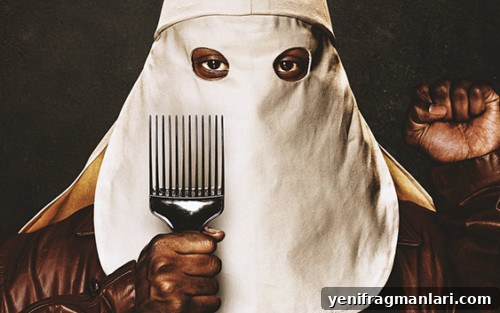
BlackKklansman (2018)
Director: Spike Lee
Screenwriters: Spike Lee, David Rabinowitz, Kevin Willmott, Charlie Wachtel
Starring: John David Washington, Adam Driver, Topher Grace, Isiah Whitlock Jr., Robert John Burke, Brian Tarantina, Michael Buscemi, Laura Harrier, Alec Baldwin
Spike Lee’s BlackKklansman closes with one of the most powerful endings of 2018, a final stretch that lingers long after the credits roll. The film exemplifies Lee’s talent for fusing emotional, subjective storytelling with documentary textures, and it takes the viewer on a gripping, often unsettling journey that feels both intimate and politically urgent.
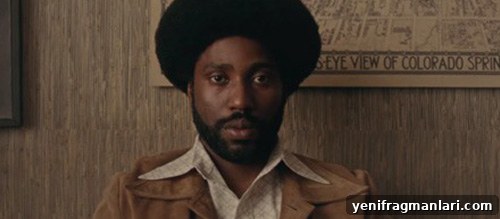
The story follows Ron Stallworth (John David Washington), who becomes the first African American detective in the Colorado Springs Police Department and volunteers to infiltrate the local Ku Klux Klan. Using phone calls to establish contact, he recruits his Jewish white colleague Flip Zimmerman (Adam Driver) to pose as his physical counterpart at in-person meetings. As Black student protests against police violence and the Vietnam War intensify, Ron and Flip uncover the Klan’s plans, which swell in significance when Grand Wizard David Duke (Topher Grace) prepares to visit the town.
Spike Lee can be a divisive figure—his outspokenness and moral certainty sometimes alienate audiences—but BlackKklansman is a film that should command renewed attention and respect. It’s direct and unambiguous in its critique, yet that bluntness serves a purpose: the film insists on clarity. Lee and his co-writers use the narrative to confront contemporary currents of racial and political extremism without disguising their target. Early sequences that mimic television propaganda and speeches that sound too contemporary to be comfortably historical drive the point home: the attitudes and rhetoric shown are not relics of the past.
The screenplay does not dwell on the psychology of every Klan member; Lee is more interested in their actions and the social structures that allow hate to persist. In the film, racism is depicted as a product of fear and ignorance—an attempt by the privileged to protect perceived advantages. Lee trusts his audience to grasp that without resorting to heavy-handed exposition, and the film’s sharper moments expose the absurdity and cruelty at the heart of white supremacist ideology.
Lee also examines American identity and the pressure to conform to an imagined “White America.” He addresses the compromises and survival strategies some Black Americans adopted, including passing for white where possible, and the complicated, precarious space occupied by those who navigated both worlds. In Ron and Flip, the film dramatizes different kinds of vulnerability: Ron’s professional ambitions and limitations as a Black man working within a predominantly white police department, and Flip’s immediate exposure to danger as the man physically present among Klan members. Both characters contend with questions of identity, belonging, and personal risk.
The performances are central to the film’s impact. John David Washington brings a confident, soulful presence to Ron, while Adam Driver balances humor and unease as Flip. Their partnership is the emotional anchor of the story, and it’s easy to imagine awards consideration for both leads. Topher Grace’s portrayal of David Duke captures an unsettling blend of charisma and menace, reminding viewers that extremism often cloaks itself in performance and spectacle.
Despite its heavy subject matter, the film allows moments of levity and human warmth—comic relief at the expense of foolish authority figures, and an unexpectedly charming sequence where Adam Driver learns to sing in the style of James Brown. Those lighter beats prevent the film from becoming relentless while strengthening the emotional contrasts that make the darker material hit harder.
Anger fuels much of the film’s energy, and Spike Lee’s pointed outrage is more compelling here than any sermonizing could be. He refuses to offer easy solutions, instead showing how hatred is passed down, performed, and weaponized. The film’s final montage is a sobering reminder that bigotry and violence are not confined to a single era; they have modern echoes that demand attention and action.
Ultimately, BlackKklansman is a striking, stylish, and timely work. It combines a true-story core with cinematic invention to probe issues of race, identity, and political manipulation. Lee’s direction—bold, mischievous, and unapologetic—ensures the film remains clear-eyed about the stakes. It’s the kind of movie that challenges viewers and stays with them, urging continued reflection long after the film ends.
19/24
By Sam Sewell-Peterson
You can support Sam at the following links:
Website – SSP Thinks Film
Twitter – @SSPThinksFilm