
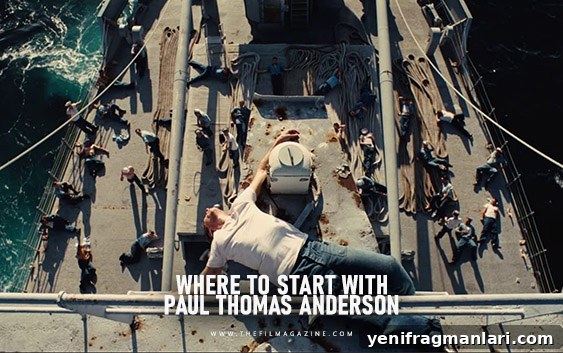
Paul Thomas Anderson is widely regarded as one of the finest filmmakers of his generation. His films reflect a cinephile’s sensibility, built around long takes, carefully detailed production design, and evocative scores. Those elements help transport viewers across eras and environments, but what elevates Anderson is his ability to probe fundamental questions about human existence: Who are we? Is there something greater than ourselves? Can we change? His movies examine what it means to be human and how people behave in their darkest moments. They balance seriousness with entertainment, suspense, and philosophical depth, prioritizing character and exploring moral dualities without forcing a single “right” answer.
Anderson is also known for building repeated collaborations with actors who bring extraordinary performances to his films. Joaquin Phoenix, Daniel Day-Lewis, and the late Philip Seymour Hoffman have delivered some of Anderson’s most acclaimed work. He has also coaxed remarkable dramatic turns from performers not traditionally associated with serious roles—actors like Mark Wahlberg, Adam Sandler, and John C. Reilly have all surprised audiences under his direction. Anderson’s knack for casting and for guiding actors to their best work is one of his greatest strengths in an industry often driven by star power.
With the exception of his debut, Hard Eight, and the offbeat love story Punch-Drunk Love, nearly every Anderson film has attracted awards attention. He has earned Best Director honors at major festivals—Cannes for Punch-Drunk Love, Berlin for There Will Be Blood, and Venice for The Master. Magnolia won the Golden Bear for Best Film at the Berlin International Film Festival. That level of critical and industry recognition places Anderson among a small group of filmmakers with consistent artistic impact.
For readers unsure where to begin with his filmography, here are three essential starting points that showcase the range and depth of Paul Thomas Anderson’s work.
1. Boogie Nights (1997)
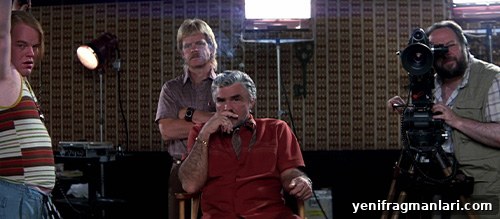
Boogie Nights was Anderson’s breakthrough, immersing viewers in the adult film industry of 1970s Los Angeles. Mark Wahlberg leads an ensemble that includes Julianne Moore, Burt Reynolds, Heather Graham, John C. Reilly, Don Cheadle, Philip Seymour Hoffman, and William H. Macy. Burt Reynolds plays Jack Horner, a director who sincerely believes he is making meaningful work, while Wahlberg’s Dirk Diggler becomes a rising star navigating fame, excess, and decline.
On one level, Boogie Nights is a story about the American dream—the rush of sudden success in entertainment and the personal costs that often follow. It mixes comedy and tragedy with a lively pace and richly drawn characters. What sets the film apart is Anderson’s attention to the craft of filmmaking itself: cameras, film canisters, Polaroid flashes, and the arrival of videotape are woven into the narrative, grounding the story in a specific cinematic moment. In doing so, Anderson humanizes characters who are often objectified and celebrates cinema’s role in our cultural lives. Boogie Nights is a strong example of his early style and his ability to portray complex human experiences without passing judgment.
2. There Will Be Blood (2007)
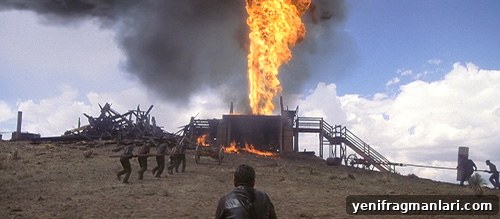
There Will Be Blood is often considered Anderson’s masterpiece. The film follows oilman Daniel Plainview and his intense rivalry with preacher Eli Sunday. Daniel Day-Lewis delivers one of his most iconic performances as Plainview: menacing, complicated, and utterly convincing. Paul Dano matches him with an explosive portrayal of Eli that creates combustible confrontations whenever they share the screen. The film’s tactile cinematic language—hot flames, slick oil, and a weathered physicality—creates a visceral viewing experience.
While the story is intimate, Anderson’s direction gives it an epic scope reminiscent of classic filmmakers like David Lean and John Ford. The camera treats the western landscape and rising industrial structures with reverence, turning oil derricks into looming monuments and associating their flames with moral and spiritual danger. The film’s deliberate pacing and meticulous composition serve the story’s harsh emotional journey. Realism in production design and performance works in harmony with impressionistic sound and editing choices, creating a film that is both authentic and deeply expressive. There are few weak points in Anderson’s career, and There Will Be Blood stands as a towering achievement of 21st-century cinema.
3. The Master (2012)
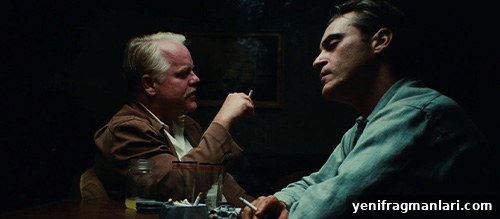
The Master revolves around the charged relationship between Freddie Quell, an alcoholic and damaged World War II veteran played by Joaquin Phoenix, and Lancaster Dodd, a charismatic leader of a movement called The Cause, played by Philip Seymour Hoffman. Their chemistry—fraught, magnetic, and unpredictable—drives the film. Freddie’s volatility and Dodd’s ego and mystique push the pair into a push-and-pull dynamic that is as intimate as it is unsettling.
The Master resists easy interpretation. It’s provocative and open-ended, encouraging viewers to bring their own reflections to the experience. Critics have debated themes of postwar America, religion, and cult dynamics; some have pointed to possible echoes of Scientology, though the film avoids explicit claims. Anderson’s film functions like a Rorschach test, asking whether people can transcend their base instincts and how power, influence, and vulnerability intersect. If the central relationship captivates you, the film is profoundly rewarding; if it does not, the deliberate pace can feel demanding. For cinephiles, The Master remains a vital and fascinating work in Anderson’s catalogue.
Recommended: A complete ranking of Paul Thomas Anderson’s films is worth exploring for further context and viewing suggestions.
Paul Thomas Anderson has released nine feature films to date, and any of them could be a valid entry point depending on what you seek—character-driven drama, formal innovation, or intense performances. Phantom Thread and Punch-Drunk Love, among others, also offer rewarding experiences. Whatever your starting place, Anderson’s films reward careful attention and repeated viewings, revealing new layers each time.