
This article was written exclusively for The Film Magazine by Cole Clark.
Cherry (2021)
Directors: Anthony Russo, Joe Russo
Screenwriters: Angela Russo-Otstet, Jessica Goldberg, Nico Walker
Starring: Tom Holland, Ciara Bravo, Jack Reynor, Forrest Goodluck, Michael Rispoli, Jeff Wahlberg
Prologue – A New Cinema
Cherry presents itself as a contemporary American drama filtered through blockbuster sensibilities. It promises an unflinching look at war, addiction, and recovery, but the film often substitutes texture and technique for meaningful insight. Tom Holland is positioned as the center of this awards-aimed narrative, while directors Anthony and Joe Russo lean heavily on style—fast cuts, shifting aspect ratios, and direct-to-camera addresses—yet the film rarely arrives at something that feels truly lived-in or original.
Part One – Two Questions
The movie prompts two central questions: is Tom Holland a strong fit for this material, and have the Russo brothers effectively translated their ambitions into a compelling drama?
The Russos, who built a reputation in television and later with blockbuster franchises, seem intent on proving dramatic range here. Their visual choices—handheld cinematography, abrupt edits, and self-conscious flourishes—aim to create urgency but often highlight a lack of subtlety. Rather than quietly earning emotional impact, Cherry reaches for demonstrative gestures that call attention to themselves: title cards, monologues, and exaggerated character introductions. While such techniques can underscore a story when used sparingly, here they feel like a set of production tricks applied to mask an underdeveloped core.
As for Holland, his performance is the film’s most debated element. He delivers effort and commitment, but his boyish screen persona and affable energy clash with the bleak, damaged character he is meant to inhabit. The film charts a dramatic physical and emotional deterioration—haircuts, scars, and gaunt features intended to signal descent—but Holland’s essentially wholesome presence rarely convinces as the anguished veteran at the story’s center. It’s not that he lacks potential; the problem is a mismatch between casting, script, and the tonal demands of the material.
Part Two – The War of Drugs
At its core, Cherry is a tale of a soldier returning from war who slips into addiction and crime. The film devotes substantial time to boot camp and battlefield sequences, drawing heavily from war-film conventions. Those sequences aim for sensory intensity, evoking training-room bravado and battlefield chaos, but stop short of sustained moral inquiry. When the film gestures at institutional emptiness or the societal forces that funnel veterans into substance dependence, it treats these themes as backdrop rather than subject. Scenes of grief and loss—like the death of a comrade—register emotionally in isolated moments, but the film rarely uses them to build a broader argument about war, policy, or the failures veterans face.
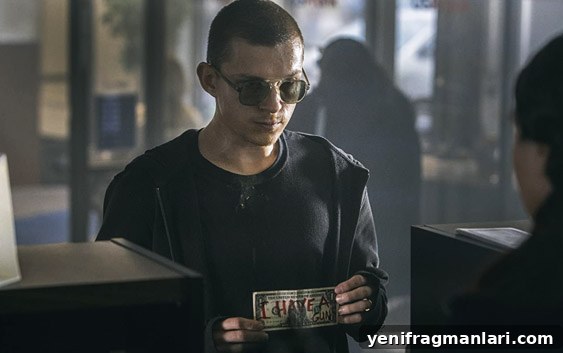
The transition from combat to addiction is presented through a succession of visceral moments: the rush of drugs, the mounting debts, the desperate robberies. The robberies themselves are staged with a satirical edge—fake bank names and cartoonish signage—but that irony undercuts, rather than clarifies, the film’s moral stakes. Rather than interrogate why a veteran might be pushed toward crime, the movie often treats criminal acts as plot mechanics to escalate the protagonist’s downward spiral.
Epilogue – How That Played Out
What Cherry ultimately offers is a collection of intense scenes and deliberate directorial flourishes intended to keep viewers constantly stimulated. The cinematography, editing choices, and a committed lead performance create moments of power, yet the film’s appetite for spectacle interferes with sustained character study or persuasive social critique. When the movie hints at systemic questions—about war, veteran care, or addiction recovery—it rarely follows through, preferring to move on to the next formal device or episode of personal collapse.
The result is a film that can feel both overworked and undernourished: polished in its surface techniques but tentative in its convictions. Viewers who appreciate dynamic filmmaking and strong visual storytelling may find parts of Cherry rewarding. Those seeking a deeper meditation on the consequences of war, addiction, and how society treats its veterans will likely be left wanting more.
4/24
Written by Cole Clark
You can support Cole Clark on Twitter @colelclark