
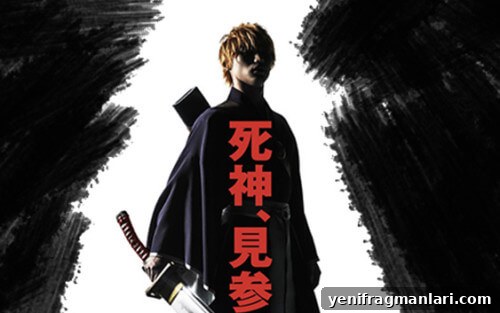
Bleach (2018)
Director: Shinsuke Sato
Screenwriters: Shinsuke Sato, Daisuke Habara, Ardwright Chamberlain
Starring: Sôta Fukushi, Hana Sugisaki, Ryô Yoshizawa, Miyavi, Taichi Saotome, Erina Mano, Yû Koyanagi, Seiichi Tanabe
Netflix has recognized that live-action adaptations of anime attract large audiences—often viewers who enjoy judging the results as much as appreciating any successes. The live-action Bleach is another example in this expanding trend. Based on Tite Kubo’s long-running manga and anime phenomenon, this film aims to condense a sprawling universe into a compact, accessible cinematic experience. For anyone curious about the adaptation—fans and newcomers alike—this review explores whether the film stands on its own and how it handles the source material.
Bleach is a massive franchise. The manga ran from 2001 to 2016 and totals dozens of volumes; the anime aired for many years with hundreds of episodes and multiple feature films. That scope presents a significant challenge for filmmakers: how to introduce a complex world, its rules, and a large cast while keeping the story coherent and engaging for viewers who haven’t invested in the original series. This live-action version focuses on the early, defining arc to give audiences a clear entry point.
The film follows Ichigo Kurosaki, a high-school student who can see spirits. His ordinary life is disrupted when he encounters Rukia Kuchiki, a Soul Reaper charged with defending the living world from Hollow creatures—malevolent, soul-eating entities. During a confrontation with a powerful Hollow, Rukia cannot complete her duties and transfers her Soul Reaper powers to Ichigo, who becomes a substitute Soul Reaper. From there, the story introduces a range of allies and enemies, establishing the movie’s emotional core and action beats.
Approached with no prior knowledge of the anime, I found the film surprisingly effective. The filmmakers do a commendable job of simplifying a complex premise without dumbing it down. Exposition is woven into character interactions and action rather than dumped in heavy-handed blocks. As a result, the worldbuilding feels organic and accessible: you get enough context to understand stakes, relationships, and the supernatural rules that govern the story.
The cast delivers performances that balance anime-style exaggeration with grounded emotional moments. Some scenes lean into campy, larger-than-life expressions characteristic of the original medium, while others are quiet and sincere. That mix works: it honors the source’s tone without becoming self-parody. Key moments—particularly a shockingly well-done death scene—land with real impact. The leads are believable and engaging, making it easy to care about their journey.
Visually, the film uses CGI sparingly and effectively. The Hollows retain a genuinely unsettling presence, their masks and designs translating well from page to screen. Action choreography is energetic and inventive: fights are clearly staged and entertaining, even if they occasionally feel stylized for spectacle. The costume and hair styling are notable successes—the orange of Ichigo’s hair is handled in a way that feels natural in live action rather than cartoonish, and overall production design respects the original aesthetics without feeling like a mere copy.
Small details demonstrate a careful eye for adaptation. Little mannerisms—from how characters carry their bags to the specific beats in training or combat—translate smoothly into a cinematic language, and these touches will please fans who appreciate faithful, thoughtful references. The score, while not lifted from the anime, complements the film well and enhances emotional and action sequences without overwhelming them.
Not every choice is perfect. Ichigo’s near-invulnerability becomes a recurring device that, after multiple dramatic recoveries, grows a touch tiresome. The comic-relief sidekick sometimes overacts and repeats lines that underline the hero’s supposed immortality, which lessens tension in a few climactic moments. Still, these are relatively minor flaws in an otherwise entertaining adaptation.
One controversy surrounding the release involved English dubbing and original voice talent. Reports that some voice actors associated with the anime were not notified or invited to reprise roles stirred disappointment among some fans. While such behind-the-scenes issues don’t change the film itself, they can influence fan reception and the broader conversation around adaptations.
Going into this film with no background knowledge yielded a fresh and enjoyable experience. The movie balances respect for the source material with the needs of a newcomer-friendly narrative, delivering solid performances, effective visuals, and a clear sense of momentum. It’s not flawless, but it’s an unexpectedly satisfying live-action adaptation that earns its place among recent attempts to bring anime to the screen.
20/24