
Bottle Rocket (1996) — Wes Anderson (Review)
Wes Anderson’s filmmaking has become a distinct presence in contemporary cinema: a recognizable color palette, meticulous composition, and a tonal blend of deadpan humor and sincere emotion. Over the past two decades his style has inspired imitators and devoted followers alike. Three of his later films — The Grand Budapest Hotel, Moonrise Kingdom and The Royal Tenenbaums — were included in the BBC’s 2016 poll of the Top 100 Films of the 21st Century, solidifying his status in modern film culture. Before those landmark works, Anderson made his feature debut with Bottle Rocket in 1996, expanding a short film into his first full-length picture.
Debut collaboration and cast
Bottle Rocket marks the first feature collaboration between Wes Anderson and the Wilson brothers, Owen and Luke, both making their film debuts. It also introduced the long-running writing partnership between Anderson and Owen Wilson, which continued on films such as Rushmore and The Royal Tenenbaums. The cast includes Robert Musgrave in a key supporting role, with memorable turns from Lumi Cavazos and the veteran actor James Caan. This early ensemble already hints at the chemistry and comic timing that Anderson would refine in later projects.
Story and themes
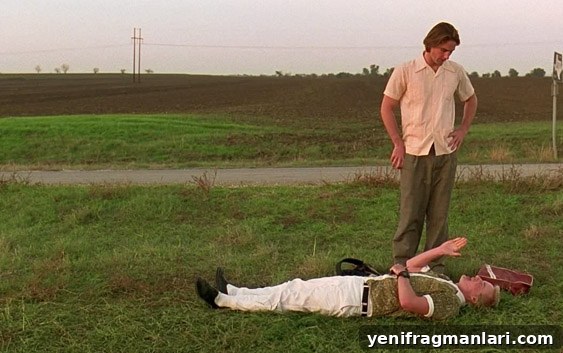
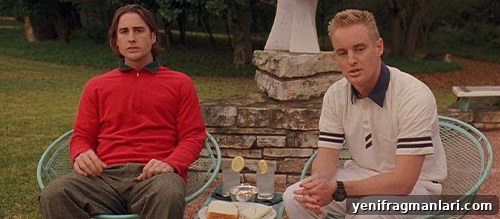
At its core, Bottle Rocket is a small-scale heist film about two lifelong friends: the scheming, optimistic Dignan (Owen Wilson) and the more hesitant, thoughtful Anthony (Luke Wilson). They scrape by attempting a series of poorly conceived robberies while dreaming of a bigger score. The film centers on their friendship — its loyalty, tensions and occasional missteps — and on Anthony’s evolving priorities when he develops a soft, awkward romance with Inez (Lumi Cavazos), a hotel cleaner whose limited shared language with Anthony becomes a source of gentle comedy and sincere connection.
Unlike many of Anderson’s later, more stylized films, Bottle Rocket stays closer to conventional genre structure. It functions as a heist movie in the traditional sense: plans, preparations, bungled executions and the human consequences that follow. That structure allows Anderson to combine the rhythms of a caper with his emerging tastes for precise composition, ironic warmth and dry, offbeat dialogue.
Performance, tone and craft
The Wilson brothers’ chemistry is a highlight: Owen’s buoyant, insistent Dignan contrasts sharply with Luke’s restrained, more morally reflective Anthony, and that interplay gives the film its emotional center. Robert Musgrave contributes steady support, while James Caan brings an experienced presence that grounds several scenes. Lumi Cavazos provides a quietly effective performance that helps shift the movie from broad comic set pieces to more intimate character moments.
Bottle Rocket already displays elements of Anderson’s signature — deliberate framing, deadpan delivery and carefully chosen music cues. The soundtrack features well-timed needle drops: songs by The Proclaimers and The Rolling Stones are used to underscore mood and to punctuate key moments. Still, the film is less overtly idiosyncratic than Anderson’s later work, which makes Bottle Rocket an accessible entry point into his filmmaking evolution.
Reception and significance
Upon its release Bottle Rocket earned warm notices and has remained a valued part of Anderson’s body of work. Martin Scorsese counted it among his favorite films of the 1990s, an endorsement that highlights the film’s early promise. Contemporary critics also recognized the debut’s strengths; for example, a four-star review in Empire praised it as “a smart little first feature,” noting the film’s fresh take on the bungled heist genre by foregrounding long-standing relationships and simmering resentments.
Although Bottle Rocket is not as stylized or as polished as Anderson’s later films, it is crucial for understanding his creative development. The movie reveals the foundational elements — collaborative partnerships, tonal balance between comedy and pathos, and an affection for eccentric characters — that Anderson would expand in subsequent projects. Viewers who approach Bottle Rocket expecting the full panoply of Anderson’s later mannerisms may find a leaner, more genre-focused picture, but those interested in the director’s origins and the first sparks of his signature voice will find an imaginative and rewarding debut.
19/24