
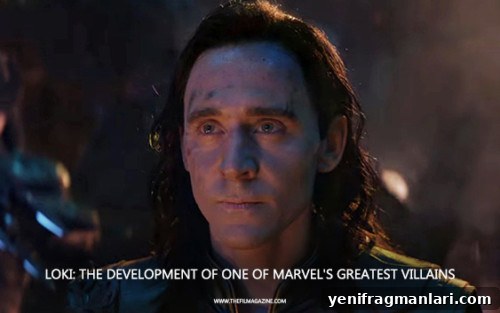
With the long-running original Marvel movie saga culminating in Avengers: Endgame, now is an ideal moment to reassess and celebrate one of the franchise’s most memorable and influential antagonists: Loki.
Portrayed by Tom Hiddleston since Thor (2011), Loki—Thor’s adopted brother—has been central to Thor’s movies and a recurring force throughout the Marvel Cinematic Universe. He first emerged as the primary antagonist in the MCU’s debut team-up film, The Avengers (2012), and has remained one of the most recognisable characters in superhero cinema. This article traces Loki’s evolution: from a boy searching for belonging to a resentful prince, to a cunning villain, and finally to a figure on the brink of redemption.
Warning: this article contains spoilers for Thor, The Avengers, Thor: The Dark World, Thor: Ragnarok and Avengers: Infinity War.
Thor (2011) – Loki’s Debut
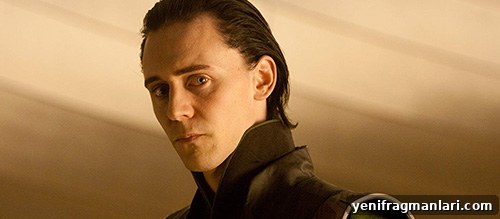
We first meet Loki as a child during a flashback in Thor. The two brothers play together and listen to Odin explain duty and kingship. Even early on, Thor’s destiny as heir is clear, while young Loki appears quieter and more reserved. These early differences plant the seeds of jealousy and insecurity that will later define his behaviour.
In the film’s present, Loki engineers the Frost Giants’ breakout during Thor’s coronation—an act that reveals his ambition and bitterness. At first he appears to love Thor, but the discovery that he is actually a Frost Giant adopted by Odin turns Loki into an outcast. His sense of betrayal and loss of identity fuels his hunger for power and vengeance. Hiddleston’s performance captures this inner turmoil: a man who feels used and disposable by the family that raised him.
Loki’s confrontation with Odin is the emotional fulcrum of the film. Accusing Odin of treating him as a tool, Loki unleashes the rage that drives his subsequent actions. After Odin’s conditional rejection, Loki chooses a path of self-destruction and ambition—robbing his brother of both throne and purpose. By the film’s close he casts himself into space, ending Thor’s immediate quest but setting up a recurring theme: duty and family come at a cost.
The Avengers (2012) – Evolution Into A Complete Villain
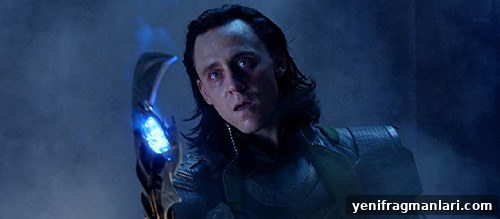
The Avengers opens with Loki as its central antagonist: a fallen prince consumed by a new mission. His pact with the Chitauri shows he doesn’t fully control events—he’s coerced, threatened, and desperate to prove himself. That vulnerability tempers his villainy, making him both frightening and oddly sympathetic.
Most of Loki’s emotional weight here comes from his interactions with Thor. Even after violence and betrayal, Thor pleads for his brother’s return, offering a sliver of hope for redemption. Loki, however, remains trapped between proving himself as Odin’s son and seizing power for belonging he never truly had. His chilling final words—“It’s too late”—underscore both his resignation and the extent to which he believes the world has already written his fate.
In the end Loki is defeated, and Thor returns him to Asgard to face judgment. Though vanquished, Loki is physically home—yet emotionally estranged—which sets the stage for his next chapter.
Thor: The Dark World (2013) – Loki’s Path of Growth
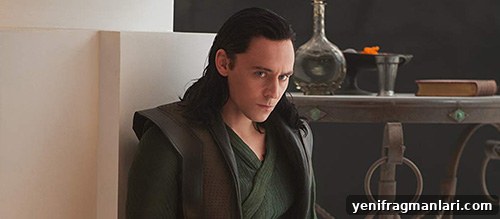
We find Loki imprisoned and awaiting judgment in Asgard. The film spends time aligning us with his perspective, reminding audiences why he remains compelling: he’s witty, damaged, and familiar with suffering. Shortly after, Loki reunites with his mother in a tender, if complicated, exchange—an early sign that family ties still bind him.
The death of Frigga, Loki’s adoptive mother, is the tragedy that rekindles his deeper emotions. Thor and Loki must collaborate to face a common enemy, and their uneasy alliance reveals layers of grief and complicated loyalty. When holograms fade and masks drop, we glimpse the fragility of Loki’s life and the ruins of his chosen persona. The film’s mix of sarcasm and sorrow humanises Loki, shifting him closer to an anti-hero than a one-dimensional villain.
The movie concludes with Loki taking on Odin’s form—an ambiguous act that feels like both penance and political manoeuvre. It leaves audiences wondering whether Loki’s motives are selfless or rooted in his relentless search for identity and power.
Thor: Ragnarok (2017) & Avengers: Infinity War (2018) – A Path Towards Redemption
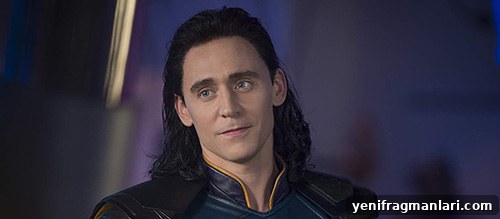
Ragnarok finds Loki impersonating Odin and ruling Asgard—more for amusement than governance. The film quickly reunites the brothers and brings the story full circle when Odin acknowledges both as his sons. That simple recognition provides Loki with closure he has longed for and nudges him toward redemption, especially in his relationship with Thor.
Infinity War completes Loki’s arc. Early in the film, faced with Thanos and the Tesseract, Loki chooses his brother over the object of cosmic power. In a final act of defiance and love, he attempts to save Thor and confronts Thanos, an act that costs him his life. The scene is a culmination: Loki’s trickster nature remains—he tries to outwit a cosmic tyrant—but the choice to protect family reveals how far he has changed.
His death raises lingering questions about motive and identity—why did he reach for the Tesseract at that moment? Was he fully redeemed? The ambiguity is fitting for a character whose life is defined by contradiction: cunning yet loyal, cruel yet capable of sacrifice. The scene underscores an essential truth about Loki—evil never fully consumed him; at critical moments, his better self could still prevail.
“I assure you brother, the sun will shine on us again.”
Has Loki truly gone? Will we see him again in new forms, flashbacks, or alternate timelines? His complexity and popularity make him hard to consign to a single fate. Share your thoughts and theories in the comments below.