
Breathless (1960)
Director: Jean-Luc Godard
Screenwriters: Jean-Luc Godard, François Truffaut
Starring: Jean-Paul Belmondo, Jean Seberg, Jean-Pierre Melville
Jean-Luc Godard’s arrival with Breathless (À bout de souffle) announced a new, restless energy in cinema. Positioned among the key figures of the French New Wave, Godard reshaped film language in the 1960s and beyond alongside peers such as François Truffaut, Agnès Varda and Jean-Pierre Melville. Breathless is the film that established his daring, rule‑breaking style: quick, improvisational, and full of a confident, modern cool that still feels immediate decades later.
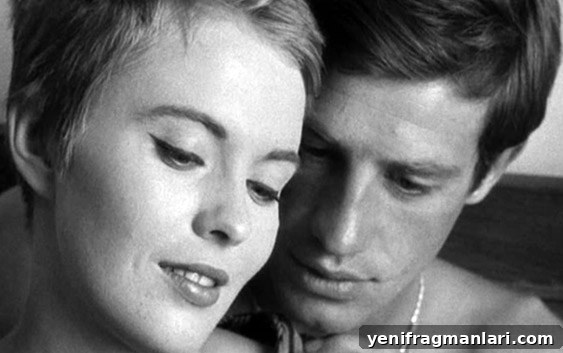
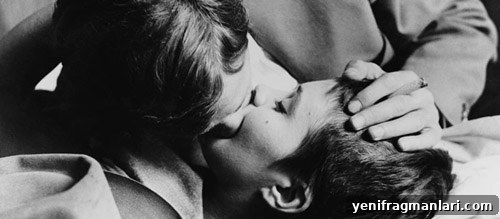
The film’s magnetism comes from a mixture of factors: the charismatic performances, the bold editing choices, the jazz‑inflected soundtrack, and a cinematic love letter to Paris. Jean-Paul Belmondo’s Michel is at once charming and reckless, a small‑time hoodlum with a casual swagger that makes him impossible to ignore. Jean Seberg’s Patricia is luminous and enigmatic, her opening line and presence setting a tone that remains hypnotic throughout. Their chemistry—uneasy, electric, and unpredictable—drives the film’s emotional core.
Breathless is often remembered for its radical use of jump cuts, a technique Godard used to break the smooth continuity that classical cinema prized. Those cuts gave the film a new rhythm and an improvisatory feel more akin to jazz than to studio melodrama. Yet the film balances kinetic montage with long, conversational scenes where characters circle one another in talk and silence. This mix of impatience and lingering observation is central to the movie’s texture and is part of why it rewards repeated viewings.
The score, arranged by pianist Martial Solal, contributes to the film’s distinct atmosphere. Solal’s jazz arrangements underscore the film’s urban energy and sense of the moment—the late 1950s on the cusp of the 1960s—while reinforcing the film’s connection to contemporary youth culture and its restless spirit. The music and editing work together to make Paris feel both glamorous and immediate.
Paris itself is more than a setting: it is an active presence. Godard’s camera roams the streets, cafes and avenues with affection and a playful eye, often framing characters from behind or at unconventional angles. These compositional choices create intimacy and distance at once, making the city feel familiar but also slightly off‑balance—just as the characters are. Familiar landmarks and everyday corners of Paris are given new life, contributing to the film’s sense of chic and style.
François Truffaut’s early involvement in the story development—based on a man on the run with an American girlfriend after killing a policeman—links Breathless to the broader relationships and cross‑pollination among the New Wave directors. The film’s blend of homage to Hollywood and its radical formal experiments shows how the movement both revered and rebelled against older film traditions. That dual impulse—love for classic cinema mixed with a desire to reinvent its grammar—is one reason Breathless remains a frequent point of reference in film history.
Critics and cinephiles continue to celebrate Breathless for its freshness and audacity. Its influence stretches widely: the film helped inspire numerous filmmakers in Europe and America and contributed to the evolution of modern cinematic storytelling. It earned enduring recognition, including placement among the highest‑ranked films in industry polls and lists. For contemporary viewers, Breathless serves as both a gateway into the French New Wave and a vivid example of how formal innovation can create lasting cultural impact.
At a brisk 87 minutes, Breathless never overstays itself. It mixes wit and danger, tenderness and bravado, wrapping its radical technique around an engaging, human story. The performances—especially those of Belmondo and Seberg—remain riveting; the film’s visual and sonic experiments continue to feel daring. Whether approached as a historical landmark or simply an exhilarating film experience, Breathless stands as a defining work of its era and a striking introduction to the sensibilities that would shape modern cinema.
22/24