
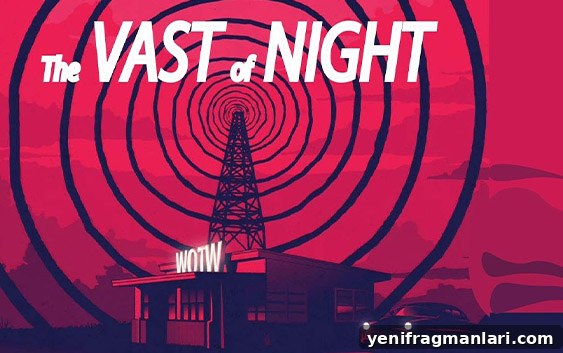

The Vast of Night (2019)
Director: Andrew Patterson
Screenwriters: James Montague, Craig W. Sanger
Starring: Sierra McCormick, Jake Horowitz, Gail Cronauer, Bruce Davis
The Vast of Night is a sharp, confident directorial debut from Andrew Patterson that marries classic 1950s science-fiction atmosphere with modern indie filmmaking sensibilities. Presented like an extended episode of The Twilight Zone or The Outer Limits, the film leans into conspiracy-era textures, a strong sonic palette, and intimate, talk-driven scenes to build tension and curiosity. Its economical approach and deliberate pacing make it one of the more memorable small-scale sci-fi films of its era.
The story takes place during a high school basketball game in a small New Mexico town. While most of the town is at the game, young switchboard operator Fay (Sierra McCormick) and late-night radio host Everett (Jake Horowitz) discover a mysterious signal that begins to interfere with phone lines and the radio airwaves. The pair team up—using their respective skills with communications and sound—to investigate and try to understand what the signal might mean.
Shot in 2016 and circulating for a few years before finding a distribution home on Amazon, The Vast of Night demonstrates how strong direction and precise technical craft can elevate a modest production. The screenplay by James Montague and Craig W. Sanger favors extended conversational sequences, and the film’s structure often places viewers in the role of eavesdroppers listening to stories unfold. Those long takes and long-form dialogues recall films like Locke in their reliance on voice and performance, but Patterson expands the technique into a cinematic world rather than confining it to a single location.
Sound functions as a principal narrative device throughout the film. Moments where image yields to audio emphasize how much of the mystery is discovered by listening. Both protagonists work professionally with sound—one on the switchboard, the other behind a radio microphone—and the film cleverly uses their tools and expertise as investigative instruments. The sound design is not merely an accessory but a storytelling engine, shaping suspense and guiding the viewer’s imagination when visuals give way to audio cues.
Visually, the film often adopts wide compositions that make the town feel observed from a distance, contributing to a voyeuristic sense that something larger is watching or studying humanity. Key transitions occur through an onscreen black-and-white television set, a motif that suggests an alien audience watching human life like a serialized program. That visual gambit reinforces the film’s central idea: storytelling and media as windows into human behavior.
As a period piece set in the 1950s, The Vast of Night confines much of its action to stationary locations where characters must remain at their posts to receive and interpret information. This limitation becomes a dramatic advantage—the inability to instantly mobilize or use portable devices heightens suspense and preserves the old-fashioned tension of waiting and listening. The film also enjoys playful touches in the dialogue, with young actors speaking in an exaggerated mid-century cadence that suits the era while sometimes sounding almost theatrical. Sierra McCormick and Jake Horowitz handle this style with ease, bringing sincerity and energy that keep the dialogue engaging.
The film’s strengths are clear in its technical collaboration: the camera work by M.I. Litten-Menz creates long, fluid shots that let conversations breathe, while Johnny Marshall’s sound design foregrounds what is heard as much as what is seen. Together they craft an immersive tone where restraint and specificity serve the story better than spectacle.
The Vast of Night illustrates how smart, small-scale filmmaking can achieve genuine suspense and emotional interest without an abundance of effects. It’s a study in atmosphere, sound, and storytelling economy: a movie that rewards patient viewers who appreciate crafted performances and a slow-build mystery. For fans of retro sci-fi, audio-driven narrative, and indie film craft, this title is a strong, assured example of how less can be more.
22/24