
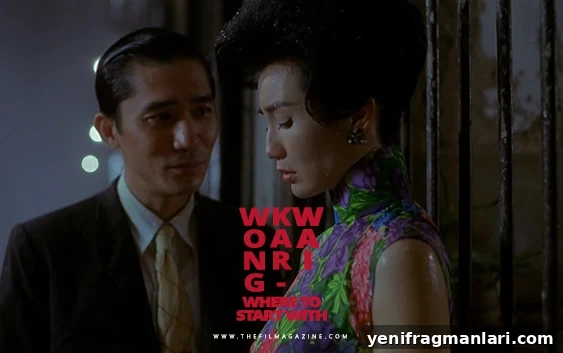
Born in 1958 on the mainland and rising from television screenwriter to internationally celebrated film director, Wong Kar-Wai is one of the most recognisable and influential auteurs to emerge from East Asia in the late 20th century. After relocating to Hong Kong, he broke through in the early 1990s with a distinctive, highly visual cinematic voice that consistently examines time, memory, love and human connection.
Across more than three decades, Wong has explored those themes with an unmistakable visual flair, nonlinear storytelling and richly textured, emotionally complex characters. His films often feel like elegies to longing and missed opportunity: sweeping and tender love stories that rarely follow conventional romantic formulas. My Blueberry Nights remains his closest approach to romantic comedy, while the darker, more controversial Happy Together stands out as a rare, provocative East Asian film about queer relationships.
Wong frequently collaborates with charismatic performers and talented craftsmen. His recurring actors include Tony Leung (Ashes of Time, Chungking Express, Happy Together, In the Mood for Love, 2046 and The Grandmaster), Maggie Cheung (Days of Being Wild, Ashes of Time, In the Mood for Love and 2046) and the late Leslie Cheung (Days of Being Wild, Ashes of Time and Happy Together). His long-running creative partnership with cinematographer Christopher Doyle—who shot seven of Wong’s films, including Chungking Express and In the Mood for Love—helped define the director’s signature look: saturated colours, kinetic camera movement and an almost painterly approach to framing and light.
Few filmmakers are as closely tied to a single city as Wong is to Hong Kong. His films are inseparable from the metropolis’ restless energy, shifting population and the dramatic political and cultural changes it has undergone over the decades. While Wong is celebrated internationally, many of his awards and accolades have come from the Hong Kong film community, reflecting the deep local resonance of his work.
With ten feature films produced across four decades, Wong Kar-Wai can feel enigmatic to viewers encountering his work for the first time—titles rarely give away the experience that awaits. Yet his films are remarkably accessible to anyone who appreciates evocative visuals, thoughtful meditations on love and time, and performances that linger in the memory. Whether you are a romantic, a thoughtful cinephile, or someone who loves arresting imagery and stylish characters captured on film, Wong’s cinema rewards repeated viewings.
Below is a focused guide to three essential Wong Kar-Wai films that serve as excellent entry points into his oeuvre: Chungking Express, In the Mood for Love and The Grandmaster. Each title highlights a different facet of his artistic range—urban longing, quiet repression, and reimagined martial-arts melodrama—so you can begin to appreciate the breadth of his cinematic vision.
1. Chungking Express (1994)
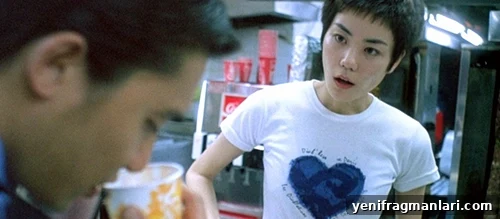
Chungking Express interweaves two parallel stories about melancholic police officers struggling with unattainable affection against the vibrant backdrop of mid-1990s Hong Kong. The film sprang from Wong’s desire to regroup after the challenging production of Ashes of Time and to make something looser, more personal and immediate.
Wong’s characters are often dramatic and deeply felt. In the first story, Cop 223 (Takeshi Kaneshiro) copes with a recent breakup by obsessively buying canned pineapple with the same expiration date as the anniversary of his heartache. He crosses paths with a mysterious drug trafficker, which briefly distracts him from his sadness. In the second story, Cop 663 (Tony Leung) is consumed by depression following the end of a relationship with a flight attendant; the shy, enigmatic snack bar worker Faye (Faye Wong) quietly infiltrates his life and makes small, transformative changes.
Chungking Express showcases Wong’s signature visual style most clearly: Christopher Doyle’s expressive cinematography blends motion, light and colour into an immersive sensory experience that evokes the sleepless urban atmosphere and the elastic sense of time that accompanies falling in and out of love. The film began as a collection of ideas for anthology tales; unused concepts later formed the basis for Fallen Angels and, much later, for Wong’s English-language project My Blueberry Nights.
Music plays a powerful role in Chungking Express, intensifying key emotional beats and helping lodge moments in the viewer’s memory. The film’s choice of songs and the way characters react to these tracks elevate ordinary scenes into deeply felt cinematic moments. Wong’s approach to character development is often improvisational—many nuances arise through interactions captured on set—resulting in characters who feel lived-in and authentic. He prefers elliptical endings that leave space for hope and ambiguity rather than tidy resolutions, a hallmark that gives Chungking Express its lingering emotional charge.
2. In the Mood for Love (2000)
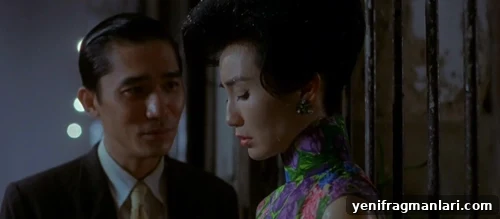
In the Mood for Love is a restrained, masterful study of two neighbours trapped in loveless marriages who gradually realise they share mutual longing. Mrs. Chan (Maggie Cheung) and Mr. Chow (Tony Leung) are drawn to one another by grief and empathy yet try to resist acting on their feelings to preserve propriety. The film is a subtle, bittersweet exploration of restraint, desire and emotional fidelity.
Wong avoids rationalising love; instead he captures its suddenness and persistence. The marred spouses remain offscreen for most of the film, becoming almost abstract presences whose absence shapes the protagonists’ interior lives. This negative space enhances the story’s emotional depth and makes the cramped apartment building itself feel alive, a vivid character that contains whispered gossip, small rituals and shared silences.
Every detail matters in In the Mood for Love: costume choices, minute facial expressions and choreographed movements give each frame meaning. The film’s muted, desaturated palette and immaculate cinematography create an atmosphere of slow-burning intensity; colours and textures are deployed with near-musical precision. Wong’s semi-improvisational process and the actors’ delicate, oscillating performances result in a romance conveyed mostly through stolen glances, near touches and imagined reenactments of adultery—moments that feel both intimate and unbearably restrained.
The film’s emotional unresolvedness and evocative imagery inspired Wong to revisit the characters years later in 2046, a more experimental follow-up that extends Mr. Chow’s story into melancholic science-fiction-inflected territory.
3. The Grandmaster (2013)
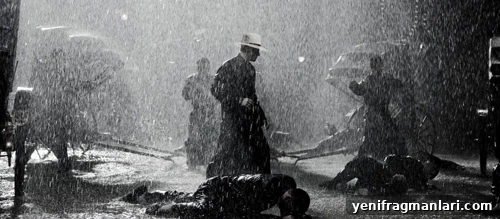
The Grandmaster is a fictionalised, poetic reimagining inspired by the life of martial-arts master Ip Man, portrayed by Tony Leung. Focused on rivalries between regional kung-fu styles and Ip Man’s struggles as an impoverished teacher in post-war Hong Kong, the film blends historical drama with Wong’s signature lyricism.
Wong treats national trauma and personal loss with poetic sensitivity, often using striking metaphors and condensed aphorisms to carry emotional weight. The Grandmaster is less a straightforward biopic than a highly stylised melodrama: balletic, dreamlike fight sequences and painterly compositions transform combat into choreography and emotional expression. While some viewers seeking conventional martial-arts storytelling may find it more abstract than expected, the film nevertheless demonstrates Wong’s capacity to adapt his sensibility to action-oriented material, producing some of the most visually arresting fight sequences in contemporary cinema.
Beyond the choreography, the heart of The Grandmaster is a long, restrained love story. Ip Man’s devotion to family and the disruptions of war echo the director’s own history of separation and loss. His bond with Gong Ruomei (Zhang Ziyi), a formidable northern martial artist, unfolds as a relationship of equals—rivals and kindred spirits—whose encounters are charged with precision, mutual respect and unspoken longing. These quietly intense interactions, set against large-scale upheaval, make the characters’ arcs feel urgent and memorable.
Although The Grandmaster did not match the critical acclaim of Wong’s earliest international successes, it became his most commercially successful film and earned numerous industry awards at home in Hong Kong. The film’s approach to martial arts as an emotional, philosophical practice offers a distinctive perspective that will resonate with viewers who appreciate both choreography and contemplation.
Wong Kar-Wai’s work rewards close viewing and repeated return. If you appreciate the three films highlighted above, consider following them with Fallen Angels as a companion to Chungking Express, 2046 as a continuation of themes from In the Mood for Love, and Happy Together among the director’s most powerful explorations of love and dislocation. Together these films form a compelling, emotionally rich body of work for anyone drawn to romance, existential reflection and striking cinematic visuals.