
This article was written exclusively for The Film Magazine by Leoni Horton of Leoni Horton Movies.
“That girl thinks she’s the Queen of the neighbourhood, I got news for you, she is!” — a line that could have been written for Cathy Yan’s Birds of Prey. Kathleen Hanna, frontwoman of Bikini Kill and a key figure in the Riot Grrrl movement, captured the loud, defiant spirit that Yan translates into a modern, kinetic comic-book film. Birds of Prey (and the Fantabulous Emancipation of One Harley Quinn) brings that raw insistence on female anger and autonomy back into the spotlight, reframing rebellion as a necessary step toward self-possession.
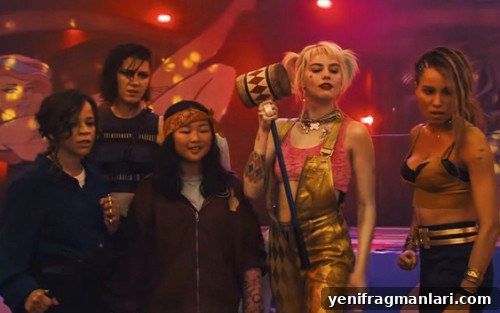
The Riot Grrrl movement carved out space for women in the punk and grunge scenes, insisting that women could be loud, messy, provocative and unrepentantly angry. That spirit was eventually softened in mainstream pop—think the commodified “Girl Power” of later groups—but its essential refusal to be silenced survives in Yan’s film. Where other recent female-led superhero films have often presented spotless, morally unequivocal heroines, Birds of Prey relishes messy, complicated female characters: Harley Quinn, Black Canary, Huntress, Renee Montoya and Cassandra Cain. These women are selfish, unpredictable, and frequently unpleasant — and that is precisely the point. The film insists that women need not be endlessly virtuous to be powerful or worthy of the spotlight.
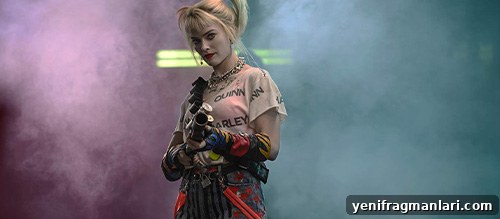
Birds of Prey stages its rebellion early. In a symbolic act that reads like a punk-rock manifesto, Harley blows up ACE Chemicals — an act that severs her connection to the Joker and the hypersexualized, subservient persona introduced in her prior cinematic appearance. Yan reframes Harley’s rage and recklessness as emancipatory. Rather than smoothing her rough edges to fit a male-centered narrative, Harley’s anger becomes the means by which she reclaims agency and carves out a piece of Gotham for herself.
Roman Sionis, the movie’s main villain, is less a titan of threat than a man who wields institutional influence. His reach lets him intimidate and exploit, and his predatory control over others — notably over Black Canary — crystallizes the film’s central conflict. By opposing him, Harley and her allies stand against a system built on fear and coercion, echoing the Riot Grrrls’ resistance to patriarchal structures.
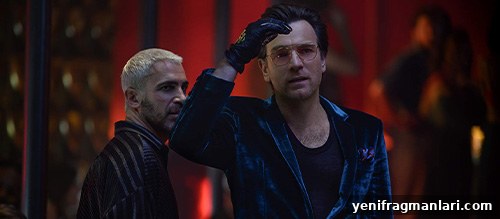
One particularly telling scene shows henchman Victor Zsasz forcing Harley to mime “I’m a good girl,” an image that speaks to society’s fixation on female submissiveness. The film answers this pressure with force, but not out of misandry: the violence the women commit is defensive and situational. Yan also highlights subtler betrayals — emotional manipulation, betrayal of trust, and societal gaslighting — demonstrating that patriarchy maintains power through many modes, not only physical violence.
Music plays a central role in bridging Riot Grrrl aesthetics and a mainstream audience. The soundtrack leans into abrasive, confrontational tones alongside pop accessibility, reviving the movement’s jagged message for a broader public. Tracks like Halsey’s “Experiment On Me” and Maisie Peters’ “Smile” juxtapose aggressive lyrics with catchy hooks, translating punk bluntness into radio-ready form and amplifying the film’s mood of refusal and reclamation.
Black Canary’s invocation of James Brown — “This is a man’s world, but it means nothing without a woman or a girl” — functions as a thematic anchor. It underlines how both law and crime in Gotham are dominated by aggressive masculinity that sidelines women’s achievements. The film’s female characters are not a homogeneous sisterhood built on simplistic niceties; they are an alliance forged by shared necessity and mutual strength. They come together because solidarity is the practical path to survival and empowerment, not because girlhood mandates unconditional harmony.
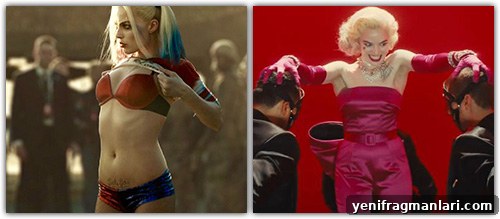
Costume and visual design play an activist role. Where Harley’s “Daddy’s Little Monster” tee in earlier portrayals signaled possession and objectification, Erin Benach’s costume choices in Birds of Prey prioritize agency and self-expression over the male gaze. High-waisted shorts that offer coverage, bold color palettes, and playful yet practical styling replace gratuitous hypersexualization. Harley even cuts her pigtails in a moment of symbolic rupture, a punk gesture reminiscent of Riot Grrrls who defied beauty norms with intentional, “bad” haircuts. Costuming, like the film itself, asserts that independence includes rejecting how women are expected to look and behave.
Yan and her collaborators also reframe classic feminine iconography. By echoing Marilyn Monroe’s famous look with a pink jumpsuit and then pairing it against a pantsuit, the film stages a visual critique: dresses as fetishized spectacle versus pants as a signifier of work, autonomy and freedom. This sartorial conversation references feminism’s long history with clothing as political speech.
The film’s provocative tone might be misread as an endorsement of immoral behavior, but it’s theatrical defiance, not a moral prescription. Birds of Prey asks audiences to accept imperfection, to stop apologizing for desire and rage, and to seize the spaces women are routinely denied. Harley Quinn is not a villain because she’s complicated and flawed; she’s liberated, loud, and defiantly herself.
She’s a bad girl — and she’s finally allowed to be.
Written by Leoni Horton
You can support Leoni in the following places:
Twitter: @inoelshikari
Blog: Leoni Horton Movies