
Cold War (2018)
Director: Pawel Pawlikowski
Screenwriters: Pawel Pawlikowski, Janusz Glowacki, Piotr Borkowski
Starring: Joanna Kulig, Tomasz Kot, Borys Szyc, Agata Kulesza
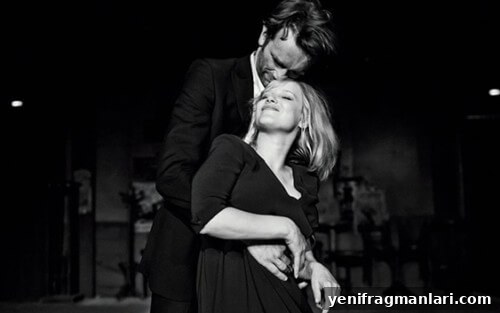
From its opening images of Polish folk singers performing directly for the camera to its careful, intimate black-and-white cinematography framed in the taller 4:3 ratio, Cold War is a film that announces its intentions with quiet authority. Pawel Pawlikowski’s direction shapes a romantic tragedy that feels both timeless and wholly of its era: a compact, emotionally precise film that moves across postwar Europe and across decades, exploring the friction of love against politics, art and personal compromise.
Shot with a restrained visual poetry, Cold War uses monochrome imagery to amplify both the era and the mood. The narrower aspect ratio concentrates attention on faces and gestures, on the small gestures that acquire enormous meaning over time. That visual choice supports a story built of glances, songs and short-lived embraces — an economy of storytelling that makes every frame count. The result is a film that is stylistically rigorous while remaining deeply affecting.
Loosely inspired by the director’s own family history, the screenplay follows the lives of Zula and Wiktor as they are swept through cultural troupes, political upheavals and the often painful choices that accompany artistic ambition. Joanna Kulig, as Zula, gives a commanding performance: she moves from youthful vitality to a more guarded, world-weariness with remarkable clarity. A single, devastating moment — when Zula, older and wearier, removes a black wig in a small, private bathroom scene — captures the film’s emotional logic: a private unmasking that signals a release from roles, expectations and personal compromise. That scene, earned by the film’s steady accumulation of detail, epitomizes how small gestures in Cold War carry the weight of entire lives.
Tomasz Kot, as Wiktor, offers a layered counterpart to Kulig’s Zula. Their relationship is a study in imbalance: devotion threaded with jealousy, ambition shadowed by regret. Pawlikowski stages their romance as if it were an elegy for a continent reshaped by war and ideology. The film treats the couple’s attachment as both sustaining and destructive — a force that defines identity even as it exacts a price. Secondary performances, including Borys Szyc and Agata Kulesza, provide textured support without drawing focus away from the central pair.
Musical performance and folk tradition are central to Cold War’s emotional architecture. Song functions as narrative glue and as a language that escapes censorship and doctrinal constraint; it allows characters to express longing and dissent with a clarity that dialogue sometimes cannot. Through performances staged within the story, Pawlikowski creates sequences that are at once documentary-like and deeply theatrical, highlighting the transformative power of art under pressure.
The film’s themes extend beyond a single love story. It asks how individuals navigate the demands of oppressive systems, how personal integrity erodes under political pressure, and whether love is an anchor or an illusion in times of upheaval. Cold War treats these questions without didacticism: it presents the consequences of choices and leaves moral judgments to the viewer. That restraint is a strength; the film invites reflection rather than prescribing answers.
At under ninety minutes, Cold War trims excess and concentrates on essential moments. Pawlikowski’s direction feels mature and exact, and the collaboration between script, performance and cinematography is remarkably cohesive. Critics noted its formal elegance and emotional depth at its festival run; the film’s presentation and craftsmanship earned Pawlikowski recognition, including the Best Director prize at Cannes.
Cold War is a modern classic in miniature: formally bold, emotionally resonant and impeccably acted. It balances the intimacy of a relationship drama with the sweep of historical forces, crafting a story that lingers long after the credits. For viewers drawn to cinema that prizes nuance, music and the moral complexities of love lived under pressure, this film is essential viewing.
Score: 24/24