

“Discomfort” is often the most accurate response to a David Lynch film. His work has provoked criticism for its depictions of violence and sadism and for a refusal to conform to conventional narrative coherence. Yet those intense reactions are frequently signs of powerful art, and Lynch’s films consistently demonstrate an ability to affect viewers on a deep, emotional level.
It helps to think of Lynch’s films as moving paintings. Trained as a painter, Lynch began making art in high school and only later discovered film as a way to animate his visual instincts. At one point he described hearing wind coming from a finished canvas, which sparked a lifelong interest in creating images that move and breathe with sound. Early experiments in crude animation led to unsettling short pieces such as The Alphabet, where he explored how design, form, sound, and motion can create profound unease. For Lynch, film is a succession of painted moments assembled to generate feeling. His process often starts intuitively—shaping light, sound, texture, and rhythm until the desired emotional response emerges. Preserving that emotional logic is the primary concern in every picture he makes.
Lynch’s work frequently operates at the crossroads of waking reality and the subconscious. Rather than trying to explain ideas with straightforward language, his films use the logic of dreams—an associative, sometimes fragmentary logic that connects seemingly unrelated images and events. His movies probe the hidden underside of ordinary life: the same neighborhoods and pleasures that hold small comforts—a cup of coffee, an old photograph—can also conceal violence, desire, and dread. Lynch invites viewers to set aside expectations and let a film’s atmosphere and imagery do the work of interpretation; he calls this giving the piece “room to dream.” Approaching a Lynch film as an experience rather than a puzzle of plot points is the best way to access its power. Expecting tidy answers will only breed frustration.
There is a wide body of Lynch’s work to explore, from short films and experimental pieces to feature films and television, but the following selections are among the most accessible entry points to his distinctive vision.
1. The Elephant Man
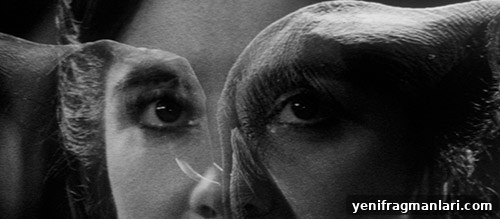
The Elephant Man Review
One of Lynch’s most narratively coherent films, The Elephant Man tells the true story of Joseph Merrick and his arrival at a London hospital under the care of Dr. Frederick Treves. Shot in stark, high-contrast black and white, the film confronts the extremes of human behavior—cruelty and compassion—while maintaining a haunting visual beauty. The film earned widespread acclaim and multiple Academy Award nominations, demonstrating Lynch’s ability to work within classical storytelling conventions without sacrificing his artistic sensibility.
John Hurt’s portrayal of Merrick and Anthony Hopkins’s Treves form the emotional core of the film. Hurt, under extensive prosthetics, conveys a dignity and intelligence that never reduces Merrick to a spectacle; his interactions with gawking crowds and carnival exhibitors force Treves and the audience to reconsider what it means to see and to be seen. Lynch also slips into surreal imagery—most notably a mythic, dreamlike recounting of Merrick’s origin involving an elephant and a woman—reminding viewers that even his most grounded films retain a symbolic, painterly dimension.
The Elephant Man marked a turning point in Lynch’s career, establishing him as a filmmaker equally capable of formal innovation and humanist storytelling. It’s a strong introduction to the ways he blends compassionate character study with unsettling visual metaphors.
2. Blue Velvet

Blue Velvet is the first of Lynch’s feature films to fully embrace his signature mix of noir, eroticism, and suburban dread. The plot begins with a young man discovering a severed human ear in a field and spirals into a darker investigation that exposes a criminal underworld lurking beneath the polite surface of a small American town.
The film trades on anachronistic touches that make its setting feel both nostalgic and out of time, and it juxtaposes the sweetness of classic Americana with images of sexual violence and psychological menace. Dennis Hopper’s unhinged performance as the film’s primary antagonist creates a terrifying focal point, while the soundtrack—centered on haunting variations of the title song and including the evocative “In Dreams”—amplifies the movie’s dreamlike atmosphere.
Blue Velvet is a good entry point to Lynch’s work because it retains a more linear narrative than many of his later films while showcasing his techniques: highly controlled mise-en-scène, striking sound design, and an interest in how beauty and brutality coexist. It shows Lynch moving from painter to storyteller without losing his commitment to mood and emotional truth.
3. Twin Peaks
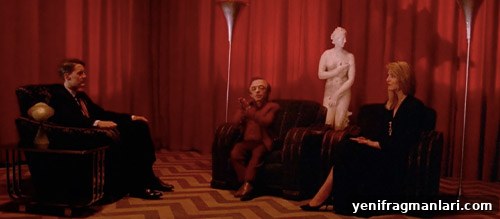
Twin Peaks is a transmedia project spanning television, film, and print, with the original TV series serving as the core. At its heart are the first two seasons (1990–1991), which follow FBI Agent Dale Cooper as he investigates the murder of high school student Laura Palmer. What begins as a conventional mystery dissolves into an exploration of dream logic, mythology, and collective secrets, where every revealed clue tends to multiply questions.
The feature film Twin Peaks: Fire Walk With Me functions as both a prequel and an extension of the series, and it exposes darker, more harrowing elements that network television previously constrained. Watching the series and the film together gives the fullest sense of Lynch’s experiment: a sprawling, unsettling universe where memory, trauma, and the supernatural collide. The later return of the series in 2017 further complicates and enriches the narrative, emphasizing Lynch’s willingness to defy expectations and to let ambiguity persist.
Twin Peaks is among Lynch’s most ambitious works: it blends nostalgia, mystery, and surreal imagery in a way that remains difficult to replicate. Whether experienced as a television show, a film, or a combined narrative tapestry, it is essential viewing for anyone seeking to understand Lynch’s approach to storytelling and the emotions his “moving paintings” are meant to evoke.
Recommended: Where to begin with Lynch’s films
David Lynch occupies a singular place in film history as a master of surreal form and content. Like painters who upend the rules of representation, he has reshaped how meaning can be suggested rather than stated in mainstream cinema. His films demand active, subjective viewing: they invite each person to bring their own associations, memories, and emotions to the work. Approached on those terms, Lynch’s movies offer a rare opportunity to experience art that feels both intimate and inexplicably other—moving paintings that make room for wonder, dread, and a glimpse of the unconscious.