
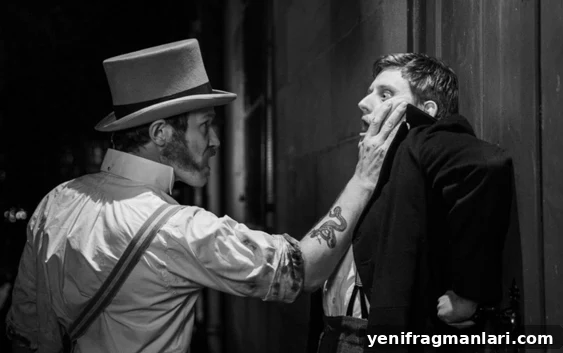
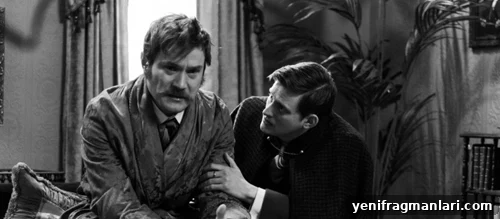
The Strange Case of Dr. Jekyll & Mr. Hyde (2023)
Director: Hope Dickson Leach
Screenwriters: Hope Dickson Leach, Vlad Butucea
Starring: Lorn MacDonald, Henry Pettigrew, David Hayman
The Strange Case of Dr. Jekyll & Mr. Hyde is one of the most enduring works of literature, and countless adaptations have tried to recapture its tension between respectability and the darker impulses that lie beneath. Hope Dickson Leach’s 2023 adaptation, created in collaboration with the National Theatre of Scotland and introduced at the Edinburgh International Film Festival, is a theatrical reimagining that makes bold choices. Those choices, however, produce mixed results: while the production occasionally evokes atmosphere and moral unease, it is often undermined by inconsistent execution.
This adaptation relocates the action from Victorian London to the winding, often sinister streets of Edinburgh. On paper the move feels promising—Edinburgh’s narrow closes, steep stairways and Gothic facades provide a natural setting for a story that explores hidden vice. In practice, the choice exposes some of the film’s larger problems. The city’s character is present, but the film rarely commits to period authenticity. Modern accoutrements such as visible exterior locks and bird netting remain in shot, and set dressing that might sell the late nineteenth-century setting is often sparse or conspicuously anachronistic. The result is a setting that hints at atmosphere but fails to fully immerse the viewer.
Visual choices affect more than the backdrop: props, costumes and small production details frequently strain credibility. Period costume and prop work can create powerful storytelling shortcuts, but here many elements come across as cheap or unfinished. Electric candles with no flicker, visibly modern accessories, and occasionally flimsy set pieces pull the audience out of the narrative rather than drawing them in. Once the illusion is lost, dramatic stakes are harder to sustain, and the emotional weight of certain scenes is diluted.
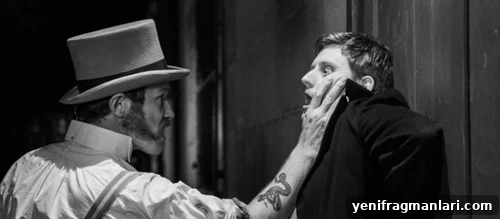
Performances are a mixed bag. Lorn MacDonald and Henry Pettigrew bring energy and commitment to their roles and manage several powerful moments despite the film’s uneven tone. Yet their work is punctuated by sudden shifts into broadness or off-kilter comedic touches that feel out of place. These tonal leaps make it difficult to settle into either character consistently; sympathy and menace sometimes compete in the same breath, and that inconsistency limits the viewer’s ability to form a sustained emotional connection.
Direction and the screenplay show the strain of translating a hybrid theatre-film production into a self-contained cinematic work. The project began as a stage piece that blended live performance and filmed elements, and remnants of that hybrid approach remain in the script. On stage, certain devices and expository moments can be forgiven because of the immediacy of live performance; on film, such devices are harder to justify. Scenes that rely on blunt, explanatory dialogue to advance themes like capitalist greed, social climbing and toxic masculinity come across as didactic rather than illuminating. The script frequently tells rather than shows, limiting opportunities for subtlety or psychological depth.
The film aspires to be politically resonant, using Jekyll and Hyde’s split nature as a lens for social critique. Unfortunately, those ambitions are not always supported by the craft of filmmaking on display. Heavy-handed exposition and predictable visual metaphors blunt the critique and leave the political commentary feeling surface-level. When thematic content is signposted rather than earned, audience engagement suffers; provocation without nuance becomes mere assertion.
That said, the production is not without merit. Moments of atmosphere—a rain-slick close, a furtive exchange on a stone stair, a strong, quiet turn from a supporting actor—remind viewers why this story continues to fascinate. The performances occasionally ignite, and the idea of placing the tale in Edinburgh has genuine potential. What keeps this version from fully succeeding is a combination of inconsistent production values, uneven tone, and a screenplay that too often opts for bluntness over complexity.
In the end, Hope Dickson Leach’s adaptation is an earnest but flawed effort. It demonstrates ambition and a clear creative impulse to revisit a classic through a regional theatrical lens, yet it falls short in execution. For viewers interested in fresh takes on canonical stories, this film offers intriguing moments and visible artistic intent; for those seeking a cohesive and fully persuasive retelling of Stevenson’s classic, this particular adaptation may frustrate more than it satisfies.
Score: 7/24