
This article was written exclusively for The Film Magazine by Martha Lane.
Easy A (2010)
Director: Will Gluck
Screenwriter: Bert V. Royal
Starring: Emma Stone, Stanley Tucci, Patricia Clarkson, Thomas Haden Church, Penn Badgley, Amanda Bynes
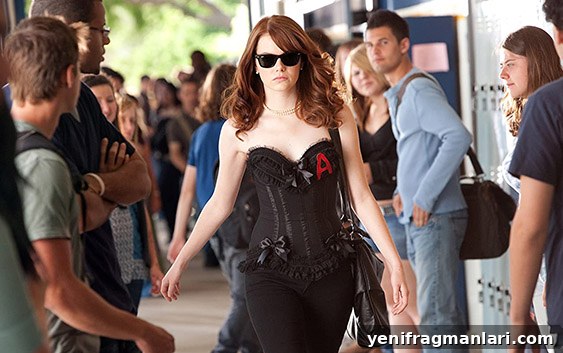
Easy A reimagines Nathaniel Hawthorne’s classic themes from The Scarlet Letter through the noisy, image-conscious world of an American high school. The film follows Olive Penderghast (Emma Stone), a quick-witted teen who fabricates a story about losing her virginity to a community college student and then finds herself monetizing similar lies for classmates. While the boys who claim to have been with her ride a wave of newfound confidence, Olive becomes the target of gossip and prejudice, forced to wear a figurative red “A” as a mark of shame.
From its opening moments, Easy A signals that it wants to be more than a standard teen comedy. Director Will Gluck purposefully nods to the classics of the genre—John Hughes is an obvious touchstone—while giving the film a sharper, contemporary voice. Olive’s narration, delivered directly to camera through a webcam-style monologue, establishes her as an astute, self-aware protagonist who understands how appearances and rumors circulate. If the film were released now, that webcam confession would likely live on TikTok; at the time it captured the era’s early fascination with social media.
Emma Stone’s performance anchors the picture. She balances sarcasm, vulnerability, and comedic timing to create a character who feels both modern and rooted in a long line of memorable teen heroines—from Juno to Kat Stratford in 10 Things I Hate About You. Stone’s Olive is clever without being cynically detached; she’s confident, restless, and imperfect in ways that make her relatable. The role helped cement Stone’s reputation as a leading comedic actress and remains one of her most enjoyable early performances.
The supporting cast adds texture and warmth. Stanley Tucci delivers scene-stealing moments as Olive’s father—warm, candid, and oddly philosophical—while Patricia Clarkson plays her mother with gentle patience. Malcolm McDowell is perfectly cast as a stern headmaster, bringing a theatrical gruffness that contrasts nicely with the film’s lighter beats. The ensemble, including familiar faces like Penn Badgley and Amanda Bynes, keeps the pacing brisk and the tone consistently engaging.
Writer Bert V. Royal and Gluck work within well-worn teen-comedy conventions—overdressed adults playing teenagers, a brooding love interest, an evangelical youth group with acoustic guitars, and exaggerated house parties—yet they bend those rules to sharpen the satire. The film pokes fun at high school hierarchies and the moral panic around teenage sexuality without ever losing empathy for its characters. Olive is never reduced to a single trait; the story gives her room to make mistakes, reassess, and ultimately reclaim her own narrative.
One of the film’s strengths is its balance between comedy and heart. Though it contains broad comedic moments, Easy A makes space for quieter scenes that reveal Olive’s loneliness and desire for genuine connection. The movie resists becoming a conventional rom-com where the protagonist exists just to secure a love interest; romance is present, but the film’s core is Olive’s search for integrity and control over how others define her.
More than a decade after its release, Easy A has held up well. While some period details date the film—fashion choices and social media references place it firmly in the late 2000s—the central themes about reputation, gendered double standards, and the power of gossip remain relevant. The movie’s wit, sharp performances, and thoughtful take on teenage life make it worth revisiting for both fans of the genre and newcomers.
18/24
Written by Martha Lane
You can support Martha Lane in the following place:
Twitter – @poor_and_clean