
Glass (2019)
Director: M. Night Shyamalan
Screenwriter: M. Night Shyamalan
Starring: James McAvoy, Bruce Willis, Samuel L. Jackson, Sarah Paulson, Anya Taylor-Joy, Spencer Treat Clark, Charlayne Woodard
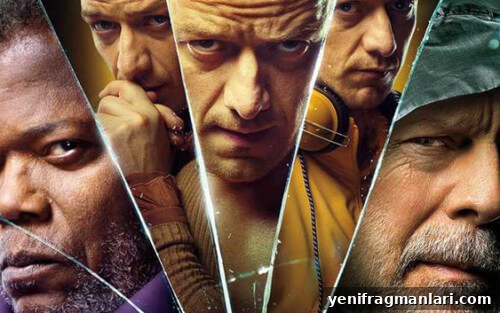
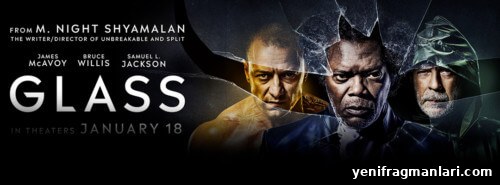
M. Night Shyamalan completes the story he seeded in Unbreakable (2000) and revisited in Split (2016) with Glass, a finale to what has been dubbed the Eastrail 177 Trilogy. The film reunites the franchise’s central figures — David Dunn (Bruce Willis), Mr. Glass (Samuel L. Jackson), and Kevin Wendell Crumb (James McAvoy) — and frames their confrontation through the eyes of Dr. Ellie Staple (Sarah Paulson), a psychiatrist who treats people convinced they are superhuman.
Glass ties together the trilogy’s themes of identity, trauma, and belief. Mr. Glass envisions a public, comic-book-style showdown that will prove the existence of people like them. David Dunn, haunted by survivor’s guilt after the Eastrail 177 crash that left him as the sole unbroken passenger, stands in stark contrast to Glass’s more violent ambitions. Kevin — fragmented into multiple personalities, including the terrifying Beast — is both dangerous and tragically human. The film builds its tension on the collision of these opposing worldviews and on the question of who, if anyone, deserves to be called a hero.
The movie was released on January 18th and immediately drew box-office attention in the UK, debuting strongly and outperforming other major releases at the time. Glass benefits from the momentum Split created by reintroducing audiences to McAvoy’s extraordinary performance as a man fractured into numerous alters. That performance remains the film’s centerpiece: McAvoy shifts between personalities with precise changes in posture, voice, facial expression, and costume, selling each identity with nuance and emotional truth. A standout scene finds him cycling through several personalities in a brief span, and it’s a reminder of his range and the investment he brought to Split.
Shyamalan’s screenplay here is functional and focused on resolving the trilogy’s arc rather than reinventing the genre. The script sometimes feels tidy where it could be more daring, and a few plot threads are compressed to service the film’s larger revelations. Yet the director’s knack for pacing and for revealing twists at just the right moment remains intact. Glass doesn’t always surprise with its dialogue, but it often succeeds in maintaining suspense and emotional stakes, especially when exploring how isolation and trauma shape each character.
Sarah Paulson’s Dr. Staple provides a grounded counterpoint to the fervent beliefs of Glass and Kevin. Paulson brings a controlled intelligence to the role, making Staple both sympathetic and professionally measured. Bruce Willis’s David Dunn embodies a weary, reluctant guardian; his presence supplies the franchise with its moral center. Samuel L. Jackson is compelling as Mr. Glass, channeling charisma, bitterness, and intellectual zeal into a villain who sees himself as a prophet. Anya Taylor-Joy returns as Casey, a survivor whose empathy and steadying influence on Kevin give the film its quieter emotional moments.
At its core, Glass is about more than spectacle. It asks what it means to be different and whether those differences should be hidden, studied, exploited, or celebrated. The trilogy’s repeated assertion — that the broken might be more evolved — resurfaces here as a throughline, articulated not as glib rhetoric but as a complex, sometimes unsettling philosophy that drives the characters to extremes. Shyamalan uses genre trappings to examine real human fissures: loneliness, the need for recognition, and the struggle to reconcile inner truth with public identity.
Technically, Glass is polished without being ostentatious. The film’s visual language supports its themes: cramped institutional settings, stark interrogation sequences, and sudden, explosive moments of violence underline the claustrophobia the characters feel. The score and sound design heighten tension without overwhelming the performances, allowing actors like McAvoy and Jackson to carry key sequences.
Glass may not rank as the director’s absolute best work, nor will it eclipse the most celebrated entries in the superhero or thriller genres, but it succeeds as a conclusion to a long-form story Shyamalan crafted across two decades. Its strengths lie in committed performances, particularly McAvoy’s, and in a willingness to engage with characters who live at the margins of society. For viewers who followed Unbreakable and Split, Glass offers a satisfying, emotionally resonant coda that validates the trilogy’s risks and themes.
17/24