
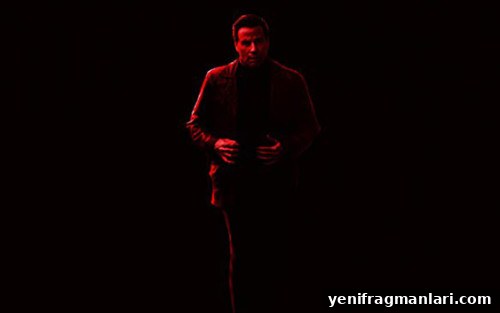
Gotti (2018)
Director: Kevin Connolly
Screenwriters: Lem Dobbs, Leo Rossi
Starring: John Travolta, Kelly Preston, Pruitt Taylor Vince, Spencer Lofranco
I watched a light romantic comedy called Little Italy this week, and the contrast with Gotti (2018) was stark. Where Little Italy delivers predictable, sugary beats about rival pizza-shop children falling in love, Gotti attempts to tackle the life of a notorious mob boss—John Gotti—yet fails to find a coherent tone or dramatic through-line.
Gotti, directed by Kevin Connolly and starring John Travolta, struggles from the start with an uneven structure. The film constantly jumps between time periods and storylines in a way that feels haphazard rather than deliberate. Instead of a clear narrative arc or a focused character study, the movie reads like a collection of loosely related scenes: courtroom sequences, bursts of violence, brief moments of family life and long stretches of exposition. This inconsistent editing robs the film of momentum and leaves the audience unsure of what the story is trying to say about John Gotti or his criminal world.
The screenplay touches on several aspects of Gotti’s life—his reputation on the street, his family relationships and his time in court—but none of these elements coalesce into a persuasive portrait. Important moments that should define character and consequence are either underdeveloped or presented out of sequence, so the emotions they should evoke never arrive. For a film about a figure known for his flamboyance and notoriety, Gotti feels oddly muted; its leading performance is far more flat than charismatic.
John Travolta plays the title role with a measured, restrained approach that rarely captures the swagger or menace associated with the real-life Gotti. Travolta is capable of commanding presence, but here the script and direction rarely let him build the kind of magnetic persona this subject demands. Supporting performances suffer similarly: Spencer Lofranco’s depiction of John A. Gotti lacks the texture and tension necessary to persuade the audience that he is the son of a powerful mobster. Characters drift in and out without clear purpose, and the film resorts to lazy shorthand—labels and brief introductions—rather than developing the ensemble.
There are a few scenes that register: an assassination that marks a turning point, some tense courtroom moments, and a handful of interactions meant to humanize the protagonist. One unintentionally memorable sequence involves a father-son exchange about mundane pleasures—ice cream and pizza—that lands with a bizarre, almost comic awkwardness. Such moments feel more like fragments than building blocks of a cohesive story.
Stylistically, the film disappoints. The cinematography and production design rarely establish a convincing visual identity; lighting and composition are serviceable at best and forgettable at worst. The movie’s soundtrack choices further undermine tension and atmosphere. Instead of a score that intensifies drama or underscores theme, the film opts for a patchwork of popular songs and an especially jarring main theme credited to Pitbull titled “Amore.” That track shifts between Italian-flavored guitar and contemporary hip-hop beats, including record scratches and heavy percussion, while its lyrics boast and glamorize criminality.
“Fuck cops, pop pop, catch you at your favorite spot”
“Yeah I killed, yeah I extorted, yeah I robbed, but I’m the God of the mob”
“The rotten apple from the Big Apple, the realest gangster you’ve ever seen”
Using a rap anthem that brags about violence and criminal exploits is a creative choice that many viewers will find uncomfortable; it also clashes with any attempt at nuance. Biopics that explore organized crime work best when they balance human complexity with moral consequence—films like Goodfellas or Casino, for example, put charisma and brutality in uneasy tension while offering pointed insights. Gotti fails to achieve that balance, instead relying on clichés and fragmented storytelling.
Ultimately, Gotti (2018) is an uneven and often unconvincing attempt at a mafia biopic. It lacks a clear narrative focus, a compelling directorial vision and performances that fully inhabit their characters. For viewers seeking a rigorous examination of John Gotti’s life or a riveting crime drama, this version disappoints. For those curious about Travolta’s turn as a mob boss or Kevin Connolly’s filmmaking choices, there are moments of interest, but they are too few and too scattered to rescue the film.
2/24