
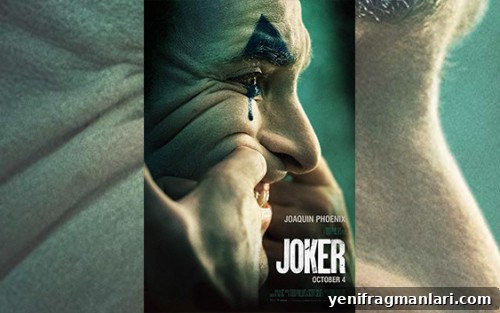

Joker (2019)
Director: Todd Phillips
Screenwriter: Todd Phillips, Scott Silver
Starring: Joaquin Phoenix, Robert De Niro, Zazie Beetz, Frances Conroy, Brett Cullen, Marc Maron
“What do you get when you cross a mentally ill loner with a society that abandons him and treats him like trash?”
After the fanfare, the awards, and the controversies that surrounded it, Warner Bros.’ latest DC adaptation has arrived: a dark, intimate portrait of one of comics’ most iconic villains. Todd Phillips presents a fierce, unsettling vision of the Joker that is as visually striking as it is emotionally raw. The film refuses to be a typical franchise installment; instead it aims for something more personal and provocative.
Phillips has openly cited Martin Scorsese’s Taxi Driver as a major influence, and the comparison is apparent in more than tone alone. The film borrows visual cues and an obsession with its central character’s interior life, channeling the grim, urban atmosphere of 1970s character studies while remaining distinctly of the present. Rather than constructing a conventional comic-book origin, Phillips and co-writer Scott Silver work backwards: they examine a man driven to extremity by neglect, humiliation and untreated mental illness, then let the Joker emerge from that unraveling. The result is a character-driven drama that feels like a standalone cinematic piece rather than a tie-in to a larger superhero universe.
Joaquin Phoenix delivers a magnetic, deeply unsettling performance as Arthur Fleck. Where previous screen Jokers leaned toward the cartoonish or the anarchic, Phoenix makes his version painfully human and disturbingly plausible. His physicality—an odd gait, sharp gestures, a nervous laugh forced into public spaces—adds layers to the role beyond the script. Phoenix’s Arthur is sometimes pitiable, sometimes revolting, and always compelling; the performance holds the film together and demands the viewer’s full attention. It’s the kind of work that dominates every scene and will likely be central to awards discussions.
The screenplay gives Phoenix room to inhabit the character without explaining every choice. Arthur is a man living on the margins, battling chronic mental health issues and a social system that repeatedly fails him. The film portrays the cumulative effect of ridicule, economic hardship and personal trauma, allowing his descent into violence to feel inevitable, however tragic. By keeping the narrative grounded in one person’s perspective, the film avoids the spectacle-driven shorthand of many comic adaptations and instead delves into the quiet horrors of isolation and alienation.
Controversy followed the film’s release, with critics and commentators debating its political implications and its potential social impact. The film itself resists straightforward political messaging; it functions more as a mirror that invites viewers to interpret the story through their own perspectives. That ambiguity is part of its strength. The Joker has often been portrayed as purely evil, but this film grants him complexity without offering sympathy as justification. It asks uncomfortable questions about responsibility, empathy and the consequences of a fractured society.
Visually, the film is remarkable. Cinematography uses neon-lit cityscapes, rain-slick streets and claustrophobic interiors to create an atmosphere that is both gritty and painterly. Hildur Guðnadóttir’s score is a vital component, a brooding, haunting composition that heightens the sense of dread and human fragility. Her music often functions as a psychological undercurrent, giving shape to Arthur’s inner turmoil much like the famous themes that accompany classic thrillers.
Todd Phillips, known previously for broad comedies, demonstrates unexpected restraint and control as a director here. He stages scenes with an eye for mood and character, keeping the focus tight on Arthur’s experience. The film is not without flaws: its pacing can feel languid in the first act, and some moments tread familiar cinematic ground. Even so, the film’s cumulative power is impressive. Performances, production design and score coalesce into a coherent, disturbing whole.
As a character study, Joker stands out among superhero films for its seriousness and ambition. Viewers who come with typical blockbuster expectations may be surprised—or unsettled—but those open to a darker, more introspective take will find much to engage with. Joker is a bold, often brilliant reimagining of an infamous figure: a focused, beautifully crafted, and challenging film that centers on a career-defining performance.
Score: 19/24
Recommended for you: Todd Phillips Movies Ranked