Becket and A Man for All Seasons: Two Films, One Faith
When I was first asked to compile a list of religious and spiritual films, I didn’t expect to still be working on it nearly two years later. My initial plan—to discuss ten films in a single list—quickly unraveled. Early attempts turned into long essays for each movie, and over the three and a half entries I’ve published so far, the selection has shifted multiple times as unlikely sources of inspiration emerged.
Working for The Film Magazine expanded my network of cinephiles worldwide. One friend, now very close, suggested we swap film recommendations. She recommended Becket and I suggested A Man for All Seasons in return. I’d only recently watched A Man for All Seasons; following it straight away with Becket produced an unexpectedly powerful experience I’ve wanted to write about ever since.
This time I’m changing my usual format: rather than separate essays, I’m discussing Becket and A Man for All Seasons together because their similarities are striking, and both films affected me in nearly identical ways.
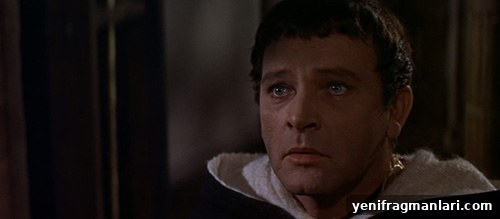
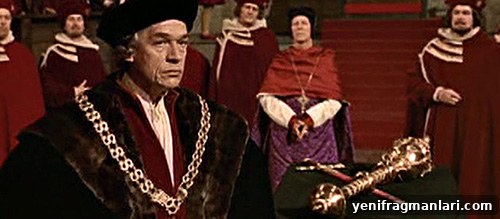
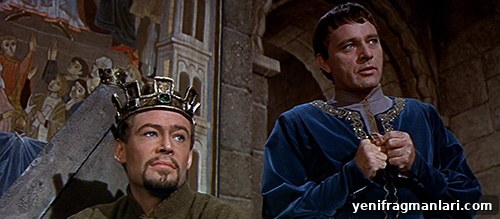
Both are 1960s period dramas adapted from stage plays and both won Academy Awards. Their subjects live three centuries apart—Becket in the 12th century and More in the 16th—but beyond that the parallels rapidly accumulate. Both protagonists are named Thomas—Thomas Becket (Richard Burton) and Thomas More (Paul Scofield). Each rose to prominence at the English court, serving under a King Henry: Henry II (Peter O’Toole) and Henry VIII (Robert Shaw). Each served as Lord Chancellor, trusted advisors and confidantes who eventually collided with the royal will.
Both men became torn between loyalty to the Crown and loyalty to God. In both cases the monarchs judged them to have failed in their duties and accused them of high treason. Both ultimately lost their lives for those convictions: Becket assassinated in his cathedral, More executed by beheading in the Tower. Through those deaths they were regarded as martyrs and later canonised.
The similarities extend to how the films resonated with me personally. To write these religious essays I always acknowledge my Catholic perspective—my interpretations may not match those of other faiths or none at all—but I hope to encourage discussion. In previous pieces I covered works ranging from subtly spiritual to overtly biblical. With Becket and A Man for All Seasons, I feel I’ve moved further: these films are deeply rooted in Catholicism, and more specifically English Catholicism.
English Catholicism feels like an oxymoron at times because of the long shadow of the Reformation, which is central to More’s persecution in A Man for All Seasons. Centuries of vilification and exclusion left Catholicism marginalised in England until the 19th century, when Irish immigration and political emancipation gradually restored a measure of prominence. Today some may assume Catholicism in the UK is no longer significant, but sectarian tensions remain in places, and residual anti-Catholic attitudes still influence society and constitutional arrangements.
As an English Catholic myself, I sometimes feel the awkwardness of holding a ceremonial, emotionally expressive faith within a rather reserved British culture. Yet that distance also fosters a particular pride: our loyalties extend beyond national borders through a relationship with Rome. That tension is exactly why these two films spoke to me and challenged my identity.
A Man for All Seasons and Becket depict the journeys that led to More’s and Becket’s sainthoods, and on the surface I can understand why some modern secular viewers might be uneasy with their choices. Thomas Becket, once Henry II’s worldly and witty chancellor, becomes Archbishop of Canterbury and undergoes a profound conversion. He abandons luxury, gives his possessions to the poor and begins to defend the autonomy of the Church against royal interference. When a priest is murdered while awaiting trial under the orders of one of Henry’s lords, Becket excommunicates the perpetrator—a step that escalates the conflict.
Thomas More’s story is familiar to many: Henry VIII seeks an annulment from Catherine of Aragon in hopes of securing a male heir and marrying Anne Boleyn. More refuses to endorse the annulment and later declines to swear to the King’s declaration as Supreme Head of the Church of England. More’s refusal is not loud or ostentatious; it is a principled silence rooted in conscience and legal reasoning. His silence protects others and reflects deep moral complexity, but it also isolates him and ultimately leads to his execution.
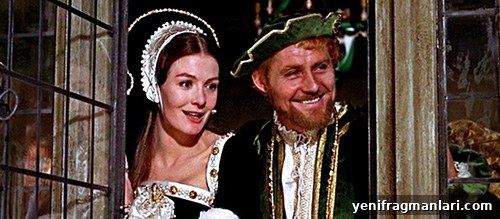
As a modern, secularly formed person, I can be instinctively wary of mixing church and state. Contemporary abuses—politicians invoking divine mandate—can make theocratic entanglement appear dangerous. Yet both films present More and Becket not as zealots but as men of conscience and rare moral integrity. Their holiness is emphasised by contrast with other characters: the two Henrys are portrayed as petulant, petty, and dangerously self-interested. Cardinals and bishops surrounding them often display ambition and corruption rather than virtue.
That contrast is crucial. More and Becket stand out because they refuse corruption. More, as judge and parliamentarian, was known for not accepting bribes and for upholding the law; even when unjustly accused, his reputation is so strong that his enemies must manufacture perjury to condemn him. Becket, once complicit in the Crown’s excesses, transforms into a defender of the Church who refuses to bow to royal pressure. Their rejection of dishonest, worldly behaviour—and their steadfastness when tempted or afraid—defines their sanctity.
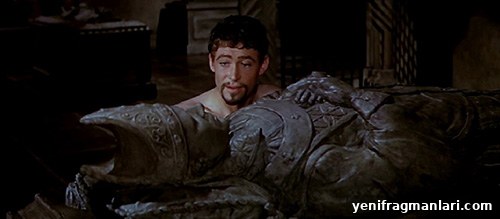
Importantly, their holiness does not mean they were fearless or without doubt. Both films are charged with emotion and human frailty. Becket’s conversion begins with terror when he realises the responsibilities of priesthood: “My Lord, I’m frightened.” He prays, “Please, Lord, make me worthy,” a moment that, for me, captures the Catholic experience—the desire to do right despite an awareness of personal weakness.
More’s path looks less dramatic at first; his refusal is quiet rather than confrontational. But his silence carries great weight. He recognizes the danger not only to himself but to his family and friends and chooses restraint to protect them, even while knowing the moral truth. His final courtroom declaration—that the indictment is repugnant to the law of God—leads to his condemnation, and his calm acceptance of death echoes the image of Christ’s willing sacrifice: “I do none harm, I say none harm, I think none harm. And if this be not enough to keep a man alive, in good faith I long not to live!”
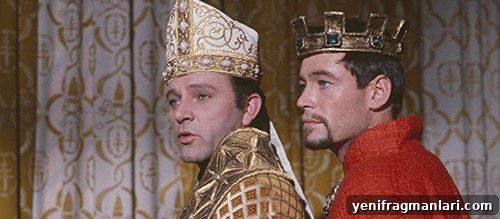
Both films moved me to reflection on what it means to be an English Catholic today. The lives of More and Becket know the loneliness, the danger, and the moral clarity required to hold to faith in a country shaped by the Reformation. Their examples point to acting with conscience, mercy and courage in the face of injustice.
As an English Catholic, I accept certain cultural traits—reserve, politeness, a fondness for tea—and I also feel a responsibility toward the wider good. I cherish the parts of our history that have welcomed the persecuted, expanded rights and care for others: the declaration of asylum, emancipation struggles, women’s rights, the post-war welfare state and a long period of peace in Europe. In the lives of Thomas More and Thomas Becket I find a model: devotion to conscience and care for humanity that transcends nationality, race and station. That is the duty I aim to live by.
Other parts of this series:
- Part 1 – The Prince of Egypt, 2001: A Space Odyssey, A Matter of Life and Death
- Part 2 – Blade Runner, Cloud Atlas, It’s a Wonderful Life
- Part 2.5 – The Miracle Maker
- Part 3 – Brazil, In Bruges