
Lauren Oppelt: Crafting Character Through Costume Design
“The duty of a costume designer is to tell the audience who a person is from the moment you look at them,” says Lauren Oppelt. “You look at this person and you know who they are, where they live, how much money they have, if they like themselves or not, and how their day is going, plus a million other little things.” That succinctly captures the power of costume design: it is storytelling through fabric, color, and silhouette.
To most viewers, costumes can seem like background detail—exceptions are obvious, like superhero suits or elaborate period garments. But a thoughtful costume designer shapes the audience’s first impression and supports a film’s tone, character development, and themes. Oppelt, a self-described “weirdo builder,” comes from a family of strong, commanding women. After graduating, she worked in theatre as a performer and director but began assisting a costume designer when she found a more consistent outlet for her creativity. “I met my friend Ann Closs-Farley, and she would hire me to work as her assistant because I could sew. Meeting Ann changed my life. I am a costume designer for better or for worse because of her,” she recalls.
Early on, Oppelt took costuming work because it offered steady opportunities when acting left creative needs unmet. Over time she turned costume design into a craft and a career, combining technical skill with a playful, exacting eye for detail.
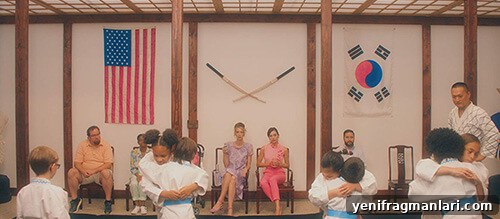
Oppelt’s most recent major project was the feature film Greener Grass, directed by Jocelyn DeBoer and Dawn Luebbe. This marked her fourth collaboration with the directors and is one of her most ambitious efforts. Filming in the Georgia summer, she and two assistants worked long days—often 15 to 20 hours—and costumed more than 50 principal actors (including a dog and two babies) plus hundreds of background performers over several weeks. She made nearly all of the costumes herself, crafting soccer uniforms and hand-applying countless pom-poms, ric rac trims, fake flowers, and fuzzy letter accents. The result is a visual world that is both meticulously constructed and immediately expressive.
For Greener Grass, Oppelt drew inspiration from designers and films such as Colleen Atwood’s work on Edward Scissorhands, Ann Roth’s costumes for The Stepford Wives, and Alix Friedberg’s styling in But I’m a Cheerleader, with touches of Melissa Toth’s Welcome to the Dollhouse and the camp aesthetics of John Waters. The film’s costumes are highly color-coordinated: each woman is associated with a dominant color—Jill in pink, Kim-Ann in green and yellow, and Marriott in orange—and their husbands and children are dressed in variations that echo those palettes. Boys wear blue-tinged masculine accents and girls more pink hues, a deliberate nod to Midwestern conformity and conservative gender codes that the film satirizes.
Costume choices in the movie actively chart character arcs. Lauren points to Lisa’s transformation as a clear example: Lisa starts in mostly blue outfits that gradually shift toward purple as the story progresses, symbolically taking pink from Jill. Her clothing evolves from modest, slightly dated dresses to more confident, homemade jewelry and sharper silhouettes that increasingly mirror Jill’s style. “Lisa evolves in every way from beginning to end,” Oppelt explains. “At first, she’s wearing sort of dated (but still rad) dresses, while Jill wears mostly two-piece outfits. As she becomes more of the alpha, her earrings get bigger, her style gets better, and her silhouette more closely resembles Jill’s.”
Working with directors Jocelyn DeBoer and Dawn Luebbe, Oppelt operates as a collaborator whose costume decisions contribute to the film’s comedic rhythm as much as the script, production design, music, and editing. Small visual jokes—like Buck’s escalating Western wear after a divorce, eventually resembling a playful Woody-like look—enrich character comedy. Practical challenges included costuming a dog and even dressing a soccer ball. The dog, Icee, required multiple outfits that had to satisfy both design and humane handling requirements; Oppelt solved it by fitting children’s garments and securing them with discreet microtags. The soccer ball, affectionately named Twilson in the production, needed a tiny shirt—an amusing task that also served the film’s visual humor.
Looking ahead, Oppelt has signed onto a horror film titled Student Body and will work on the LGBTQIA+ drama See You Then with Mari Walker. She says she’s drawn to horror for its chance to design monsters, creatures, and visual hints that allude to unseen threats. Across genres, her approach remains the same: obsessive care for every piece that appears on camera. “Literally, you are in charge of every single piece of clothing that makes it onto camera. Depending on how much you care, that can be a very daunting task. I aggressively care,” she says.
Lauren Oppelt’s work demonstrates why audiences and critics should pay closer attention to costume design. Clothing in film is not mere decoration; it communicates personality, social codes, and narrative shifts. In Greener Grass, Oppelt’s meticulous, imaginative designs are integral to the film’s satire and visual identity, proving that great costume design is indispensable to storytelling.