


Looking for Eric (2009)
Director: Ken Loach
Screenwriter: Paul Laverty
Starring: Steve Evets, Matthew McNulty, Eric Cantona, Justin Moorhouse, Stefan Gumbs, John Henshaw, Stephanie Bishop, Gerard Kearns
Eric Bishop, played by Steve Evets, is a man in crisis. The film never specifies whether his troubles stem from an identifiable medical condition or from the cumulative weight of misfortune and poor choices. That ambiguity is deliberate: by keeping his diagnosis undefined, the story becomes more universal. Surrounded by family and friends, Eric remains fragile and withdrawn. He insists the incident driving the wrong way around a roundabout was an accident, but the doubt lingers. His vulnerability feels real and persistent, and those closest to him struggle to help.
The film’s most distinctive device is the appearance of Eric Cantona—playing a version of himself—as a kind of guardian figure who emerges from Eric’s imagination. After sharing a stolen spliff from his son’s stash, Eric encounters Cantona, who offers calm, paradoxical wisdom. Whether a figment of fantasy or a projection of Eric’s inner guidance, Cantona becomes the catalyst for his small but meaningful transformation. Through their conversations, Eric learns to face his fears and to reconnect with life.
Directed by Ken Loach, Looking for Eric is not polished in the way many mainstream films are. The muted color palette and the occasional home-video texture contribute to the film’s sense of authenticity. This approach is quintessentially Loach: the focus is on everyday people, working-class life, and intimate domestic struggles. The characters are warm and human, with humor and resilience despite limited material means. The northern English setting and local speech patterns lend the movie a distinctive regional flavor that feels genuine rather than ornamental.
What sets this film apart from some of Loach’s darker works is its comic heart. The script by Paul Laverty balances empathy with levity, producing scenes that laugh with their characters rather than at them. There are moments of genuine hilarity—Cantona’s unexpected interludes and understated physical comedy remain memorable. This lightness does not undercut the film’s seriousness; instead, it makes the story more accessible and emotionally resonant.
Football serves as a central motif and a practical bridge to broader themes. For many of the characters, Manchester United and the culture around the club provide identity, community, and a language for discussing life’s hopes and disappointments. By rooting Eric’s journey in the rituals of fandom, the film addresses male loneliness and mental health in a way that feels relatable and human. Football becomes both a refuge and a means of social connection, helping the film to explore topics that are often stigmatized.
The ensemble cast amplifies the script’s warmth. Justin Moorhouse brings years of comic experience and natural timing; John Henshaw contributes a lived-in authenticity drawn from his long career in British drama and comedy; Gerard Kearns offers a sensitive portrayal of the younger generation, convincingly balancing toughness with vulnerability. Kearns’s chemistry with Evets is particularly effective—he looks plausibly like a son and acts like one, helping to ground the film emotionally.
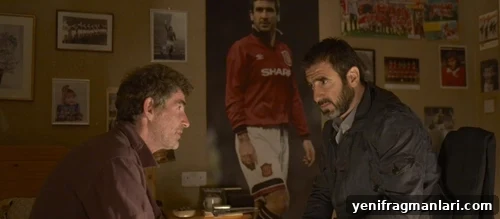
Eric Cantona, though not a professional actor, turns in a surprisingly charming and committed performance. He leans into the role with a relaxed self-awareness, allowing the film to use his celebrity as a tool for both comedy and catharsis. Steve Evets, as the film’s emotional center, plays the “straight man” role with nuance: his quiet desperation and small acts of courage give the movie its moral weight.
The story’s climax veers into near-farce when a group of devoted fans confronts a dangerous local criminal with improvised weapons and determination. This sequence could easily become absurd, but the film frames it as a desperate bid by ordinary people to reclaim agency. The actions are morally ambiguous and legally questionable, yet the audience is led to sympathize with their motives because the characters are drawn with compassion and complexity.
Looking for Eric stands out for telling the story of a community that is often overlooked in contemporary cinema. It captures the dignity, humor, and resilience of working-class life without romanticizing hardship. The real achievement is not simply representation, but the way this familiar material is told: with heart, wit, and respect for its characters.
That said, revisiting the film years after its release invites reflection on the director’s public controversies. Ken Loach’s personal and political positions have prompted debate, and viewers may find themselves weighing an appreciation for his films against concerns about his beliefs and associations. This tension does not erase the film’s merits, but it complicates how audiences choose to engage with his work.
Score: 13/24
Rating: 2 out of 5.