
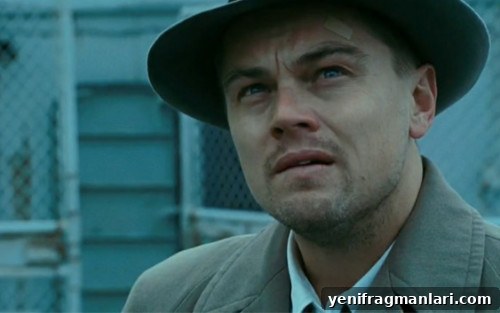
With director Martin Scorsese’s recent projects—most notably The Irishman—earning widespread awards and nominations, it’s timely to revisit one of his most enduring films on its tenth anniversary: Shutter Island. This meticulously crafted psychological thriller remains a resonant examination of trauma, memory, and mental illness, and feels increasingly relevant today.
Released on February 19, 2010, Shutter Island received mixed reviews at first, but over time it has found a devoted audience. The film now holds a strong rating on IMDb and appears among the site’s Top 250 Highest-Rated Films. Its growing reputation reflects a deeper appreciation for Scorsese’s atmospheric direction, Laeta Kalogridis’s tightly woven screenplay, and a powerhouse cast that includes Leonardo DiCaprio, Mark Ruffalo, Michelle Williams, and Ben Kingsley.
Shutter Island showcases Scorsese working in a moodier, more unsettling register than some of his better-known crime films like Goodfellas. The film leans into suspense and horror, recalling the brooding sensibilities of Cape Fear while remaining wholly original. Adapted from Dennis Lehane’s 2003 novel, it blends period atmosphere with psychological horror, producing an experience that continues to haunt viewers.
The story confronts themes of child murder, severe mental illness, isolation, and the long shadows of war—subjects that still disturb contemporary audiences. Fans of crime, mystery, and true-crime narratives will find the film comfortably at home in today’s cultural landscape. The cast’s continued prominence has helped maintain interest in the film, while Scorsese’s direction gives the material a classical cinematic weight.
Shutter Island is also an ideal film for scholarly analysis. It offers rich thematic layers and formal choices that invite close reading. For example, Teddy Daniels’s wartime flashbacks evoke elements of Film Noir and draw inspiration from Hitchcockian suspense as well as earlier classics such as Double Indemnity and The Maltese Falcon. These sequences help situate the film in post-war 1950s America and heighten feelings of isolation, paranoia, and uncertainty—emotions that resonated after World War II and continue to resonate today.
Teddy’s subjective reality is shaped by his wartime experiences and the coping strategies he developed afterward. The film never bluntly labels his condition—reflecting the era in which it is set—but it makes clear that he suffers from trauma and related disorders. Shutter Island’s focus on post-traumatic stress and severe mental illness places it alongside contemporary films that explore similar fears and stigmas, and in this movie such concerns drive the narrative. Coupled with themes of nostalgia and fractured American ideals, the result is an especially unsettling atmosphere.
Roger Ebert observed at the time of release that “the movie is about atmosphere, ominous portents, the erosion of Teddy’s confidence and even his identity. It’s all done with flawless directorial command.” That assessment remains apt: Scorsese’s control of tone, the steadily building tension, and the ominous score create a sustained dread that reaches into the viewer’s core. These stylistic strengths have contributed to the film’s longevity and continued fascination.
The lighthouse functions as a central symbol in Kalogridis’s screenplay: a place that radiates dread and conceals truths. Its looming presence drives the narrative toward the film’s penultimate revelations, when layers of Teddy’s identity and memory begin to fall away. Dr. Cawley (Ben Kingsley) and the island’s staff represent a clinical perspective that seeks to dismantle Teddy’s constructed reality—an exchange that reflects broader tensions between patients and medical authorities, and the difficulty of seeking help in a world quick to judge unusual behavior.
Shutter Island’s final moments consolidate the film’s themes without offering neat closure. Teddy’s last line—“Which would be worse: to live as a monster, or to die as a good man?”—leaves viewers debating whether he has truly been cured, resigned to his fate, or simply returned to a protective delusion. That ambiguity has prompted repeated viewings and countless interpretations, encouraging viewers to reexamine the narrative and its clues.
Ten years on, Shutter Island remains compelling precisely because it resists a single explanation. Its blend of psychological complexity, period detail, and strong performances ensures it stays relevant and provocative. Whether seen as a haunting study of trauma or a puzzle to be unraveled, the film endures as one of Scorsese’s most thought-provoking works—and its mysteries remain open to interpretation.