
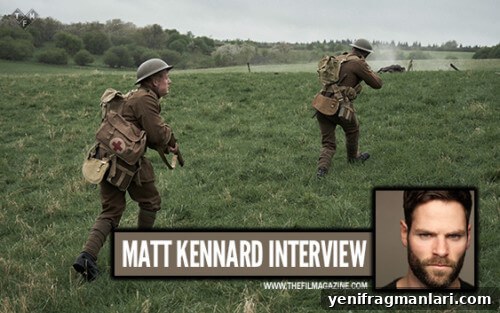
Matt Kennard moved from acting in several well-known British television productions to writing and directing the World War I centenary short film Hymn of Hate. The film was praised for its careful orchestration and emotional handling, described by reviewers as an effective tribute to lives lost in the First World War. In a recent conversation, Kennard discussed his inspirations, the casting of Russell Tovey and Thomas Turgoose, and the film’s relevance to contemporary politics.
What inspired you to adapt the poem into a film?
While finishing a script originally titled “No Man’s Land”, Kennard discovered a nationalistic German poem from World War I that immediately resonated with the story he was telling. The poem’s propagandistic voice and its tribal language—lines that emphasize collective love and hate—captured the emotional core he wanted to explore. The poem gave the project a stronger, more provocative title, and helped crystallize the film’s central theme: how propaganda and fear can shape a nation’s understanding of friend and foe.
“Evil isn’t always in the opposing uniform.”
Why focus on the individual cost of war, especially on the enemy’s side?
Kennard was influenced by numerous historical accounts of soldiers encountering their counterparts across no man’s land—moments that revealed common humanity amid conflict. Examples like the informal truces during the 1914 Christmas period show how quickly the “them and us” mindset can be undermined by real human interaction. For Kennard, these stories raise an important question: might ordinary people have more in common with their so-called enemies than with the elites who send them to fight? The film’s character arc demonstrates that realization. In Kennard’s view, soldiers were often manipulated by powerful figures who used propaganda to serve selfish interests, and the film intends to encourage viewers to look past uniforms and recognize shared humanity.
Was the film intended as a commentary on current political events?
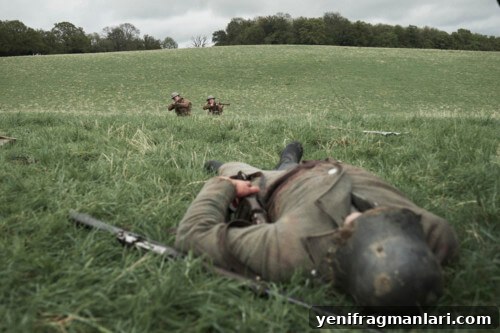
Yes. Kennard sees clear parallels between the forces that drove Europe to war a century ago and modern developments such as Brexit, rising nationalism, and deep political polarisation. He argues that the same patterns—elite manipulation, propagandistic rhetoric, and division among ordinary people—continue to shape contemporary politics. The film aims to highlight how these dynamics distract societies from asking tougher questions, and to urge audiences to resist simplistic narratives that pit people against one another.
Did the film subvert the poem’s message?
Indeed. The film positions its protagonist, May, initially as an embodiment of the poem’s nationalist fervour. Her arc in the story becomes a deliberate subversion: through interactions with Billy and Franz, she confronts the humanity of those she had been taught to hate, and reaches a life-changing understanding that undermines the poem’s original intent.
How did Russell Tovey and Thomas Turgoose join the project?
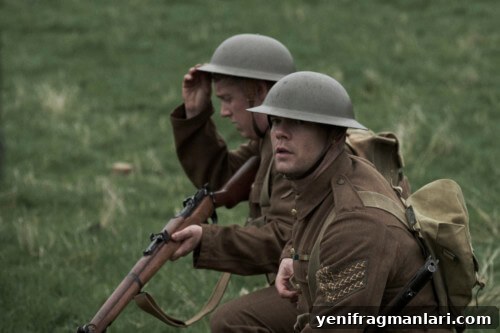
Kennard considers himself fortunate to have both actors on board. Connections through his wife—an actor who had worked with Russell—and a familiarity with local talent helped the casting process. Kennard admired Russell’s stage work and felt his name would strengthen funding applications; Russell responded positively after reading the script. Thomas Turgoose, from Kennard’s hometown, was also receptive and had worked with Kennard’s wife previously. Kennard believed their contrasting styles would create a powerful on-screen tension. Andrew Knott, another cast member and a friend of Russell’s, rounded out a cast that Kennard credits with elevating the script.
How was the period look achieved—costumes and visual style?
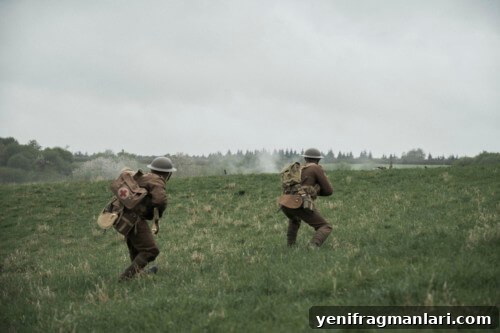
Costume designer Sarah Tapscott sourced much of the wardrobe from a specialist supplier and hired what the production needed, with one deliberately destructible shirt for narrative purposes. Kennard visited the Imperial War Museum for reference and to ensure historical accuracy in accessories. For the film’s visual tone, the team opted for a muted, grainy look. Ruth Wardell, the colourist, worked to achieve a textured, grey palette that reflects period sensibilities while using modern colour techniques to give the film contemporary resonance. The cinematographer proposed 16mm, but the production chose to use old anamorphic lenses and then apply grain and texture in post to reach the desired aesthetic.
“I’m a big Terrence Malick fan and I was keen to use that dynamic movement and intensity he captured in The Thin Red Line and, like him, allow my actors room to shine.”
Which films influenced the look and sound?
Kennard cites several war films as influences. He mentions a particular admiration for Terrence Malick’s work—especially The Thin Red Line—for its dynamic movement and emotional intensity. He also references how sequences from other acclaimed war films shaped the tone and pacing of the film’s second half. The sound design and original score were created to support that aesthetic, reinforcing mood and narrative progression.
How did Kennard’s acting background inform his directing?
With more than twenty-five years as an actor, Kennard arrived on set comfortable with the environment and confident about directing performance. His time in front of the camera taught him the communication styles he values in a director, and he aimed to be calm, energetic and clear while getting the performances he needed. He found it strange not to act during production, but that distance allowed him to focus on making creative choices and guiding the team.
Was directing always the plan?
Kennard began writing in earnest several years earlier as a way to create the kind of roles and stories he wanted to see. Writing led to a clear vision for Hymn of Hate, and because the short script was relatively compact, he decided to direct it himself. The project became his first step into filmmaking from writing and acting.
Why did Mini Productions come on board?
Having initiated production himself, Kennard sought a producing partner to help take the project further without stretching his own resources too thin. A recommendation put him in touch with Mini Productions. The team read the script, believed in the project, and agreed to produce. Kennard speaks highly of their energy and work ethic and says their involvement was essential to the film’s completion.
What’s next for Matt Kennard?
Kennard is currently writing several TV series, with two projects moving closer to potential production, and working on a feature script about the arms trade. He plans to adapt a short extract from that feature into a stand-alone short as a proof of concept. He also expects to continue acting to support his filmmaking ambitions.
Where to follow his work
Kennard shares updates on social media, including posts about his French bulldog and festival or screening news related to Hymn of Hate. He posts festival updates and screening information on his social profiles.
You can find out more about Hymn of Hate on the Mini Productions website and on IMDb. The film remains a thoughtful, visually driven reflection on war, propaganda, and the human connections that can break through the rhetoric of hate.