

MaXXXine (2024)
Director: Ti West
Screenwriter: Ti West
Starring: Mia Goth, Elizabeth Debicki, Moses Sumney, Michelle Monaghan, Bobby Cannavale, Halsey, Lily Collins, Giancarlo Esposito, Kevin Bacon
Ti West’s horror trilogy began with X (2022) and its companion prequel Pearl (2022). Both films mix unsettling violence with layered commentary on the shifting relationship between sex, censorship and spectacle in cinema history. X is set in 1979 and follows young filmmakers who travel to a rural Texas farmhouse to make an explicit film, only to encounter murderous residents; Mia Goth played both the fleeting young star Maxine and the unbalanced older woman Pearl. Pearl, set in 1918, traces the origins of that older character, drawing on early Hollywood aesthetics and wartime isolation to build a tragic, feverish portrait. Together they establish West’s interest in the intersection of ambition, repression and popular culture.
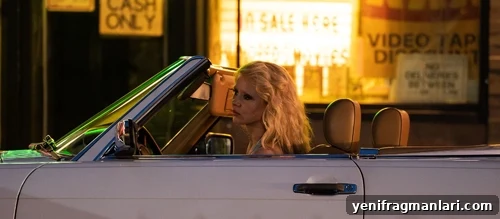
Released in North America on July 5, 2024, MaXXXine is the trilogy’s concluding chapter and a direct sequel to X. It relocates Maxine to Los Angeles in 1985, where she has reinvented herself as an adult film star while trying to break into mainstream entertainment. West fashions the film as an homage to 1980s genre cinema: VHS artifacts, neon lighting, slasher conventions and noir beats fill the film’s look and mood. The story threads in historical touchstones of the era—the conservative politics of the Reagan years, the cultural anxiety of the Satanic Panic and the real-world figure of the Night Stalker who terrorized L.A.—to ground Maxine’s attempt at reinvention in a turbulent cultural moment.
The central narrative follows Maxine as she chases mainstream stardom and lands a starring role in a horror sequel titled Puritan II, directed by Elizabeth Debicki’s character, Elizabeth Bender. But past violence and the public infamy of the “Texas Pornstar Massacre” continue to shadow her. She faces invasive attention from a sleazy private investigator, John Labat (Kevin Bacon), and tension with local detectives Williams (Michelle Monaghan) and Torres (Bobby Cannavale), who suspect she may be connected to a spate of copycat murders. As young actresses are targeted around her, Maxine must wrestle with whether to confront her past or risk being erased by a new wave of predators.
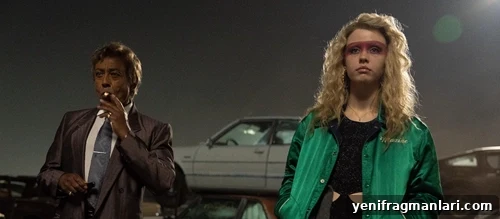
Visually, MaXXXine is striking: West’s production design and cinematography capture the texture of mid‑80s Los Angeles and the era’s media saturation. The film is full of carefully composed references to slasher cinema, Italian horror flourishes and neon-drenched period detail that make it a rich pastiche. Where it falters is in turning that style into substantive critique. The movie often feels more intent on dressing scenes in retro signifiers than interrogating the ideas those signifiers represent. Pastiches succeed when they use imitation to illuminate or skew their source material; here, the replication rarely opens into a deeper conversation about fame, exploitation or the industry’s changing relationship with sex.
Structurally, the film tries to juggle slasher suspense, darkly comic noir and industry satire, but this fusion is uneven. Pacing slips into long stretches that lack tension, and many supporting characters register as thin sketches rather than fully realized figures. Kevin Bacon leans into his role with relish and provides one of the film’s more memorable turns, but other performances, including Elizabeth Debicki and Giancarlo Esposito, feel underused. Singer Halsey’s performance as fellow adult performer Tabby Martin comes across as stiff at times, which further undermines emotional investment in the cast.
Most crucially, Maxine—who should be the trilogy’s emotional center—never fully becomes a person on screen in this installment. Despite Mia Goth’s committed presence and the intriguing legacy established by her dual performance across the series, MaXXXine leaves her character’s inner life largely unexplored. Moments that might hint at transformation, rage or moral complexity are introduced and then dropped, leaving her arc feeling predictable and anticlimactic rather than revelatory. The film raises questions about whether Maxine might repeat darker patterns embodied by Pearl, but it never follows through in a meaningful way.
There are pleasures to be had—West’s eye for period detail, the film’s confident production design and occasional jolts of atmosphere—but the trilogy’s final chapter ultimately values aesthetic homage over emotional clarity. Themes that could have tied the three films together—how fame corrupts, how sex and violence are negotiated in popular media, and how cultural panic shapes personal lives—are hinted at more than resolved. The result is a visually bold but narratively hollow conclusion that leaves the central character underexplored and the series’ larger critique only partially articulated.
Score: 11/24
Rating: 2 out of 5