

Midsommar (2019) Review
Director: Ari Aster
Screenwriter: Ari Aster
Starring: Florence Pugh, Jack Reynor, Vilhelm Blomgren, William Jackson Harper, Will Poulter
Ari Aster’s second feature, Midsommar, confirms the filmmaker as one of contemporary horror’s most distinctive voices. Following his striking debut, Hereditary, which blended family drama and supernatural dread, Aster returns with a film that is at once sunlit and deeply unsettling. Where many horror directors rely on jump scares and predictable beats, Aster builds tension through character, ritual, and visual craft.
The film follows Dani (Florence Pugh) and Christian (Jack Reynor), a young couple nearing the end of their relationship. Christian, distant and preoccupied, spends most of his time with three friends—Pelle (Vilhelm Blomgren), Josh (William Jackson Harper) and Mark (Will Poulter)—who encourage him to move on. After a devastating personal tragedy leaves Dani in acute grief, Christian reluctantly invites her to accompany the group to Sweden for a midsummer festival in Pelle’s ancestral village. What begins as a holiday meant to heal slowly unravels into a disorienting nightmare.
Aster excels at portraying the small, awkward moments that reveal relationships in distress. Dani’s attempts to be present and enjoy the trip are frequently undercut by her fragile emotional state and by the insensitivity of Christian’s friends. This tension becomes the film’s emotional core: Dani’s desperation for comfort contrasts with Christian’s passive drift and the group’s casual cruelty, making their dynamics a fertile ground for horror to take root.
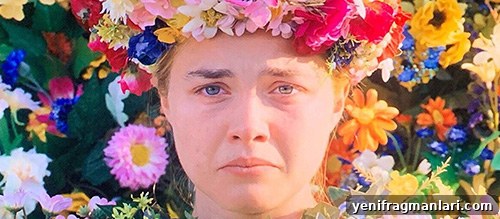
The setting is integral to the movie’s power. The village is sun-filled, pastoral, and meticulously staged with flowers, wooden structures, and villagers in traditional dress. On the surface it feels idyllic—meals shared at long tables, communal sleeping in a barn, elders who greet visitors with warmth. Yet the rituals and customs of this isolated commune become increasingly peculiar and unnerving. Aster uses this contrast—the brightness of daylight against ritualized brutality—to create a sustained, uncanny atmosphere that is rarely seen in horror, where darkness usually does the heavy lifting.
Visually, Midsommar is arresting. The cinematography bathes the landscape in radiant, pastoral light that makes gruesome moments feel even more dissonant. Aster peppers the imagery with subtle distortions—slight asymmetries and visual cues that hint something is off, especially during sequences that involve drugs or altered perception. The result is a film where almost every frame contains a detail meant to unsettle, from a single meaningful look to a violent, visceral tableau. These choices reward attentive viewers and amplify the film’s dread.
Narratively, Aster is adept at building toward multiple payoffs. He plants small conflicts and ambiguous clues early on, letting them accumulate into a thematic and emotional crescendo. Yet the film’s final act divides opinion: Aster pushes the story into a surreal, ritualistic climax that some viewers will find hypnotic and others will find overly stylized. The ending is deliberately extreme, and while it fits the film’s mythical, cultic logic, it leaves certain narrative threads more impressionistic than resolved. Fans of Aster’s previous work may recognize this tendency—his movies often privilege emotional and symbolic closure over tidy plot resolution.
Performances anchor the film. Florence Pugh brings a raw, vulnerable intensity to Dani, giving the character real interior life and making her transformation believable. Jack Reynor portrays Christian as affable but emotionally evasive, and the supporting cast populate the group with convincing, uneasy chemistry. While the ensemble here may not reach the dramatic peaks of some of Aster’s earlier collaborators, the acting reliably serves the film’s psychological aims.
Despite reservations about its final act, Midsommar is a compelling, original work that solidifies Ari Aster’s place as an important contemporary filmmaker. It challenges genre expectations by turning daylight and pastoral beauty into sources of dread, and it interrogates grief, codependence, and communal identity through striking, often disturbing imagery. The film is not an easy watch, but for viewers open to a slow-burn, emotionally intense horror experience, it delivers a singularly memorable and haunting ride.
20/24
Written by Samuel Sybert