
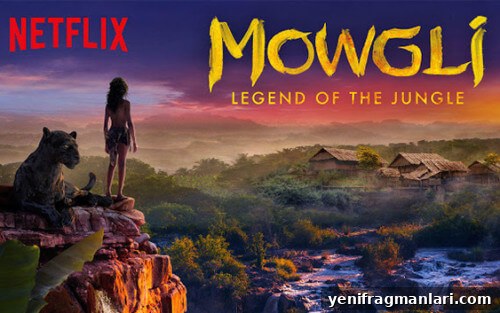
Mowgli: Legend of the Jungle (2018)
Director: Andy Serkis
Screenwriter: Callie Kloves
Starring: Rohan Chand, Christian Bale, Cate Blanchett, Benedict Cumberbatch, Naomie Harris, Andy Serkis, Peter Mullan, Jack Reynor, Eddie Marsan, Tom Hollander, Matthew Rhys, Freida Pinto
Review — Mowgli: Legend of the Jungle (Netflix, 2018)
Andy Serkis’s Mowgli: Legend of the Jungle presents a darker, more adult-oriented interpretation of Rudyard Kipling’s classic Jungle Book tales. After a lengthy production process that began in 2015, Warner Bros. sold the film to Netflix, partly because the studio felt audiences would be reluctant to embrace a second big-screen retelling so soon after Disney’s widely successful 2016 adaptation. Serkis set out to deliver a grittier, PG-13 take on the material, but the final product ultimately struggles to decide whom it is meant to serve.
Mowgli aims for a middle ground between family-friendly adventure and mature drama, and it rarely finds balance. The film is caught between two audiences: it’s often too serious and narratively opaque for younger viewers yet not fully developed or resonant enough for adults expecting a more profound exploration. The tone wavers, and the emotional beats do not consistently land, leaving the story feeling incomplete at times despite some ambitious ambitions.
One of the film’s clearest strengths is its motion-capture visual work. The animal characters—particularly the big cats, wolves and bears—are rendered with impressive detail. Fur, whiskers and subtle facial movements convey a strong sense of life, and the animators pay careful attention to the animals’ eyes, using them to underline the film’s moral contrasts: hunting to survive versus hunting to kill for sport. These visual choices are among the movie’s most compelling and are likely to receive recognition in visual effects discussions.
However, the technical brilliance of the creatures is undermined by weaker elements elsewhere. The sets and production design often feel artificial; lighting and staging frequently call attention to the film’s studio origins rather than creating a convincing natural world. This sense of artifice hampers the suspension of disbelief crucial to immersive fantasy storytelling. Combined with uneven editing, those production choices make the jungle feel less like a lived-in environment and more like a backdrop.
Editing problems are a recurring issue. The film’s pacing is inconsistent: long stretches of montage and repetitive training sequences delay meaningful character development, and key moments that should deepen emotional investment instead pass without impact. As a result, the narrative sometimes reads as a series of episodes rather than a cohesive arc. Slow-motion and stylistic flourishes occasionally feel gratuitous and distract from rather than enhance the story.
Dialogue and characterization also undermine the film’s aims. Mowgli’s language is frequently overly formal and expository, presenting the child’s internal struggles in lines that feel beyond his life experience and age. Rather than revealing character through action and subtlety, the script often resorts to blunt declarations of feeling and motivation. This tendency reduces nuance and makes certain scenes feel staged rather than earned.
Performance-wise, the voice and motion-capture cast deliver mixed results. Christian Bale (Bagheera) and Cate Blanchett (Kaa) are standouts, bringing depth and nuance to their animal roles. Rohan Chand, who plays Mowgli, shows promise but is occasionally undone by the script’s stilted dialogue; his performance oscillates between genuine vulnerability and moments that read as overly rehearsed. The supporting cast contributes strong moments, but the uneven tone prevents consistent emotional payoff.
The score by Nitin Sawhney alternates between evocative and overly dramatic, reflecting the film’s struggle with consistency. At its best, the music elevates intimate scenes and underscores moral lessons. At its weakest, it swells into melodrama and clashes with the film’s quieter beats.
For viewers expecting a family-friendly adventure in the tradition of the 2016 adaptation, Mowgli will likely feel heavy and joyless. For audiences seeking a fully realized adult reimagining of Kipling, it lacks the narrative depth and focus to satisfy. The film contains memorable technical achievements—particularly in motion capture and creature design—but these are not matched by storytelling that is coherent, emotionally compelling or appropriately paced.
In summary, Mowgli: Legend of the Jungle is an ambitious but uneven take on a familiar tale. Its visual effects and creature performances are frequently impressive, yet inconsistent editing, artificial production design and overly expository dialogue prevent the film from achieving the darker, more mature resonance it strives for. A strong contender for visual effects recognition, the movie nevertheless remains a flawed experiment that struggles to find its audience.
9/24