
Inside the Rot: Oliver Bernsen on Bagworm, Family, and Making the Movie You Can Make
What is Bagworm About?
I first heard about Bagworm after its North American premiere at the 2026 SXSW Film & TV Festival, though I didn’t catch it there. Seeing it later at the Calgary Underground Film Festival felt like a stroke of luck, because this is a film that’s easier to experience than to summarise. A simple logline can’t capture its tonal range or the odd intimacy at its core.
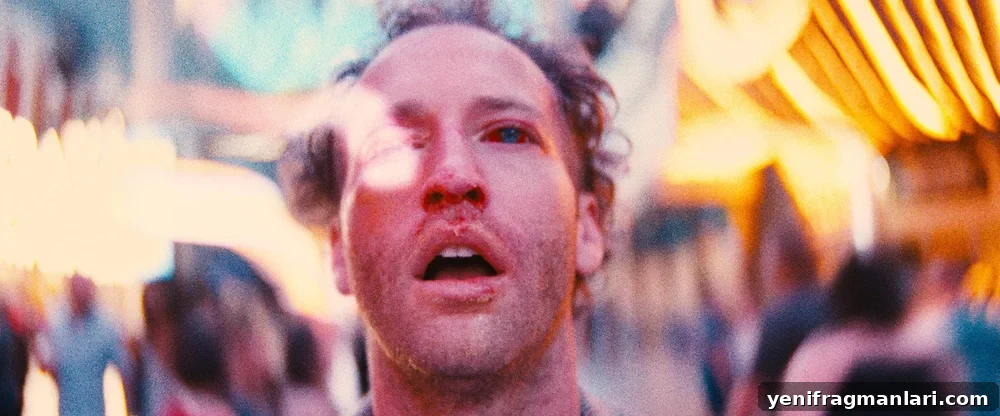
On the surface the plot is straightforward: Carroll, a sexually frustrated hammer salesman, steps on a rusty nail and then drifts into a progressively distorted physical and psychological decline. The world around him appears to rot as his body deteriorates. But that description only skims the surface.
Oliver Bernsen, the film’s director, laughed when I asked him to pin the movie down. “Yeah, don’t ask me,” he said, then offered a sharper reading: it’s a character study about a man at a low point who thinks everything around him has gone wrong, while being blind to the fact that his own behaviour helped create that decay. In that way, Bagworm is less a straightforward tale of external rot than a study of self-delusion, isolation, and how a private collapse can distort perception of the world.
That contradiction — a descent into grotesque bodily horror that also reads as a painfully domestic story of denial and family dysfunction — is what gives the film its strange power. It lands somewhere between a Terry Gilliam–style odyssey into madness and the blackly intimate portrait of a family quietly unravelling, and it’s the tension between those poles that keeps the film compelling.
The World Outside and the House Within
One of the film’s strengths is how Carroll’s house reads not as a neutral set but as an extension of his body. The home feels sick, cramped, and half-alive — a living, decaying thing that mirrors his interior rot. On screen it functions less like scenery and more like an organ slowly failing.
The set itself grew from improvisation. Bernsen told me the idea began when they found a burned-out house near where his brother Henry — who wrote the script — was living. The impulse was immediate: make a film that takes place in that house. Once inside they discovered the building was dangerous and unstable, so rather than shoot there they reconstructed the interior in a large garage-like space Henry had access to. Angus Bernsen and production designer Tyler Evans rebuilt the house from scratch, giving it a handcrafted, carefully worried-over texture that reads as both realistic and uncanny.
The film’s artisanal feel owes a lot to family craftsmanship. Oliver traced his lineage through generations of actors, producers, and radio personalities; his father and mother acted, and other relatives worked in carpentry and housebuilding. That blend of performance and practical skill is visible in the movie: it looks handmade because people in the family actually build things out of little resources. Henry’s script, Angus’s set work, and appearances by family members on screen make the project feel rooted in a shared creative and practical tradition. Memory and loss also haunt the production — Bernsen noted that one of the beach houses seen in the film belonged to family and later burned in real life — lending the film an uneasy layer of real-world resonance.
Not Waiting for Perfect Conditions
Bagworm is a useful example for anyone who talks about making a film and waits for the right moment. It’s not the product of ideal circumstances; it was made by people asking, “What can we do right now?” Bernsen and Henry had been developing a larger horror film that stalled. Then, after driving past the burned house, a smaller, more immediate idea took hold and they redirected their efforts.
The process was far from neat. They wrote a full script, filmed about two-thirds of the movie, ran out of money, paused, edited what they had, re-evaluated the story, rewrote the ending, and went back to shoot the final third. Bernsen described it as “improv writing,” where the film matured through interruption and reassembly. That stop-and-start process might have made the final product messier, but it also clarified what the movie needed to become.
Bernsen spoke candidly about the unromantic side of indie filmmaking: crowdfunding, returning to day jobs — he worked as a landscape designer — and scrimping until they could finish. That practical honesty is key. The interruption that forced them to reassess the story ultimately helped them find an ending truer to the film’s evolving mood. For a movie built on subjectivity, dread, and tonal accumulation, that emergent quality matters enormously.
The 16mm Look of Bagworm
The film’s texture is central to its effect. Bernsen wanted to shoot on film from the start, and they settled on 16mm despite the significant cost. Film stock, processing, and scanning took up a large portion of the budget; had they fully tallied the expenses earlier they might have hesitated. They tested Super 8 for a scrappier feel, but that option felt too inaccessible. 16mm offered a tactile, weathered image that still reads clearly on screen.
Shooting on film also imposed discipline: the crew typically did one or two takes per angle, and the entire shoot wrapped in fourteen days. Limited film stock forced efficient rehearsals and purposeful choices. That economy suited the material — performances are energetic without being indulgent, and the filmmaking feels precise and alert.
Cinematographer Adriel Gonzalez helped shape this documentary-adjacent look. Bernsen wanted the camera to feel like a visitor arriving in an already-lived-in world, invoking documentary references while allowing for occasional cinematic flourishes. The result is a visual language that feels lived-in and weathered, an image texture that matches the film’s themes of decay and denial.
Peter Falls and the Weight of Carroll
The film rests on the central performance of Peter Falls as Carroll. The role demands abrasiveness, humor, awkwardness, and a kind of watchability that keeps the audience engaged despite the character’s many flaws. Bernsen said they lost an actor late in prep and had only about two weeks to cast Carroll. Peter read the script twice in a night and called the next morning excited — Bernsen knew immediately he had the right man.
There’s a prickly, inviting quality to Falls’s performance that Bernsen compared to Richard Dreyfuss: someone who can be bristly and still endearing. Small, unscripted beats often land hardest — Bernsen pointed to a brief restaurant moment where Carroll pauses when asked if he wants pepper, then says no. That tiny hesitation, slightly off-kilter and unexpectedly funny, encapsulates how the actor plays the character: suspicious, withholding, petty, and oddly human. Moments like that prevent the film from collapsing under its own misery.
The Backseat Freestyle
One scene that lingers is an awkward backseat “freestyle” sequence. It’s both over-the-top and deadpan, quietly escalating into something absurd and horrific. The scene feels improvised in the right way: not polished, but intentionally unrefined. Bernsen revealed that the moment was not written fully in the script but came from Peter. The actors were asked to create material that sounded like genuine freestyling — it had to build in the worst possible way until it landed in an embarrassingly awful place. The only strict rule was that it had to end with the word “carrot.” That modest constraint produced one of the film’s most memorable and darkly funny moments.
That approach — a clear prompt, trust in performers, and an ear for tone — is emblematic of how the film operates. Even its funniest beats feel slightly unstable, part controlled and part accidental, which keeps viewers off-balance in the best possible way.
Back Through Calgary

By the end of our conversation Bernsen was already plotting the next move. The positive response to Bagworm encouraged the core team — Oliver, Henry, Peter, and many of the same collaborators — to keep working together rather than waiting for a bigger, more official green light. While in Calgary they began sketching ideas for another project, one that might use the city’s distinctive locations, including Caesars and the skywalks.
What remains striking about Bagworm is the film’s ethos: independent cinema doesn’t have to choose between ambition and constraint. Often, limits are what force creative clarity. A smaller, stranger, more achievable idea can allow filmmakers to explore what they need to say without compromise.
Bagworm is grotesque, funny, uncomfortable, and intimate in ways glossy films often are not. Under all the rot and absurdity sits a human truth: a man externalizing what he cannot face in himself, collapsing inward and misreading the world as a reflection of his own failures. The film is messy because Carroll is messy; it is contradictory because he is contradictory. Through that grime, Bernsen and his collaborators have made something unnervingly precise.
Bagworm was awarded an Honourable Mention for the Jury Award at the 2026 Calgary Underground Film Festival.