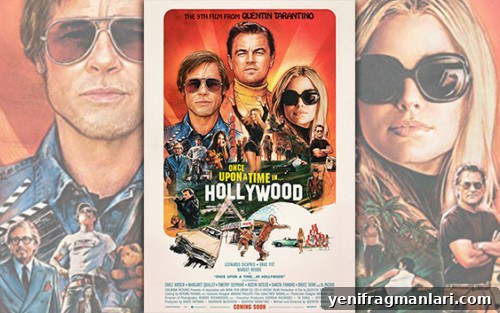
Once Upon a Time… In Hollywood (2019)
Director: Quentin Tarantino
Screenwriter: Quentin Tarantino
Starring: Leonardo DiCaprio, Brad Pitt, Margot Robbie, Emile Hirsch, Margaret Qualley, Timothy Olyphant, Julia Butters, Austin Butler, Dakota Fanning, Bruce Dern, Mike Moh, Al Pacino, Luke Perry, Damian Lewis, Kurt Russell, Lena Dunham, Maya Hawke, Michael Madsen
Quentin Tarantino’s ninth film is unmistakably his: richly styled, referential, and soaked in cinematic nostalgia. Yet where many of his previous films balanced homage with taut storytelling, Once Upon a Time… in Hollywood often feels like a work that toes the line between tribute and self-parody. The result is a film that both celebrates and interrogates the director’s influences—and occasionally allows his personality and references to overshadow the story itself.
The film luxuriates in period detail and classical cinematography, recreating late-1960s Los Angeles with a level of craft that will reward viewers who love the textures and rhythms of old Hollywood. Tarantino’s affection for the era is evident in every frame: the production design, soundtrack choices, and deliberate camera work all evoke a bygone industry. Yet those très-beautiful moments sometimes serve as pauses in a narrative that moves unevenly, as if the director preferred to linger on mood and homage rather than propel the plot.
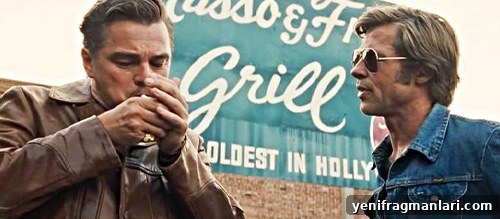
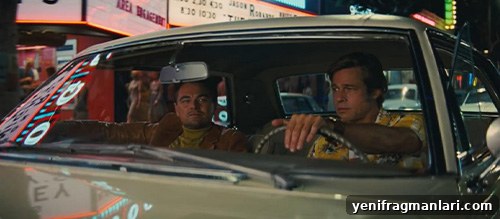
At the film’s center is the friendship between Rick Dalton (Leonardo DiCaprio) and Cliff Booth (Brad Pitt). DiCaprio and Pitt are both superb: DiCaprio brings volatile insecurity and yearning to Rick, while Pitt offers a laid-back, charismatic performance as Cliff that grounds the movie’s more meandering tendencies. Their chemistry—warm, convincing, and at times bittersweet—turns the movie into, in many ways, a deeply felt buddy picture. Tarantino borrows elements from Westerns and classic studio-era storytelling to shape their relationship, making their bond the emotional core that holds the film together.
The inclusion of the Manson Family murders and the figure of Charles Manson functions here as both historical backdrop and narrative fulcrum. Tarantino reinterprets and reimagines historical events in a manner he has used before: he bends history to suit his moral and cinematic aims. That approach is provocative, and in this case it raises difficult questions about the ethics of rewriting violent events for entertainment. The director seems directly responsive to critics who have accused his work of glamorizing or excusing violence, especially violence toward women, and the film’s climactic sequence reads as a defiant rejoinder—an audacious, gleefully cinematic answer that has proven divisive.
There are moments of pure exhilaration in the final act; Tarantino’s command of tension and release is on full display. That same sequence, however, highlights a central tension in the film: while the finale is one of Tarantino’s most striking and uncompromising pieces of filmmaking, it also underlines how much of the movie serves the director’s own voice and grievances. To fully appreciate the film, an audience member must not only recognize the many cinematic references but must often be attuned to Tarantino’s larger persona and preoccupations—something that may alienate viewers less versed in his body of work or Hollywood lore.
Structurally, the film’s 2-hour-41-minute runtime (reduced from an even longer original cut) produces mixed results. The pacing frequently luxuriates, and at times the narrative feels disjointed, with chapters that meander and sequences that primarily showcase atmosphere rather than forward momentum. Still, this leisurely pace allows for memorable character moments: DiCaprio’s unguarded outburst in one scene and Pitt’s steady, laconic presence in so many others create a believable, lived-in world.
Supporting performances are strong across the board. Margot Robbie’s portrayal of Sharon Tate is gentle and luminous, offering a humane center amid the surrounding darkness and artifice. The cast—veterans and newcomers alike—brings texture and authenticity, reinforcing Tarantino’s knack for assembling ensembles who feel like real people inhabiting a highly stylized reality.
Technically, the film excels: the production design, wardrobe, and cinematography combine to produce one of Tarantino’s most visually assured pictures. Editing choices during tense sequences sharpen suspense, and the film’s soundtrack reinforces its nostalgic pull. Yet the same confident technical craftsmanship sometimes amplifies the film’s indulgences; when the director points the camera back at his own canon, the result can feel less like homage and more like self-referential looping.
Ultimately, Once Upon a Time… in Hollywood is a complex and personal film. It will be celebrated by those who relish Tarantino’s stylistic bravado and his willingness to reshape history for dramatic effect, while frustrating viewers who prefer a stricter focus on narrative cohesion. It is at once one of his most polished, film-literate works and one of his most unabashedly self-aware—perhaps even self-critical—pieces. Whether that self-awareness reads as courageous reinvention or weary self-parody will depend largely on the viewer’s appetite for the director’s voice.
Score: 15/24