
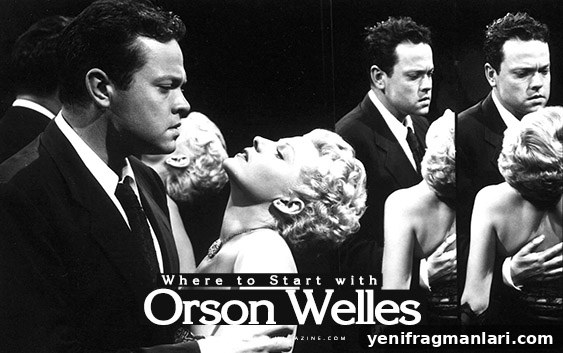
Orson Welles enjoyed one of the most fascinating and turbulent careers in cinema history. Celebrated as a prodigy from the start, he seldom retained final cut on his films, which led to numerous critical and commercial disappointments beyond his control. Poor box office returns effectively exiled him from the Hollywood system. Frustrated by constant clashes with studio executives, Welles relocated to Europe, where he found greater creative freedom and produced some of his most daring work. To finance his projects he sometimes took surprising gigs, from commercials to small roles in unexpected films such as The Muppets Movie, and even voice work like Unicron in The Transformers: The Movie. Outside of film, Welles was an enthusiastic magician and a lifelong member of the International Brotherhood of Magicians—an intriguing facet of his personality.
A true maverick, Welles pioneered a bold, distinctive cinematic language. He frequently pushed narrative boundaries and experimented with technique to craft memorable visual and storytelling experiences. He made extensive use of deep-focus photography, keeping foreground and background simultaneously sharp to expand each frame’s storytelling potential. His editing, often using cross-cutting and overlapping dialogue, influenced generations of filmmakers and helped create a more dynamic, immersive form of cinema.
Some of his most renowned works, however, are not included in this guide. Notably, Citizen Kane—often hailed as a pinnacle of film art—and the late-career documentary F for Fake are both deliberately omitted here. Citizen Kane tends to be better appreciated after a viewer becomes familiar with Welles’ style and influences, while F for Fake rewards those who know his broader body of work because of its numerous callbacks and playful structure. Both films remain essential viewing, but this guide focuses on films that serve as approachable entry points into Welles’ career.
There are many other Welles films that deserve mention—Chimes at Midnight, with its breathtaking battle sequence that influenced later historical epics, and his Othello, one of the most artfully shot black-and-white films ever made. Yet for those just beginning to explore his oeuvre, the three films selected here provide ideal starting points to understand his talents as director, actor, and storyteller. This is Where to Start with Orson Welles.
1. The Third Man (1949)
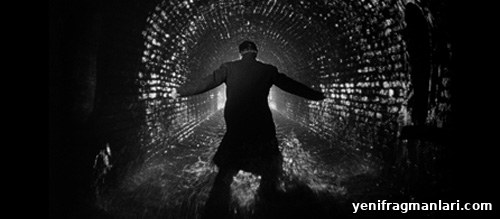
The Third Man is a classic film noir set in post-World War II Vienna. The plot follows writer Holly Martins, who arrives in the city after being offered a job by his old friend Harry Lime—only to learn that Lime has died under mysterious circumstances. As Martins investigates, he becomes drawn into a web of deceit and discovers that his friend may not have been who he believed.
Although Welles did not direct The Third Man, his supporting role as Harry Lime is magnetic and unforgettable. From the moment he appears, Welles commands the screen with a presence equal to any director’s. His entrance is often cited as one of the most memorable in cinema history: a performance that blends charm and menace, instantly dominating every scene he inhabits. One famous sequence—where Lime delivers a monologue about the futility of justice while riding a Ferris wheel—remains iconic largely because of Welles’ delivery and contribution to the dialogue.
Director Carol Reed and cinematographer Robert Krasker crafted a striking visual approach that uses unusual camera angles, dramatic shadows, and expressive lighting to sustain a noir atmosphere. The sewer sequence, in particular, employs darkness and claustrophobic framing to create a chilling climax. Krasker’s work was recognized by the Academy with the Best Cinematography award. Anton Karas’ zither score also gives the film a unique tonal identity, distinguishing it from contemporaries.
While The Third Man succeeds as a collaboration—Joseph Cotten’s grounded performance and Reed’s assured direction are essential—it’s an ideal introduction to Welles’ charisma and the kind of complex, larger-than-life characters he could inhabit.
2. Touch of Evil (1958)
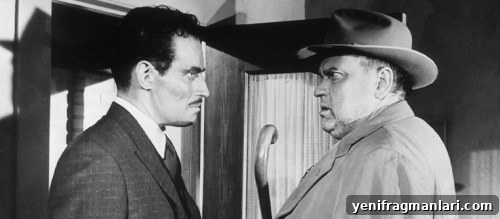
Directed by Orson Welles, Touch of Evil centers on a corrupt police captain, Hank Quinlan, who investigates a car bombing on the U.S.–Mexico border. When evidence points to a Mexican national named Sanchez, Quinlan abuses his power to frame him. Meanwhile, Mexican narcotics officer Miguel Vargas becomes entangled in the case and grows increasingly frustrated with the corruption and prejudice that taint the investigation. The film builds into a tense, morally complex confrontation between Quinlan and Vargas.
Touch of Evil opens with a masterful three-minute tracking shot that follows a car containing a bomb as it crosses the border. That sequence alone demonstrates Welles’ brilliance: a technical and narrative achievement that ratchets up tension by making the audience privy to a looming threat. The rest of the film matches that intensity with a story that escalates into a powerful finale.
Welles also stars as Hank Quinlan, a hulking, corrupt presence whose framing and camera treatment emphasize his domineering influence. He is often shown in fragmented framing that suggests his moral disintegration and looming control. Through Quinlan, the film investigates themes of racism, abuse of authority, and moral compromise—subjects that remain strikingly relevant. Touch of Evil stands as a landmark of noir filmmaking and a perfect example of Welles’ dual gifts as director and performer.
3. The Lady from Shanghai (1947)
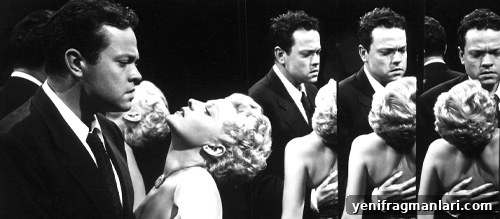
The Lady from Shanghai follows sailor Michael O’Hara, who becomes entangled with Elsa Bannister, the enigmatic wife of a wealthy lawyer. Hired to work aboard the Bannisters’ yacht, Michael soon finds himself implicated in a plot to murder Elsa’s husband and must navigate betrayal, seduction, and deception to clear his name and uncover the truth about Elsa’s motives.
This film highlights Welles’ playful and charismatic side. His slightly wobbly Irish accent and charismatic presence make Michael simultaneously flawed and endearing—an acknowledgment that even a celebrated genius can be imperfect and fun. Opposite him, Rita Hayworth—his then-wife—delivers a mesmerizing performance as Elsa: cunning, alluring, and dangerous. Their chemistry is one of the movie’s strongest assets and a delight for fans of classic Hollywood.
Welles demonstrates his technical skill here as well, most famously in the climactic hall-of-mirrors sequence, which creates a dizzying, disorienting visual experience that has inspired countless homages. While the plot can feel tangled at times, Welles’ dynamic camerawork and confident staging keep the film compelling.
With vivid performances and iconic imagery, The Lady from Shanghai is an excellent and entertaining entry point into Welles’ films. It touches on recurring themes in his work—betrayal, corruption, and the dark underside of desire—while remaining brisk, stylish, and watchable.
Recommended for you: Where to Start with Powell & Pressburger
Approaching Orson Welles can feel intimidating: his debut carries immense acclaim, and his career is often discussed in superlatives. Yet his filmography—with roughly a dozen completed feature films and numerous unfinished projects—is compact and remarkably rich. Across his Hollywood and European periods, Welles delivered unforgettable performances, striking visuals, and dense thematic material that reward repeated viewing. If this guide helps you take the first step, consider exploring the rest of his work—especially Citizen Kane, F for Fake, and The Trial—to appreciate fully one of cinema’s most original talents.