
This article was written exclusively for The Film Magazine by Christopher Connor.
Shaun of the Dead (2004)
Director: Edgar Wright
Screenwriters: Simon Pegg, Edgar Wright
Starring: Simon Pegg, Nick Frost, Kate Ashfield, Lucy Davis, Dylan Moran, Peter Serafinowicz, Rafe Spall, Bill Nighy
Since its release, Shaun of the Dead has grown into one of the most beloved British comedies of the modern era. As the first entry in Edgar Wright, Simon Pegg and Nick Frost’s Cornetto Trilogy, it has left a lasting mark on British cinema and inspired a generation of filmmakers who admire its blend of genre affection and sharp, character-driven comedy.
The film emerged from the creative team’s earlier work on the cult sitcom Spaced, which helped launch Pegg, Frost and Wright into the wider public eye. Over the years that followed, each of the three collaborators developed successful careers on both sides of the Atlantic: Pegg took on major franchise roles, Frost continued to find memorable parts, and Wright established a reputation for energetic, visually inventive filmmaking with titles such as Scott Pilgrim vs. the World and Baby Driver. Watching Shaun of the Dead now, after those later achievements, offers a clear window into the creative chemistry and stylistic traits that would define their work.
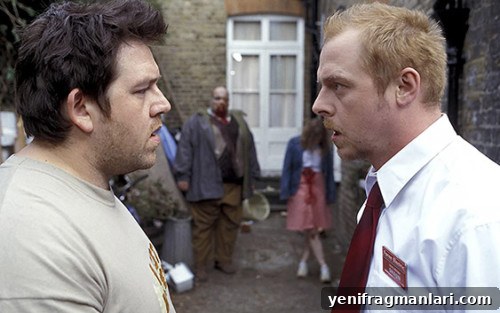
At its core, the film follows Shaun (Simon Pegg), a disengaged young man in London, and his friend Ed (Nick Frost), as they struggle with everyday life and Shaun’s faltering relationship with his girlfriend Liz (Kate Ashfield). The movie opens with scenes that feel as much like a buddy picture or romantic comedy as they do the setup for a horror pastiche — the humor is laddish and specific, but the emotional beats are grounded and sincere, giving the characters real weight before the genre elements arrive.
There are clear echoes of Spaced in the film — from casting choices to tonal flourishes — but Shaun of the Dead never feels simply like a TV sketch stretched into a movie. Instead, it borrows familiar touches as affectionate nods that reward viewers in the know while remaining accessible to newcomers. Jessica Hynes (formerly Stevenson), for example, makes a memorable recurring cameo that reads as both an in-joke and a natural piece of the story.
More than just a comedy, the film functions as a love letter to zombie cinema, especially the work of George A. Romero. Its title itself references Romero’s legacy and the film frequently pays tribute to the conventions of the subgenre while skillfully subverting them with comedy and character moments. That balance — between referring to horror tropes and using them to deepen emotional stakes — is central to the film’s enduring appeal.
Edgar Wright’s directorial gifts are evident from the opening moments. An extended tracking shot that follows Shaun from his flat to the corner shop is an early showcase: meticulously choreographed, funny in detail and then cleverly mirrored later under very different circumstances. Such choices demonstrate Wright’s ability to combine technical flair with comedic timing, turning camera movement into part of the joke and amplifying emotional resonance at the same time.
The film’s humor relies heavily on the chemistry between Pegg and Frost. Their rapport carries much of the movie, from casual banter to more urgent set pieces. Recurring motifs — quips about shops, fence-jumping, and pub confrontations — reappear across the Cornetto Trilogy, creating a connective tissue between the films that fans enjoy spotting. Yet the screenplay, co-written by Wright and Pegg, also finds room for serious moments: grief, responsibility and the awkward transitions of adulthood are woven into the laughs, giving the story surprising depth.
Music plays a vital role in Wright’s work, and Shaun of the Dead uses its soundtrack to great effect. Opening with The Specials’ “Ghost Town” and featuring several Queen tracks, the film pairs songs with action in memorable ways. The pub brawl sequence set to “Don’t Stop Me Now” has become iconic, illustrating how perfectly chosen music can heighten both comedy and suspense. A playful running gag about Shaun’s vinyl collection — debating which records are suitable improvised weapons — underscores the film’s knack for blending character detail with absurd comedy.
Over the years, Shaun of the Dead has attracted a devoted following and earned recognition from critics and genre fans alike. Its mix of affection for horror movies, sharp visual comedy, and genuine character work explains why it remains influential. As the first major cinematic collaboration between Pegg, Frost and Wright, it set the tone for their subsequent work and stands as an early showcase of Wright’s signature talent for combining humor with an emotional core.
19/24
Written by Christopher Connor
You can support Christopher Connor in the following places:
Twitter – @chrisconnor96