
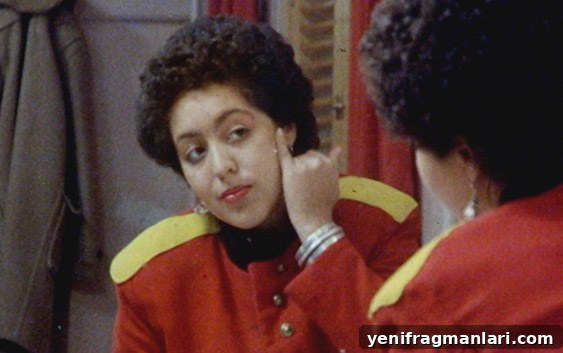
Poly Styrene: I Am a Cliché (2021)
Directors: Celeste Bell, Paul Sng
Screenwriters: Celeste Bell, Paul Sng
Starring: Celeste Bell, Marianne Elliott-Said, Ruth Negga
When most people picture punk, images of its outspoken male icons often come to mind: provocative frontmen and disruptive personalities who defined the sound and spectacle of the movement in the 1970s. Yet punk’s history also includes courageous female artists whose contributions reshaped music, style and social attitudes. Poly Styrene: I Am a Cliché focuses on one of those crucial figures: Marianne Elliott-Said—better known as Poly Styrene—the singular voice behind X-Ray Spex. Co-directed by her daughter Celeste Bell and Paul Sng, the documentary traces Marianne’s life and legacy, presenting her not just as a punk pioneer but as a complex artist, mother and human being who confronted racism, mental health struggles, and the pressures of fame.
From the start, the film grounds the story in family memory. We see Celeste Bell surrounded by boxes of photographs, press clippings and personal artifacts—material evidence of a career that was both influential and intensely personal. Celeste begins by reflecting on her mother’s death and the weight of carrying on a legacy shaped by loss. The resemblance between mother and daughter is striking, and the film uses Celeste’s perspective to bridge Poly Styrene’s public persona and the private woman behind it.
Through interviews, archival footage, poetry and diary entries voiced by Ruth Negga, the documentary reconstructs Marianne’s life from childhood onward. Born to an Anglo-Somali family and raised in London, Poly faced persistent questions about her place in British culture. Encounters with casual and overt racism informed much of her writing and public identity. Songs like “Identity” directly address the frustration of being excluded from mainstream representations: “Do you see yourself on the TV screen, do you see yourself in the magazine?” The film demonstrates how Poly used punk as a platform to challenge narrow definitions of identity and to claim visibility on her own terms.
The origin of her stage name is a small, revealing detail: Poly chose “Styrene” from a phonebook because she wanted a name that sounded synthetic and consumerist, reflecting her critique of modern life. As X-Ray Spex’s frontwoman, she became known for a distinctive mix of sharp lyrics, vocal intensity and fearless fashion. The release of “Oh Bondage, Up Yours” propelled her into wider recognition; that song’s defiant refrain—“Some people think that little girls should be seen and not heard, but I think, oh bondage, up yours!”—remains an emblem of punk’s resistance to oppression and gendered expectations.
The documentary enriches its portrait with testimony from peers and admirers, including Kathleen Hanna, Thurston Moore, Neneh Cherry, Don Letts and Vivienne Westwood. Their perspectives highlight Poly’s role as a groundbreaking woman of color operating in a music scene predominantly controlled by white, middle-class men. Her presence and voice expanded punk’s boundaries and offered new possibilities for political and personal expression.
But the film refuses to present a one-dimensional triumphal narrative. Celeste Bell carefully unpacks the toll that touring, public attention and the expectations placed on Poly took on her mental health. Footage and family testimony reveal moments when Marianne struggled to reconcile her public image with her private needs—episodes that culminated in a breakdown after intense touring in the United States, including a fraught appearance at New York’s CBGB. A dramatic sequence shows her shaving her head—an act often read as deliberate defiance—which, Celeste explains, was also a desperate cry for help.
As the story unfolds, Celeste shifts focus from the punk persona to the woman who navigated mistreatment, misdiagnosis and personal hardship. The film covers Marianne’s being sectioned and misdiagnosed with schizophrenia, her retreat from the public eye, and her later battle with cancer. Celeste also shares the difficulties of her own childhood: living briefly in an ashram with Hare Krishna followers, coping with the consequences of her mother’s mental illness and sometimes feeling neglected—experiences that fractured their relationship even as love endured.
Poly Styrene: I Am a Cliché moves with honesty and emotional clarity. It balances the exhilaration of Poly’s creative achievements with the quieter, sometimes painful realities behind the myth. The directors avoid sensationalism, opting instead for a measured, intimate account that highlights the unbreakable bond between mother and daughter and the persistence of Poly’s writing and vision.
The film’s archival material—early performances, interviews and personal writings—combined with contemporary reflections, builds a nuanced portrait of Marianne Elliott-Said as artist, activist and parent. Celeste Bell and Paul Sng’s collaborative effort preserves a singular voice and extends Poly Styrene’s influence to new audiences, reminding viewers why her music and ideas still resonate: she insisted on being seen and heard on her own terms.
24/24