
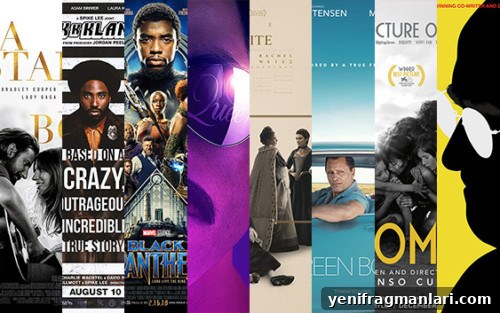
There are only eight nominees for the Best Picture Academy Award at the 2019 Oscars (down from nine the previous year). The Academy of Motion Picture Arts & Sciences—the body responsible for nominating these films—faced heavy criticism over this year’s selections. From controversies surrounding the production of Bohemian Rhapsody to debates over the politics and intentions behind Green Book, from the arrival of streaming with Roma to the polarizing tone of Vice, nearly every nomination stirred spirited discussion.
In this installment of Ranked, the eight Best Picture nominees for 2019 are ordered from least to most compelling, considering quality, audience appeal, and their significance as cinematic works released in 2018.
Agree or disagree? Share your thoughts in the comments below.
8. Bohemian Rhapsody
Bohemian Rhapsody Review
Bohemian Rhapsody is an energetic, nostalgia-driven compilation of Queen’s music anchored by a standout lead performance, but it falls short of Best Picture standards. The film stitches together material from multiple directors and suffers from uneven editing and pacing. Its treatment of Freddie Mercury’s personal life—especially his sexuality—often feels superficial, reducing complex moments to familiar biopic beats.
On its own terms the film entertains and celebrates the band’s career, but it rarely probes beneath the surface. It’s ultimately a crowd-pleasing product with one exceptional turn rather than a daring piece of cinema. Given its problems in structure and tone, Bohemian Rhapsody lands at the bottom of this list.
7. A Star Is Born
A Star Is Born Review
Bradley Cooper’s directorial debut and Lady Gaga’s first leading film role made A Star Is Born an important cultural moment. Cooper’s staging of live performances and the chemistry between the leads are major strengths, and his portrayal of a fading star is empathetic and well-observed. Gaga’s performance confirms her emergence as a serious actor.
However, the film largely retreads familiar territory from earlier versions of the story and other music-industry dramas. Uneven editing and occasional pacing issues keep some emotional beats from fully landing. While this remake succeeds as a powerful mainstream romance and a showcase for its stars, it doesn’t push the form far enough to rank higher among the year’s most distinguished films.
Recommended for you: A Look Inward – Introspection in A Star Is Born
6. Vice
Adam McKay’s Vice divides viewers. The film offers bold stylistic choices, sharp performances—particularly Christian Bale’s transformative turn—and moments of pointed satire. It attempts to map the rise of Dick Cheney and the consolidation of political power with a mix of humor, dramatization, and factual detail.
At times the film’s tone feels inconsistent: it oscillates between biting satire and earnest drama, and some sequences feel extraneous to the central argument. Its length and self-referential flourishes undercut momentum. Vice is ambitious and often entertaining, but it’s less cohesive and disciplined than the best Best Picture contenders.
Recommended for you: A Millennial’s Take on Vice
5. Green Book
Green Book provoked strong reactions across critics and audiences. At its heart, the film is a well-crafted, sentimental portrait of an unlikely friendship between two very different men, anchored by strong work from Viggo Mortensen and Mahershala Ali. The film’s cinematography and period detail often feel polished and assured.
However, the movie has attracted criticism for its framing and for comments made by members of the production team that raised questions about perspective and intent. The narrative tends to favor familiar tropes and predictable resolutions, which undercuts its more serious themes. As a result, while Green Book is moving and competently made, questions about its point of view and reliance on cliché prevent it from ranking higher.
Recommended for you: Green Book’s Verdant Views on Race Allow Inherent Contradiction
4. Black Panther
Black Panther Review
As a cultural phenomenon, Black Panther was groundbreaking: a major studio superhero film anchored in a richly imagined world, highlighted by powerful performances and resonant themes of identity and responsibility. Ryan Coogler’s direction and Michael B. Jordan’s complex antagonist helped elevate the film beyond typical franchise fare.
Some visual effects and formulaic beats align with blockbuster expectations, and the film sometimes prioritizes accessibility over formal experimentation. Still, Black Panther stands as one of the most significant and memorable films of 2018, notable both for its entertainment value and its cultural impact.
3. BlacKkKlansman
BlackKklansman Review
Spike Lee’s BlacKkKlansman is a sharp, timely film that blends humor and moral urgency. Based on a true story, it follows an undercover investigation into the Ku Klux Klan and uses its premise to explore race, identity, and American history with both rage and wit. John David Washington, Adam Driver, and Topher Grace deliver strong performances that anchor the film’s tonal shifts.
Lee’s direction alternates between stylized set pieces and documentary-like immediacy, crafting visuals that linger. The film manages to be accessible and provocative at once, making it one of the year’s most compelling and resonant entries. Its placement here reflects a close competition with the top two films rather than any shortcoming in quality.
2. The Favourite
The Favourite Review
Yorgos Lanthimos’s The Favourite is a darkly comic period drama that showcases exceptional performances from Olivia Colman, Emma Stone, and Rachel Weisz. Its production design is lush, its pacing deliberate, and its formal choices—framing, editing, and in-camera techniques—are consistently striking. The film balances cruelty and comedy to tell a story of ambition, jealousy, and power.
Colman’s central performance is revelatory, while Stone and Weisz provide nuanced, often uproarious support. The screenplay is witty and incisive, and the overall craft elevates the film into one of the year’s most artful and original achievements. It narrowly misses the top spot because of the unique emotional resonance of the film ranked first.
1. Roma
Alfonso Cuarón’s Roma represents a rare instance of a foreign-language film being embraced at the highest levels of the Oscars, and for good reason. Cuarón served as writer, director, and cinematographer, crafting a film that is intimate, formally precise, and visually breathtaking. Shot in black and white, much of the film communicates through image, rhythm, and silence rather than expositional dialogue.
Roma blends personal memory with social observation, following the life of a domestic worker in Mexico City with extraordinary empathy and painterly detail. Its quiet power, technical mastery, and emotional honesty make it a landmark film and a clear frontrunner for Best Picture. The film also sparked important discussions about streaming, theatrical exhibition, and how films qualify for awards—conversations that underscore the changing landscape of cinema.
Judged for artistry, relevance, and impact, Roma stands as the most compelling Best Picture nominee of 2019.
Recommended for you: 2018 Oscars Best Picture Nominees Ranked
This ranking is bound to provoke debate, especially among passionate fans of the films placed lower on the list. If you disagree or want to add your perspective, please leave a comment below.