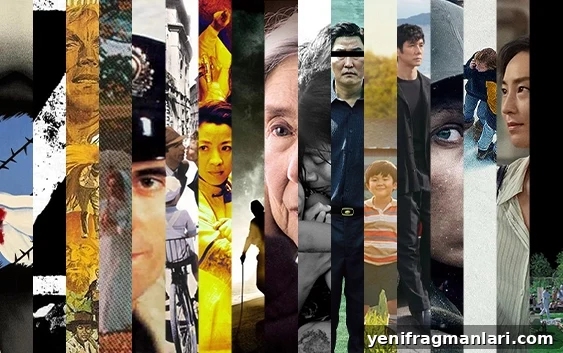
Across more than nine decades and over six hundred nominations, only one film not primarily in English—Parasite—has won the Academy Award for Best Picture. That fact highlights a long history of conservative voting patterns at the Oscars and raises questions about how international cinema is recognized by the Academy.
Since 1947, there has been a separate category—Best International Feature—that has honoured many outstanding films such as Rashomon, Fanny and Alexander and The Lives of Others. While that category gives international films a platform, it can also have the effect of marginalizing them, as if cinema made outside of Hollywood belongs in a separate lane rather than competing equally for the highest prize.
Seventeen films mainly in languages other than English have been nominated for Best Picture, representing countries from Sweden and Italy to Mexico, Japan and South Korea. Many are masterpieces. In this feature, we rank every non-English-language Best Picture nominee, considering how they compare to the English-language winners of their year and whether they might have deserved the top prize.
17. Life Is Beautiful (1997)
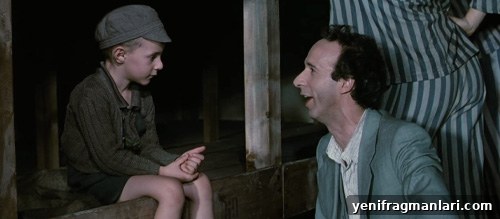
Roberto Benigni’s Life Is Beautiful starts as a light, playful comedy and takes a harrowing turn when it moves into a concentration camp setting. Benigni’s performance as a devoted father who shields his son by turning horror into a game is both moving and controversial: some critics argue the film risks trivialising the Holocaust, while others praise its heartfelt spirit and the emotional weight Benigni brings to the role.
The film’s tonal shift is startling but intentional; whether the comedy and the tragic reality fully cohere is debatable. Benigni won Best Actor for his role, becoming one of the few non-English-speaking winners in acting categories—a rare moment of recognition amid broader Academy conservatism.
That year the Academy chose Shakespeare in Love for Best Picture, favouring a crowd-pleasing period romance over Benigni’s riskier, more divisive drama.
16. All Quiet on the Western Front (2022)
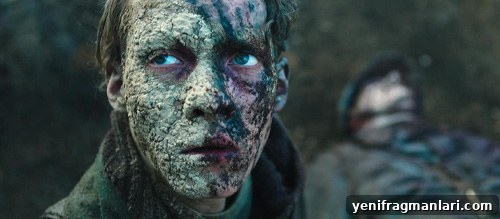
Edward Berger’s adaptation of the classic anti-war novel is a visually striking, uncompromising depiction of World War I. The film’s raw imagery, an oppressive industrial score and a strong young cast led by Felix Kammerer convey the dehumanising effects of combat. It spares no brutality, following soldiers from eager youth to broken survivors.
While it delivers powerful spectacle and technical polish, some viewers feel the film’s revised final act—neither fully faithful to the novel nor to historical events—diminishes the emotional clarity that the story requires.
15. Letters from Iwo Jima (2006)

Clint Eastwood’s portrait of Japanese soldiers during the Battle of Iwo Jima presents the conflict from the Japanese perspective, counterbalancing his companion film Flags of Our Fathers. Ken Watanabe gives a dignified, restrained performance as General Kuribayashi, and the film builds slowly to intense, brutal battle sequences that humanise the men caught in a losing fight.
Its deliberate pacing pays off as the characters’ backstories are revealed, creating a mournful, humane account of war rather than a simple action epic.
14. Minari (2020)
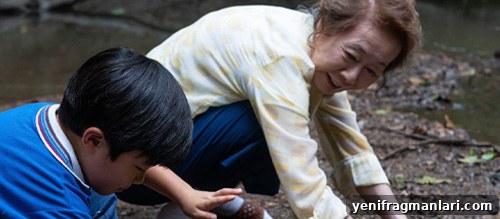
Lee Isaac Chung’s Minari tells a familiar American story—the pursuit of a better life—through the eyes of a Korean immigrant family. The film balances cultural specificity with universal themes of family, sacrifice and resilience. Steven Yeun delivers a quietly powerful lead performance, and the supporting ensemble, including Youn Yuh-jung, provides depth and warmth.
Minari also sparked debate about categorisation at awards ceremonies, since it is an American-produced film primarily in Korean—a discussion that underscores the limitations of segregating films by language rather than by artistic merit.
13. The Emigrants (1971)
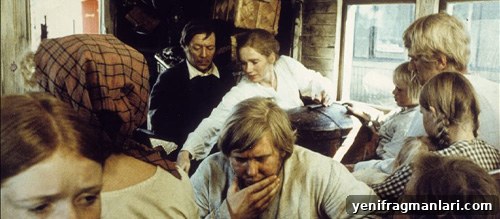
Jan Troell’s two-part adaptation of Vilhelm Moberg’s novels is an expansive, meticulously observed epic about a Swedish family’s emigration to America in the 1840s. Its long runtime allows the film to immerse viewers in the hardships of rural life, the perilous Atlantic crossing and the uncertain promise of a new land. The performances, especially from Liv Ullmann and Max von Sydow, anchor an intimate human story on a grand historical canvas.
12. Roma (2018)

Alfonso Cuarón’s semi-autobiographical Roma is a rich, carefully composed portrait of domestic life in 1970s Mexico City. Told largely through the point of view of the family’s housekeeper, the film blends intimate moments with broader social observation. Cuarón’s direction and cinematography create a vivid, tactile world; the result is a deeply personal film that resonated widely.
11. Z (1969)

Costa-Gavras’s Z is a taut political thriller that exposes corruption and state violence. Presented as a thinly fictionalised account of real events, the film combines investigative momentum with sharp social critique. It rewards close attention with a gripping narrative that remains relevant for its examination of power and impunity.
10. Il Postino (1994)
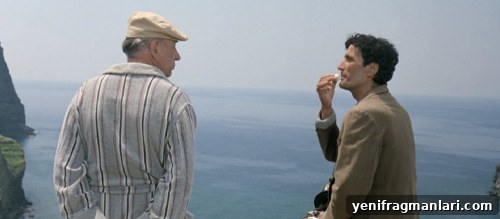
Il Postino is a tender, lyrical story about a fisherman-turned-postman who befriends the exiled poet Pablo Neruda and learns to express love through language. Massimo Troisi’s warm presence and the film’s sunlit Italian landscapes create an irresistible humanism that lingers long after the credits.
9. Past Lives (2023)

Past Lives is an intimate, elegantly crafted story about connections that last across decades and distance. Celine Song’s debut centers on Nora and her childhood friend Hae-sung as they revisit what might have been. The film’s quiet emotional intelligence and well-earned performances create a nuanced portrait of longing, memory and the choices that shape our lives.
8. Drive My Car (2021)

This patient, three-hour film adapts Chekhov for a multilingual theatrical production and explores grief, empathy and artistic collaboration. The growing bond between a grieving director and his driver unfolds through long journeys and rehearsals. The film’s deliberate pacing and focus on relationships make it a meditative, richly rewarding experience.
7. Anatomy of a Fall (2023)
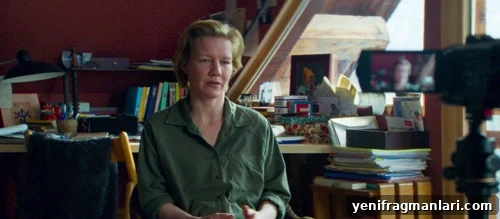
Anatomy of a Fall is a compelling study of perception and uncertainty. When an author’s husband dies, the ensuing murder trial lays bare the unreliability of witnesses and the many ways a story can be interpreted. Sandra Hüller gives a striking performance in a film that remains unsettling and thought-provoking even after multiple viewings.
6. La Grande Illusion (1937)

Jean Renoir’s La Grande Illusion is one of cinema’s great anti-war statements, examining class, honour and human connection among prisoners of war. Its empathetic portrayal of characters from different social backgrounds and its gentle, philosophical tone make it timeless and deeply humane.
5. The Zone of Interest (2023)
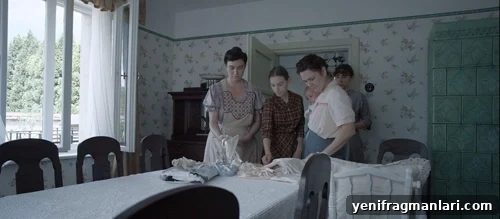
Jonathan Glazer’s The Zone of Interest is a chilling, precise examination of banality and complicity. By positioning a comfortable domestic life next to Auschwitz, the film forces viewers into an uncomfortable complicity and exposes the ordinariness of evil. Its austere style and sustained moral pressure make it haunting and unforgettable.
4. Cries and Whispers (1972)

Ingmar Bergman’s Cries and Whispers is an intense, intimate chamber drama about family, suffering and the limits of empathy. Its striking visual motifs and powerful performances create a claustrophobic atmosphere where emotional wounds are exposed without flinching.
3. Crouching Tiger, Hidden Dragon (2000)

Ang Lee’s Crouching Tiger, Hidden Dragon helped reintroduce wuxia to global audiences with its poetic blend of martial arts, romance and operatic drama. The film’s choreography, production design and the luminous performances of Michelle Yeoh, Chow Yun-Fat and Zhang Ziyi create a dreamlike, emotionally resonant experience.
2. Amour (2012)
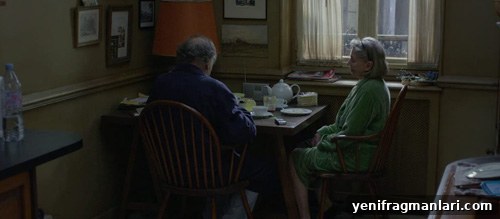
Michael Haneke’s Amour is a devastating, unsentimental portrayal of love, ageing and loss. Anchored by tender, heartbreaking performances from Emmanuelle Riva and Jean-Louis Trintignant, the film depicts the slow decline of a partnership with rare honesty and emotional clarity.
1. Parasite (2019)

Bong Joon-ho’s Parasite became the first film primarily in a non-English language to win Best Picture, a landmark moment that broadened perceptions of what the Academy might celebrate. Parasite is a brilliant, blackly comic and ferocious social satire about class and inequality, brilliantly acted and precisely constructed. Its acclaim from critics, audiences and peers alike reflected a rare consensus that the right film had been honoured.
Whether the Academy will continue to evolve slowly or accelerate its recognition of world cinema remains to be seen. Many of the films on this list could reasonably have been awarded the top prize in their respective years. Which ones do you think should have won?
Updated to include Anatomy of a Fall, Past Lives and The Zone of Interest on 26 February 2024. Originally published 8 March 2023.