
This article was written exclusively for The Film Magazine by Lucas Hill-Paul.
Ray & Liz (2018)
Director: Richard Billingham
Screenwriter: Richard Billingham
Starring: Ella Smith, Justin Sallinger, Joshua Millard-Lloyd, Tony Way
In the opening moments of Richard Billingham’s Ray & Liz, we find a middle-aged man emerging from a fog of stupor. He lights a cigarette and pours a dark, cola-like liquid—strong with the smell of spirits—into a shabby glass. The scene lingers on the buzzing of flies and the stained, cyan-tinted light of a late afternoon. This deliberate, stagnant beginning establishes a tone of memory and decay, presenting viewers with a fragmented portrait that frequently crosses between the present and a haunted, working-class past.
Billingham, known originally for his stark photographic work, builds the film from a series of intimate, cramped images of his upbringing. The influence of memory photography is clear: these moments feel lived-in and painfully specific. Yet the film often reads less like a reflective memoir and more like an unrelenting catalog of indignities. At times the style recalls the nightmarish detachment of David Lynch’s Eraserhead or the bleak rhythm of Beckettian consciousness, but Billingham’s focus is retrospective rather than speculative. Rather than using this aesthetic to probe broader social forces, the film frequently lingers on shock and ridicule.
The narrative structure dissolves repeatedly between three timeframes that echo Billingham’s photographic sources. Cross-fades move us from tower blocks to cloudy skies to bursts of fireworks, creating a visual surface that is at once beautiful and unsettling. Daniel Landin’s cinematography—notably intimate and tactile—lends many of the film’s moments a haunting clarity. Landin captures small, visceral details: a child reaching into a jar of red cabbage, family members smoking half-finished cigarettes scavenged from the gutter, and damp envelopes stuffed beneath a pile of dog-soiled papers. These images register with documentary force.
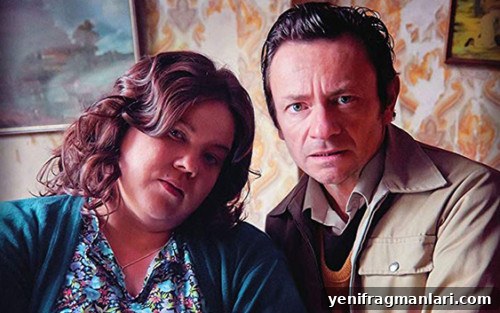
However, the film’s visual elegance does not always translate into emotional nuance. Billingham’s camera often draws attention to its own insecurity—twitchy pans and abrupt focus changes that feel more like stylistic affectation than a route to understanding character. The result is a portrait of poverty that at times reads as zoological voyeurism rather than empathetic social realism. Characters are frequently presented as grotesques: Liz is portrayed as a violent, obese hypocrite, while Ray is reduced to an apathetic layabout. The family’s dynamic rarely moves beyond scenes of abuse, mockery, or humiliation.
There are strikingly human moments scattered throughout, and the film benefits from strong, physical performances—Justin Sallinger’s work, in particular, contains sharp moments of comic timing and physical risk. One memorable sequence finds a child placing chilli powder into his sleeping father’s mouth; the scene lands as both dark comedy and an odd, tender sign of sibling complicity. Yet such moments are isolated; the film does not allow its characters consistent space to breathe or to reveal deeper interior lives. Rather than challenging the viewer to understand how structural conditions produce such pain, the film often seems content to present misery as a spectacle.
Billingham’s approach to themes like class and race can feel cursory. References to racism and white supremacy appear almost as incidental seasoning—brief, crude remarks that mark characters as detestable rather than offering a critique of the social systems that shape their outlooks. Compared to socially engaged British films that combine anger with political clarity, Ray & Liz can feel morally ambiguous. It documents lived experience with uncompromising honesty, but that honesty sometimes curdles into a mean-spirited tone that presumes the audience stands outside the world it depicts.
For all its flaws, the film is a notable cinematic accomplishment in several respects. The production design and texture recreate a specific working-class environment with impressive detail, and Billingham’s eye for composition—unsurprising given his background in photography—yields images that linger. The film’s refusal to soften its subject matter can be powerful; it refuses sentimentality and forces a viewer to confront squalor and dysfunction without easy moralizing. Yet the movie’s insistence on shock over context weakens its claim to deeper insight.
Ultimately, Ray & Liz is a visually striking, uncompromising personal document that showcases Richard Billingham’s considerable talent. It stands as a promising debut in terms of craft and vision, but it is hindered by a lack of empathy in its narrative choices. When a filmmaker restricts characters from expressing complexity or agency, the result can be artful but emotionally limited. Billingham has created a film that will provoke strong reactions—and rightly so—but it also leaves open the question of what a more balanced or politically engaged portrait of poverty might have revealed.
11/24
You can support Lucas Hill-Paul at the following links:
Personal Twitter – @lucashpaul
You can find more of his writing at Film Daily News – @FilmDailyNews