
Return to Seoul (2022)
Director: Davy Chou
Screenwriter: Davy Chou
Starring: Ji-Min Park, Oh Kwang-rok, Guka Han, Kim Sun-young, Yoann Zimmer, Louis-Do de Lencquesaing, Hur Ouk-Sook
When Davy Chou accompanied a close friend to a family meal in South Korea, he witnessed a profound inability to connect between his friend and her biological relatives. The encounter made him reflect on the legacy of post-war Korea, where hundreds of thousands of children were orphaned or abandoned and many were adopted overseas. In recent decades, a growing number of these adoptees have returned to Korea seeking to reunite with their birth families. That emotional collision of two different lives—separated by language, time, and culture—inspired Chou to write and direct Return to Seoul.
Chou spent three years developing a script that draws on the real-life tension he observed, as well as on his own bicultural upbringing. The film is a character-driven study of identity and belonging, told across eight years and divided into three acts with an epilogue. It follows Freddie (Park Ji-min), a French-Korean woman who makes an impulsive trip back to South Korea and attempts to reconnect with the place of her birth.
Freddie is fiercely independent. She is witty, sharp-tongued, and guided by instinct rather than long-term plans. Her relationships are guarded; she often prioritizes immediate gratification and keeps people at arm’s length. Early in the film she reminds her boyfriend that she could cut him out of her life without hesitation—an offhand remark that underlines the defensive armor she has built around herself to prevent emotional pain.
Casting was crucial. Chou wanted an actor who could bring lived experience to Freddie’s conflicted identity. Park Ji-min, a newcomer, arrived in France from South Korea at eight years old and shared many cultural touchpoints with the character. Chou and Park collaborated closely to shape Freddie’s attitude toward femininity and her fraught interactions with men—elements informed by Park’s own perspective.
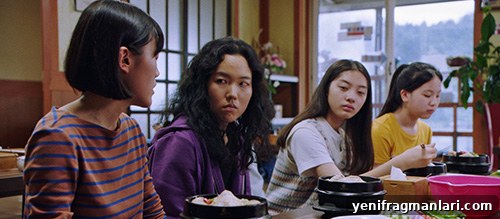
Park’s performance subverts common cinematic tropes that reduce Asian female characters to passive or inward-looking figures. Freddie is provocative and unpredictable; she regularly breaks social conventions and stirs up the world around her. In one memorable restaurant scene, she transforms a quiet dinner into a communal celebration, drawing strangers into conversation and laughter and challenging social norms in the process.
Freddie’s return to Korea is marked by recurring dislocation. Although she looks physically like the people around her and receives comments about her “ancestral Korean” features, she still feels like an outsider. This sense of alienation drives her to push boundaries and keep others off balance, as if rebellion is a shield against loneliness.
On the advice of her friend Tena (Guka Han), Freddie visits an adoption agency with only a childhood photograph and a social security number to guide her search. Her mother remains evasive, but she is contacted by her father (Oh Kwang-rok), who invites her to stay with him and his new family. Their reunion is loaded with awkwardness and expectations: conversations quickly turn to relocation, marriage prospects, and appearance. Language barriers and cultural assumptions magnify the discomfort. Tena often filters Freddie’s sharp remarks, so misunderstandings multiply.
Freddie’s father is a quiet, guilt-ridden figure who struggles to meet his daughter’s gaze. His attempts at reconciliation spiral into inappropriate behavior after alcohol, culminating in intrusive phone calls and messages that sabotage any chance of trust. The breach leaves Freddie more isolated and cements her reliance on self-preservation.
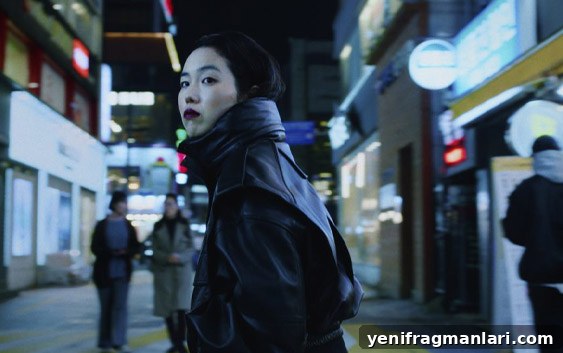
As the film progresses into its second and third acts, Freddie’s life in Seoul takes center stage. Two years after her initial return, she becomes enmeshed in the city’s nightlife and underground scenes. The visual palette shifts from pastel hues to neon-lit nights, reflecting Freddie’s deeper integration into the urban tapestry of Seoul. The narrative becomes looser and more episodic here; the focus moves from the mechanics of family reunification to Freddie’s attempts to carve out a place in a city that both attracts and unsettles her.
Thomas Favel’s cinematography renders Seoul in rich, contrasting tones: vibrant and alive during the day, electric and seedy after dark. This visual vitality helps the audience inhabit Freddie’s perspective as she drifts through encounters that are alternately charged, tender, and dangerous.
Return to Seoul is ultimately a study of loss and the complex aftermath of displacement. It examines what is irretrievable when a person is removed from their homeland and how difficult it can be to rebuild connections later in life. The film’s structure, divided into distinct acts, can feel fragmented at times, but strong performances—especially Park Ji-min’s—sustain the emotional force of the story. Freddie emerges as a solitary, resilient figure shaped by the fractures of her past; she survives by relying on her instincts and asserting control over the scant anchors she possesses.
Score: 16/24
Written by Jake Gill