
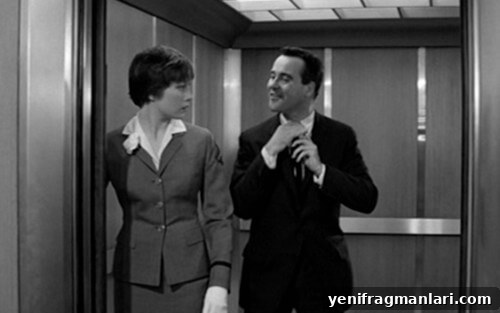
The Apartment (1960): Billy Wilder’s Darkly Comic Holiday Classic
“Shut up and deal” are the memorable last words of Billy Wilder’s 1960 Oscar-winning film The Apartment. That curt, unexpected closing cuts through the usual holiday clichés—sweeter declarations of love and sentimental finales—to leave viewers with something sharper and more honest. The Apartment is often discussed as a Christmas movie, but it’s far from a conventional one: it blends seasonal settings with adultery, loneliness and an attempted suicide, yet somehow remains funny, warm and ultimately uplifting.
Set in New York during the Christmas and New Year period, The Apartment centers on C.C. “Bud” Baxter (Jack Lemmon), a low-level office worker eager to climb the corporate ladder. To win favour with his superiors, Bud lends his Upper West Side apartment to company executives for their extramarital trysts. That arrangement brings him the promotion he wants, but it also opens the door to personal heartbreak when Bud discovers that one of the men using his apartment, Personnel director Jeff Sheldrake (Fred MacMurray), is having an affair with Fran Kubelik (Shirley MacLaine), the elevator operator whom Bud admires from afar.
The emotional stakes rise when Bud realizes Fran is the very woman he loves. Things come to a head after a humiliating office Christmas party reveals Sheldrake’s pattern of affairs. A confrontation in Bud’s apartment—sparked by Fran’s discovery that she’s one of many—leads to a bitter fallout and, later, to a heartbreaking crisis when Bud finds Fran unconscious after an apparent suicide attempt. With help from a doctor neighbor, Bud rescues Fran, tending to her through the holidays and deepening his feelings as she recuperates.
Complications continue: Fran’s brother-in-law turns up to take her home and strikes Bud for protecting her. Bud is rewarded professionally with another promotion but refuses to let Sheldrake use his apartment again, resigning from the company in the process. Sheldrake’s infidelity is eventually exposed by his wife, but he continues to mislead Fran with promises he doesn’t intend to keep. On New Year’s Eve, after hearing why Bud quit, Fran rejects Sheldrake and races to Bud’s apartment. There, the two reconnect over a simple game of gin rummy; Bud confesses his love and Fran, in that bluntly affectionate way that sums up the film, answers, “Shut up and deal.”
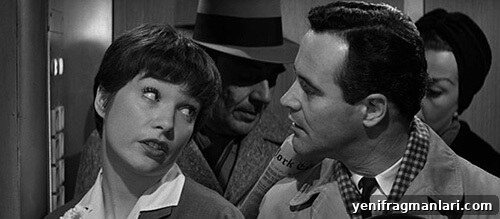
Coming off the success of Some Like It Hot (1959), Wilder was in top form directing Jack Lemmon for the second time. The Apartment became Wilder’s most critically celebrated film, winning Academy Awards for Best Picture, Best Director and Best Original Screenplay, plus honors for editing and art direction. While Lemmon and MacLaine did not receive Oscars for their roles, Lemmon’s performance elevated him from a supporting comic presence to a fully realized leading man.
Lemmon’s portrayal of Bud balances affability and pathos: he’s upbeat yet lonely, industrious yet allowing himself to be used for others’ benefit. His comic timing—often physical and slightly self-deprecating—cuts through the character’s vulnerability, making Bud both sympathetic and admirably human. Co-writer I.A.L. Diamond’s observation that “being funny in a drama is one of the most difficult things of all” rings true here; the film sustains laughter and tenderness without undercutting serious emotional beats.
Shirley MacLaine’s Fran avoids simple objectification. Though she is mistreated and manipulated, MacLaine gives the role complexity—sweetness tinged with sorrow, a wounded dignity that invites empathy. Fran may follow a familiar arc—sought-after by a sleazy man, hurt and then rescued by the decent protagonist—but MacLaine’s performance makes that journey feel sincere rather than formulaic.
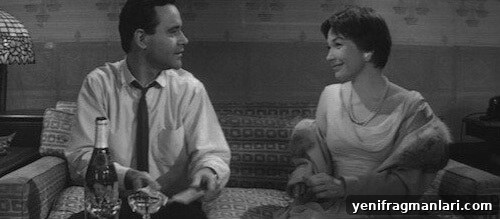
The film’s choice to set the story over the holidays plays a vital narrative role. Stripped of the usual Christmas color, Wilder’s black-and-white cinematography emphasizes isolation and irony: characters surrounded by festive imagery still feel profoundly alone. Rather than focusing on charity and goodwill, The Apartment highlights self-interest and desire—employees seeking advantage, men pursuing trysts, and characters looking for validation rather than genuine connection. In that contrast, the film finds its moral center: what each character wants versus what they truly need.
Wilder’s screenplay treats adultery and workplace corruption as commonplace, daring for its time. Infidelity is shown without moralizing, revealing how normalized these behaviors have become within the office culture Wilder depicts. That candid portrayal sparked controversy at release, even prompting confrontations for actor Fred MacMurray from viewers who felt unsettled by his character. Yet over time The Apartment’s honesty and craft won acclaim, and it now ranks among the most important American films of its era.
What secures the movie’s lasting appeal is Wilder’s gift for balancing cynicism with a humane tenderness. The story can be sharp and cynical about social compromises, yet the performances and emotional undercurrent offer genuine warmth. Moments of light comedy—Bud’s quirky kitchen antics, for example—sit comfortably alongside scenes of real pain, creating a tonal mix both risky and rewarding.
If you want a holiday movie that resists saccharine sentiment while still delivering humor and heart, The Apartment is an excellent choice. Its blend of comedy, drama and compassionate characterization makes it a timeless classic—and a film that rewards repeated viewing.
By Craig Sheldon