Slender Man (2018) — A Misguided Studio Horror
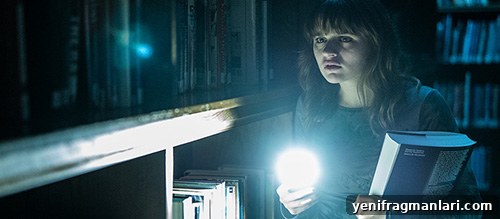
The problem with many major-studio misfires is not always that they’re unintentionally funny or campy; it’s that they feel soulless and generic. Slender Man falls squarely into that category: a film that fails to capture the unsettling mystique of its source material and instead delivers a bland, incoherent horror story. Other disappointing 2018 releases had at least some distinct (if crude) identity, but Slender Man largely feels like a checklist of modern horror tropes assembled without conviction.
Context and missed responsibility
The rights to the Slender Man character were bought years before the film’s release, and the movie premiered amid lingering public attention around highly publicized violent incidents connected to the Slender Man mythos and an HBO documentary that explored that tragic episode. Given that context, the filmmakers had an opportunity to approach the material with sensitivity and originality. Instead, the finished movie leans on familiar, problematic plot beats: teen girls as protagonists, one girl becoming dangerously influenced by the myth, and attempted harm to friends while pursuing contact with the entity. Those elements are central to many internet-originated Slender Man stories, but the film neither deepens nor reframes them in any meaningful way.
Weak worldbuilding and thin mythology
Where the Slender Man legend on the web exists as an unsettling collage of images, faux-documentary fragments, and collaborative storytelling, the film struggles to create a credible mythology. The movie refuses either to commit to folklore-style ambiguity or to invent a compelling backstory; instead, it offers evasive exposition and vague comparisons to generic supernatural lore. The creature’s abilities are unclear beyond a few scattered effects: it supposedly drives people insane, appears in the woods, and communicates through online channels. Rather than cultivating dread through suggestion, the film opts for literalistic staging and repetitive imagery—endless shots of trees and shadows meant to signal menace, but which end up feeling redundant.
Poor characters and clumsy themes
The protagonists are written as generic teenagers with little to distinguish them beyond the plot roles they occupy. Dialogue is frequently clunky, trading authentic adolescent behavior for melodrama or clumsy metaphors. A recurring line of dialogue tries to link Slender Man to the idea of a virus, with awkward exchanges meant to be clever (“He gets in your head like a virus.” “What kind of virus?” “Like a computer virus… but in your brain.”). Those beats are intended to comment on the spread of online myths and social media’s influence, but they land as blunt and uninteresting rather than incisive.
Editing, continuity, and suspense failures
The film’s construction compounds its narrative weaknesses. Scenes contain jarring continuity problems, such as a laptop said to be confiscated by the police only to reappear moments later, and several characters vanish without proper resolution. Pacing choices undercut tension: instead of patient atmosphere, the movie relies on jump scares and a score heavy on ominous strings. When a horror film borrows familiar beats, it must at least deliver them with craftsmanship—convincing performances, sustained dread, or memorable visual moments. Slender Man delivers none of these in a way that satisfies.
Ethical concerns and last-minute edits
Beyond cinematic faults, the production’s decisions feel tone-deaf given the real-world events tied to the Slender Man name. Reports surfaced that the studio made cuts to the film after public reaction to early footage, a move that suggests reactive damage control rather than a principled approach to the subject. The result is a final product that is both less coherent and, arguably, less respectful: the filmmakers trimmed material but didn’t replace it with thoughtful alternatives, leaving gaps that further weaken narrative and emotional impact.
Conclusion
Ultimately, Slender Man is disappointing on multiple levels. It fails to expand on its internet-born lore, its characters are shallow, and its scares are mostly perfunctory. The film could have explored the cultural phenomenon of online mythmaking or crafted an ambiguous, folklore-infused nightmare; instead it produces a forgettable, occasionally offensive studio horror that adds little to the conversation about the source material. For viewers interested in how modern scares intersect with digital culture, the movie is a missed opportunity rather than a worthwhile example.